Languages
Tuesday, November 3, 2026



News and Views from the Global South
IPS UN Bureau

United Nations Least Developed Country Category – Curse or Boon?
The UN General Assembly will soon vote – most likely favourably – on Bangladesh’s request to postpone the country’s graduation from the UN’s Least Developed Country (LDC) category, currently scheduled for November this year. The request for a 3-year extension was endorsed by the ECOSOC following the recommendation of the UN’s Committee for Development Policy (CDP). It is highly likely that the extension will also be justifiably granted to Nepal and Lao People’s Democratic Republic (Lao, PDR) – the two other countries scheduled to graduate with Bangladesh, given the fast deteriorating global economic situation and recent natural disaster in Nepal. In fact, the same argument for an extension may be admissible to all prospective graduating countries, such as Solomon Islands (2027), Cambodia (2029) and Senegal (2029).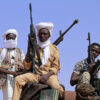
Sudan: Blood on Foreign Powers’ Hands
Sudan’s civil war grinds on. It’s close to three and a half years since the Sudanese Armed Forces (SAF) and the Rapid Support Forces (RSF) militia began their battle for supremacy, and the two forces and their allies continue to slaughter civilians with impunity. As a recent UN report makes clear, the killing is enabled by numerous foreign powers that continue to supply weapons, personnel and logistical support. They have made a civil conflict their proxy war, and their self-interest is sustaining the killing.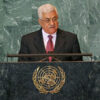
US Visas for Ruthless Autocrats to Address UN – but not for Palestinian Leaders
When Yasser Arafat was denied a US visa for his second visit to New York to address the United Nations back in 1988, the General Assembly defied the United States by temporarily moving the UN’s highest policymaking body to Geneva—perhaps for the first time in UN history—providing a less hostile political environment and a platform for the leader of the Palestine Liberation Organization (PLO).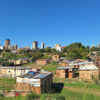
The Connection Between Urbanization and Poverty: How Cities Can Reduce Poverty – Or Deepen It
Urbanization can help concentrate jobs, services, and investments; however, it can also concentrate unaffordable housing, insecure employment, and unequal exposure to contamination and environmental threats. A recent report from the UN Special Rapporteur on extreme poverty and human rights, argues that the difference is not urbanization itself, but how cities are planned, governed, and financed.
Outpacing Foreign Aid, Migrant Remittances Are a Lifeline Ensuring Families Are Fed and Healthy, Says IFAD
Migrants now send home more money than foreign aid, and this is pulling rural families out of poverty, according to the International Fund for Agricultural Development (IFAD).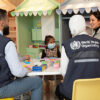
WHO Launches New Global Health Strategy for Childhood Cancer Medications
When a child is diagnosed with cancer, their chances of survival should not depend on where they live, yet according to the WHO, more than 80 percent of children with cancer in high-income countries are cured, compared with fewer than 30 percent in many low- and middle-income countries (LMICs).
The Cost of Excluding Refugees
For the young women I met through Global Give Back Circle’s HER Lab in Kenya, displacement was not the end of ambition. It had interrupted school, separated families from stability, and narrowed the choices available to them. But it had not erased their hopes. What they wanted was not pity. They wanted skills, work, confidence and the chance to rebuild their lives with dignity.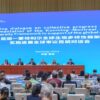
Ahead of COP17, UN Biodiversity Chief Urges Urgent Realignment of Finance with Nature Goals
The world may have enough money to protect nature. The bigger problem, according to the head of the UN Convention on Biological Diversity (CBD), is that too much of it is still being spent on activities that destroy it.
ETHIOPIA: ‘Reporting on Abuses Shouldn’t Be Treated as a Threat to National Interest’
CIVICUS discusses renewed conflict and a growing crackdown on independent media in Ethiopia with Yonas Kedir, Editor-in-Chief of the independent news outlet Addis Standard, who was recently abducted and detained by government forces.
Bangladesh Must Face Its Quiet Crisis of Internal Displacement
Bangladesh is rightly praised for saving lives during cyclones and floods. Early warning systems, cyclone shelters and community mobilisation have turned once-catastrophic disasters into emergencies in which evacuation is often possible. But behind that success lies a quieter national failure: millions of people are being uprooted inside the country, often more than once, without a clear path back to secure homes, land or livelihoods.
African Farmers Demand Affordable Finance as Governments Fall Short on Funding
Agriculture remains underfunded in Africa as governments struggle to deliver on decades-old promises to dedicate 10% of national income to agriculture.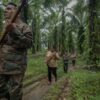
Killing of Environmental Defenders Reflects Power Struggle Over World’s Resources
At least 124 land and environmental defenders were killed around the world in 2025 while protecting forests, rivers, farmland and Indigenous territories, according to a new report by Global Witness that warns violence against activists remains widespread even as recorded killings have declined from previous years.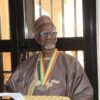
One Man’s Quest to End Female Genital Mutilation (FGM) in Mali
In Mali, an estimated nine out of ten women and girls have undergone female genital mutilation (FGM). And for years, Sidi Haidara, a father and recognized leader in his community, believed the practice was simply part of life.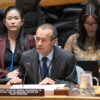
Renewed Hostilities In Yemen Inflame Displacement and Regional Risks
In recent days, the humanitarian situation in Yemen has deteriorated sharply following a new escalation of hostilities between the Iran-backed Houthi rebels and the Saudi-backed Presidential Leadership Council (PLC). This follows four years of relative stability, marking the most severe resurgence of violence since the collapse of the United Nations (UN)-mediated ceasefire in October 2022.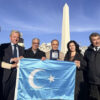
Transnational Repression: A World Without Refuge
On 24 August, I took part in a human rights conference in Buenos Aires, Argentina. Days before it opened, the city legislature cancelled the intended venue after the Chinese ambassador complained to the Argentine government about the participation of prominent Uyghur human rights defenders, including Dolkun Isa, an activist exiled in Germany. Beijing has waged a campaign of mass detention and forced assimilation against the mostly Muslim Uyghur population for years.
September 11 and the End of the American Dream
The Day That Changed Everything
On 11 September 2001 I was in New York, on one of my frequent visits to the United Nations, to which I was tied by a consultancy contract. That morning I woke up late, around eleven, sleeping off the jet lag of the flight from Italy. I was staying at the Hyatt Park, today the Millennium. A hotel a few metres from the Glass Palace, built to serve the world of the United Nations.
Will the General Assembly Continue to be Subservient to the P-5 Refusing to Challenge the Nominee for UN Chief?
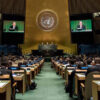
As the race for the election of a new Secretary-General (UNSG) gathers momentum, the spotlight is on the 193-member General Assembly, the highest policy making body at the United Nations, which has refused to assert itself and continues to play a subservient role in the elections of UNSGs.
Global Survey Finds Deep Crisis of Trust as Majority Say Economic System Favours the Rich
An international survey released by Earth4All has found a growing crisis of trust in governments, widespread anger over inequality, and strong public support for major economic reforms, suggesting that many people across the world believe current political and economic systems are failing to serve ordinary citizens.
A Spectre is Haunting Europe — the Spectre of Ultra-Nationalism
During summer months there is a certain news drought. Nevertheless, this year social media has been crowded with news from wars in the Middle East and Ukraine, while customary tales about grisly murders have not been neglected. In Sweden it is election year and summer reporting has been supplemented by a debate about “hate speech against ethnic groups”. If individual tragedies connected with murders upset people, many seem to be indifferent to the fact that entire population groups are targeted by politicians. Swedish social media is overloaded with outcries about “Muslim” immigration and concerns about Sweden becoming “Islamized” and in danger of being transformed into a new Afghanistan.
Investment in Irrigation Systems Is Vital in Preparing for the Next Climate Shock
When the African continent experiences erratic rains, crops fail, leaving millions of people facing hunger.
International Trade Theory Not Developmental
Most free trade advocates falsely claim that comparative advantage ensures developmental gains from trade liberalisation. Mainstream trade theory does not promise that partial trade liberalisation guarantees optimal international specialisation.« Previous Page — Next Page »





The Week with IPS

NEXT STOP - SDGs
Tracking global progress towards a sustainable world
Tracking global progress towards a sustainable world
