Languages
Saturday, October 10, 2026



News and Views from the Global South
Brazil
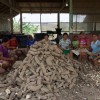
Soy, an Exotic Fruit in Brazil’s Amazon Jungle
In the northern Brazilian state of Pará, the construction of a port terminal for shipping soy out of the Amazon region has displaced thousands of small farmers from their land, which is now dedicated to monoculture.
Blackmail Politics Is the Name of the Game in Brazil
The aim to impeach President Dilma Rousseff is no longer merely a threat that was poisoning politics in Brazil. Now it may be a traumatic battle, but in the light of day.
Did Argentina’s Elections Mark Start of Shift to the Right in South America?
Different degrees of economic problems are a common denominator in South American countries where governments that identify as leftist may start to fall, in a shift that began in Argentina and could continue among its neighbours to the north.
Not Yet Curtains for BRICs
With Goldman Sachs folding up its haemorrhaging BRIC fund, is it curtains for the acronym that defined the investment bankers’ fancy for emerging markets? It certainly appears so after China’s stock market crash and a fast slowing economy triggered fears that the dragon will set off the next global recession.
School Meals Bolster Family Farming in Brazil
“That law should have existed since the end of slavery, which threw slaves into the street without offering them adequate conditions for working and producing, turning them into semi-slaves,” said Brazilian farmer Idevan Correa.
Brazil’s Megaprojects, a Short-lived Dream
Working as a musician in a military band is the dream of 21-year-old Jackson Coutinho, since hopes that a petrochemical complex would drive the industrialisation of this Brazilian city near Rio de Janeiro have gone up in smoke.
Itaborai, a City of White Elephants and Empty Offices
Itaboraí still recalls its origins as a sprawling city that sprang up along a highway, not far from Rio de Janeiro. But a few years ago big modern buildings began to sprout all over this city in southeast Brazil, whose offices and shops are almost all empty today.
Brazil’s Expanded Climate Targets Frustrate Environmentalists
Brazil’s greenhouse gas emissions reduction programme, hailed as bold, has nevertheless left environmentalists frustrated at its lack of ambition in key aspects.
Electoral Revolution in Brazil Aimed at Neutralising Corporate Influence
From now on, elections in Brazil will be more democratic, without corporate interference, which had become decisive and corruptive. A Sep. 17 Supreme Court ruling declared unconstitutional articles of the elections act that allow corporate donations to election campaigns.
Crisis in Brazil Hampers Infrastructure under Construction
Besides suffering from macroeconomic imbalances, like a drop in GDP, a high inflation rate and a large public deficit, Brazil is experiencing heavy losses as many oil industry and logistical works grind to a halt.Italy Joins Internet Rights ‘Club’
Italy has finally joined the restricted club of states in the world that have chosen the constitutional path for regulating the Internet – or at least has taken a significant step in that direction – by adopting a Declaration of Internet Rights.
Local Development, the Key to Legitimising Amazon Hydropower Dams
In the case of the Belo Monte hydroelectric dam in Brazil, the projects aimed at mitigating the social impacts have been delayed. But in other cases, infrastructure such as hospitals and water and sewage pipes could improve the image of the hydropower plants on Brazil’s Amazon rainforest rivers, turning them into a factor of effective local development.
Opinion: Brazil Poised on Verge of Unstable Equilibrium
As the political situation in Brazil appears to be reaching a state of unstable equilibrium, or more bluntly, as it is transformed from instability to impasse, the economy continues to deteriorate.
Presalt Oil Drives Technological Development in Brazil
The extraction of deepwater oil, the most abundant kind in Brazil, is costly but foments technological and industrial development, requiring increasingly complex production equipment and techniques.
Money, Knowledge and Controversy in Brazil’s Development Bank
Brazil’s rush to build hydroelectric dams, refineries, railways, ports and other megaprojects since the last decade, not only at home but in other countries as well, has been fueled by the sheer volume of financing from its development bank.
Belo Monte Dam Marks a Before and After for Energy Projects in Brazil
Paulo de Oliveira drives a taxi in the northern Brazilian city of Altamira, but only when he is out of work in what he considers his true profession: operator of heavy vehicles like trucks, mixers or tractor loaders.
Opinion: A BRICS Bank to Challenge the Bretton Woods System?
The formal opening of the BRICS Bank in Shanghai on Jul. 21 following the seventh summit of the world’s five leading emerging economies held recently in the Russian city of Ufa, demonstrates the speed with which an alternative global financial architecture is emerging.
Indigenous People in Brazil’s Amazon – Crushed by the Belo Monte Dam?
Ethnocide, the new accusation leveled against the Belo Monte hydroelectric dam, brings to light deeper underlying aspects of the conflicts and controversies unleashed by megaprojects in Brazil’s Amazon rainforest.
Fishing Families Left High and Dry by Amazon Dams
Small-scale fisherpersons were among the first forgotten victims of mega construction projects like the Belo Monte hydroelectric dam on the Xingú River in the Brazilian Amazon.
Sustainable Use of Biodiversity Could Fill Gap When Belo Monte Dam Is Finished
Some argue that the sustainable use of biodiversity is the best alternative for local development in the area surrounding the enormous Belo Monte hydroelectric dam, now that the construction project is entering its final phase on the Xingú River in Brazil’s Amazon jungle.
Opinion: BRICS for Building a New World Order?
As the leaders of the BRICS five meet in the Russian city of Ufa for their annual summit Jul. 8–10, their agenda is likely to be dominated by economic and security concerns, triggered by the continuing economic crisis in the European Union and the security situation in the Middle East.« Previous Page — Next Page »





The Week with IPS

NEXT STOP - SDGs
Tracking global progress towards a sustainable world
Tracking global progress towards a sustainable world
