Languages
Friday, October 23, 2026



News and Views from the Global South
Children Under Siege
CHILE: Mixed Reception for Indigenous Protection Code
Although it is still in the process of being drafted, a "code of responsible conduct" promoted by the Chilean government to regulate public and private investment in indigenous areas has already drawn resistance.HAITI: Recruiting Far and Wide for Great Young Minds
When Garry Delice arrives at St. Joseph, a public high school in rural Haiti, something’s amiss. The cinderblock building is full of students, but no teacher can be found. Young men and women are finishing exams, and the staff has already left for the day.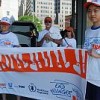
DEVELOPMENT: Thousands March as Food Crisis Deepens
An estimated 300,000 people across the globe hit the streets Sunday to support the World Food Programme (WFP) and its mission to feed hungry schoolchildren and battle malnutrition worldwide.ECONOMY-US: One in Five Children Sinking Into Poverty
U.S. children’s quality of life is expected to decline through 2010 due to the impacts of the financial crisis, said a new report by the Foundation for Child Development (FDC), released on Wednesday.HEALTH-BOLIVIA: Subsidy to Cut Maternal-Child Mortality
A new Bolivian government programme will provide special payments to pregnant women and mothers with children up to the age of two, with the aim of cutting the country’s maternal and infant mortality rates.RIGHTS-BURKINA FASO: Five Million To Get Precious Documents
Nearly 5.5 million people - mostly women and children - are to receive birth certificates in a country-wide exercise over the next 12 months. According to Burkina Faso's latest census, conducted in 2006, the rate of non-registration is particularly high amongst women and children, of whom three million (60 percent being girls) are not on the public registry.EGYPT: Fears Rise Over Spate of Missing Children
A surge in reports of missing children has set off alarm across the Egyptian countryside. The fears are being fed both by reports and rumour.MADAGASCAR: Education Hampered by Lack of Clean Water
Because most schools in Madagascar have no access to running water, lack of hygiene and sanitation have become a major problem for children on the Southern African island. Many pupils fall sick regularly, are unable to attend classes and hence don’t perform well at school.HEALTH: Killer Diarrheal Diseases Eclipsed on Donor Agendas
Interest in reducing the harm caused by diarrheal diseases has waned among the global health and aid communities, said two new reports released Tuesday in Washington.
MEXICO: Nation’s Future Hinges on Near-Empty Science Classrooms
Many solutions for sustainable development in Mexico lie in the scientific and technological training of its younger generations, say academics. But students in this country, where everyone wants to be a doctor or accountant, are ignoring those fields.AUSTRALIA: Climate Change – Further Threat to Aboriginals
Climate change will further marginalise Australia’s Aboriginal communities, forcing them out of their traditional lands, destroying their culture and significantly affecting their access to water resources, indigenous rights advocates warn.
RIGHTS-SIERRA LEONE: Child Miners: Legacy of Conflict
Since the end of the civil war seven years ago, the Sierra Leonean authorities and child welfare agencies have been battling to remove children from the diamond-mining fields, a trend which began at the height of the conflict, when children were abducted by rebel forces and coerced to work in the mines.POLITICS: Security Council Silent on Burma’s Child Victims
The U.N. Security Council, which has remained virtually paralysed on Palestine because of strong Western support for Israel, is considered equally ineffective on Burma (Myanmar) because of Chinese and Russian backing for the military junta in that politically troubled Southeast Asian nation.BRAZIL: Guarani Suffering Breakdown of Culture, Suicides
One young indigenous person commits suicide every 10 days on average in the centre-west Brazilian state of Mato Grosso do Sul. Blamed on the lack of land and opportunities, the proportions of this tragedy have drawn the attention of local and foreign experts.
HEALTH: Chernobyl Kids Keep Arriving in Cuba
Thousands of kilometres from Ukraine, where the worst nuclear accident in history occurred 23 years ago, the sun and fresh air of a Cuban beach provide therapy for Ukrainian children, who continue to be born with problems stemming from the disaster.
HEALTH-MEXICO: Training Professional Village Midwives
Mexican communications specialist Marla Vargas had her baby in the bathtub at home, attended by a midwife, because, she says, "I wanted a different experience, and a better way for my child to come into the world."
ARGENTINA: Hundreds of Thousands of Teenage Girls "in Limbo"
Cintia, 17, already has three children and is trying to go back to school, which she dropped out of several times because of the births and when her kids were sick. But the principal of her high school is not optimistic.LESOTHO: Help At Hand for Orphans
The Lesotho government - battling against the challenges presented by an ever-growing population of orphans whose parents have succumbed to the AIDS pandemic - has embarked on an ambitious programme aimed at alleviating the suffering of these vulnerable children, in partnership with the European Union and UNICEF.RIGHTS: Recruiters of Child Soldiers Defy U.N. Pressure
The United Nations remains virtually helpless as an increasing number of armed groups - described as "non-state actors" - continue to exploit, abuse and deliberately harm children in battle zones in Asia, Africa and the Middle East.HEALTH-ARGENTINA: Half of Children at Risk for Lack of Clean Water
More than half of all children in Argentina are at risk of illness because of lack of access to clean, running water, while a large proportion are also threatened by polluting industries and the use of pesticides in agriculture, according to a study by the ombudsman’s office.
TECHNOLOGY-BRAZIL: E-Waste Can Produce Marvels
Using pieces from all sorts of useless equipment, students at the Computer Recovery Centre in the southern Brazilian city of Porto Alegre have put 1,700 computers into operation in three years.« Previous Page — Next Page »





The Week with IPS

NEXT STOP - SDGs
Tracking global progress towards a sustainable world
Tracking global progress towards a sustainable world
