Languages
Sunday, October 25, 2026



News and Views from the Global South
Children Under Siege
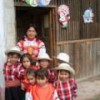
PERU: Coffee Growers Cultivate Education
"Without coffee there is no future," say coffee growers in the Selva Alta, in the central Peruvian region of Junín, where they are setting up schools near their farms so that their children don't abandon their studies.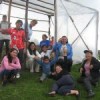
COLOMBIA: New Meaning in Life for Young Shantytown Dwellers
After three of Viviana’s friends were killed, and one of them dismembered, she began to think things over, and decided to join the Legión del Afecto project in Colombia, leaving six years of gang life behind her.BRAZIL: Transformation Through Art and Music
They call it an orchestra, but this atypical all-percussion group is far from featuring the range of musicians found in a conventional ensemble. Which does not mean that the music they make is not rich and varied, as the young amateur musicians produce an amazing array of sounds.VENEZUELA: “Children Can’t Even Play on Their Front Stoops”
Johana Bracamonte never had a chance to learn to read. She was just five years old the morning her uncle took her to kindergarten and they were both shot by thieves who stole his motorbike, in 23 de Enero, a shantytown on the west side of the Venezuelan capital.LATIN AMERICA: Poverty Rates Likely to Rise
Two million people in Latin America and the Caribbean were lifted out of poverty in 2008, but three million poor people fell into extreme poverty, according to a new report by the regional United Nations agency ECLAC.
ENVIRONMENT-LATIN AMERICA: Personal Crusades for Nature
Elba Muñoz rescues and cares for mistreated monkeys in Chile; Trinidad Vela revived a dry riverbed and saved her Peruvian community from drought; Rubén Pablos has spent 12 years restoring the native Patagonian forest in southern Argentina; and Angela Corvea is cultivating awareness about the environment in Cuba.RIGHTS-MEXICO: Children Paid to Strip at Rural Fair
Four indigenous boys took their clothes off for money in front of a large crowd at a rodeo, who laughed and made fun of their genitals. The mayor of the farming town in the Mexican state of Puebla where the incident occurred was in the audience.Q&A: "I Don’t Believe a 12-Year-Old Was Born to Kill"
A group of around 20 people settle into their seats in a small conference room in a hotel in the Salvadoran capital. They are here to watch "La Vida Loca", a 90-minute documentary about the Pandilla 18 youth gang, directed and co-produced by French-Spanish filmmaker Christian Poveda.FILM-BRAZIL: “An Artist Only Bows His Head to Thank the Audience”
The first three times he saw the film he could not watch it through to the end; he was so overcome by emotion he burst into tears. The next five times he did manage to see the whole movie, but tears were constantly streaming down his cheeks. Brazilian Maestro Mozart Vieira was "extraordinarily" moved by seeing his own story on screen.Q&A: “Young People Are Invisible Until They Become a Problem”
Latin American and Caribbean countries with specific laws and policies on young people must now move on to concrete actions, international consultant Dina Krauskopf told IPS in this interview.BRAZIL: War Against Child Pornography on the Internet
The Brazilian government has announced the creation of a web site to centralise the reception of complaints about child pornography on the Internet, as a further step towards fighting the phenomenon which is growing globally, alongside child trafficking and sex tourism.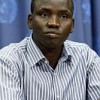
RIGHTS: Former Child Soldiers Work to Save Those Left Behind
"An AK-47 is not made for a kid. It is not made for a human being, let alone a kid," said Kon Kelei, a former child soldier from Sudan. Kelei was taken to a camp when he was four or five years old - he is not precisely sure - and trained to fight in battle.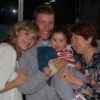
RIGHTS-ARGENTINA: Children of the ‘Disappeared’ Tell Their Stories
For the first time, the life stories of children of people forcibly disappeared by Argentina’s 1976-1983 dictatorship have been compiled in a book that sheds light on their experiences.
RELIGION-INDONESIA: ''My Roommate, the Terrorist''
For one Indonesian journalist, the acts of terror unleashed on the resort island of Bali in October 2002, that killed 202 people, were more than a major story to cover.
DR CONGO: Poverty Pushes Children Onto the Streets
Despite being Africa's treasure chest in terms of natural resources, the Democratic Republic of Congo (DRC) struggles with widespread poverty.RIGHTS: How Child Friendly Is Africa
Forget all those Gross Domestic Product rankings for a moment. Think, as a new survey in Africa sets out, of ranking countries by how friendly they are to children.
HEALTH: Haj Pilgrims Get Polio Drops in Int'l Eradication Plan
As the first batches of Haj pilgrims from Pakistan arrived at Saudi Arabia’s Jeddah airport for the current pilgrimage season they were, regardless of age, administered oral polio vaccine (OPV).
SOUTH AFRICA: Through The Eyes of Children
"I didn’t know that girls can play soccer. I thought it was a sport only for boys," says Thulile Khanyile. But after a photography and writing project changed her perception of gender roles, the 14-year-old helped start a girl’s soccer team at her high school in Nkandla, a rural area in the heart of Zululand.EDUCATION-BRAZIL: Pockets of Illiteracy, Despite Strides
Staying illiterate even after going to school is the plight of thousands of boys and girls in Brazil and is proof of the shortfalls of the country’s educational system, in particular in poverty-ridden areas. But the tide is beginning to turn, as can be observed among the country’s youngest children.RIGHTS-ARGENTINA: Adolescents in No Man’s Land
The recent murder of a man allegedly at the hands of teenagers has sparked a heated debate in Argentina between advocates of lowering the age of criminal responsibility and those in favour of a juvenile justice system in line with the United Nations Convention on the Rights of the Child.POLITICS: Ibero-American Summit Marred by Absences
Several heads of state and government have sent lower ranking officials to represent them at the 18th Ibero-American Summit in the Salvadoran capital, while others arrived late and will stay only for a few hours.« Previous Page — Next Page »





The Week with IPS

NEXT STOP - SDGs
Tracking global progress towards a sustainable world
Tracking global progress towards a sustainable world
