Languages
Wednesday, September 9, 2026



News and Views from the Global South
Children Under Siege
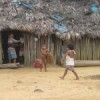
VENEZUELA: Bari People Left Without Land by Oil, Cattle, Coal
For 900 years, Barí indigenous hunters roamed freely throughout a vast region in western Venezuela. "Now they want to sentence us to die by locking us up in this corral, watching the white man get rich by destroying the land that used to be ours," says schoolteacher Conrado Akambio.RIGHTS: A Fifth of EU Children in Poverty
Minimum levels of expenditure on addressing the causes of child poverty should be introduced across the European Union, according to a parliamentarian tasked with analysing the problem.EDUCATION-SOUTH AFRICA: Making the Blackboard Jungle Less So
Violence in South African schools has claimed the lives of a number of children in recent years, while many more have been hospitalised with injuries.
Q&A: "A World 'Unfit' for 2.2 Billion Children"
As the United Nations plans to commemorate the 20th anniversary of its landmark Convention on the Rights of the Child next year, the world's 2.2 billion children continue to suffer the consequences of growing poverty, rising illiteracy, increasing sexual abuse and widespread military conscription in conflicts worldwide.KENYA: Free Secondary Schooling Policy Faces Testing Times
When Kenya's government introduced free primary schooling in 2003, vast numbers of additional pupils were brought into the education system overnight, putting it on a steep learning curve.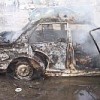
POLITICS: U.N. Remains Wary of Debate on Suicide Bombings
When the Security Council adopted a resolution last week extending the U.N.'s mandate in Afghanistan through March 2009, it expressed its "strong concern" over a growing new phenomenon in the politically-troubled South Asian nation: the increased use of children as suicide bombers.LEBANON: Children Learn That Religion Excludes
From East to West, the Arab region is afflicted with mounting religious divides that are increasingly affecting the well-being of the region's children. Lebanon's constitution, which splits power equally between Muslims and Christians, is no exception to this growing chasm.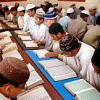
EDUCATION-PAKISTAN: Religious Schools – Boon or Bane?
Mehboob Illahi, 15, cannot wait to leave Pakistan and the Jamia Binoria, the largest madrassa (religious school) in Karachi, forever.THAILAND: Islamic Teachers Blamed For Violent Separatism
As Thailand’s new government searches for fresh options to quell an escalating insurgency in the country’s south, its stance towards the region’s pondoks (Islamic schools), will be keenly watched.RIGHTS-ANGOLA: Free Rein for Human Traffickers
There is little awareness on the problem of trafficking in persons, mainly women and children, in Angola, and no laws for cracking down on the growing phenomenon.RIGHTS-BURMA: Back to Child Recruitments
Till last September, the International Labour Organisation (ILO) office in military-ruled Burma had received few complaints about children being forced to join the army. But that is no longer the case.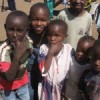
KENYA: Education Amidst Displacement
With the new academic year in Kenya underway, teacher Moses Simiyu Kalenda is once again instructing children - just not in the place where he expected to be doing so.
PARAGUAY: Fighting for Survival in a Green Desert Wonderland
"The first red stains on Nicanor’s white shirt" reads the inscription on a memorial niche at the side of the road to Ypecuá, 230 kilometres from Asunción, where peasant farmers are fighting for their land and against the diseases caused by agrochemicals used on nearby soybean plantations.IRAQ: Childhood Is Dying
Iraq's children have been more gravely affected by the U.S. occupation than any other segment of the population.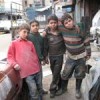
LEBANON: Children Get to Work Early
Walid is a wide-eyed boy of 10. His frail figure, of the kind common in such poverty-stricken areas, seems smaller than for a child his age. His hands are covered in dirt and paint. Here, in Ard Jalloul (the land of Jalloul), located in the populous Tarik Jdideh neighbourhood of Beirut, he works as a painter from 8am to 6pm for 7 dollars a day.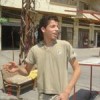
LEBANON: Peace Brings No Joy to Children
Over the years, Lebanese children have faced war and bombings enough to make violence a staple in their lives. With the situation becoming increasingly volatile as Lebanese factions are gripped by a lasting and deadly discord, this vulnerable population is left at greater risk.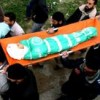
MIDEAST: Israel Kills Some More Children
Tamer was nine, and no child soldier. He did not live in the area from where home-made rockets are launched into Israeli territory. The day he was killed, he was at least two kilometres from the place Israeli troops had entered Gaza, and met with return fire by Palestinian resistance.
LEBANON: Children Look At The Brighter Picture
On the outskirts of Beirut, narrow alleyways cut through the Chatila Palestinian refugee camp. A maze of electricity cables connect one concrete block and another. Sewage pours continuously through a small grey construction, filling the street with nauseating stench.
Q&A: As Civil Wars End, Child Soldiers Decline
The number of child soldiers, who are forcibly pressed into military service in conflicts worldwide, has declined: from about 300,000 in 1997 to an estimated 250,000 now, says U.N. Under-Secretary-General Radhika Coomaraswamy.HEALTH: Most Malnourished Children Aided Too Late
Prevention may be the best medicine of all when it comes to tackling childhood malnutrition, according to a study published this week in the leading medical journal The Lancet.HEALTH-ARGENTINA: Juicy Hamburgers Threaten Young Kidneys
Famed as one of the world’s leading beef producers, Argentina holds the unfortunate record for the highest incidence of Hemolytic Uremic Syndrome (HUS), an infectious disease caused by bacteria present in incompletely cooked foods, such as hamburgers.« Previous Page — Next Page »


The Week with IPS

NEXT STOP - SDGs
Tracking global progress towards a sustainable world
Tracking global progress towards a sustainable world
