Languages
Saturday, September 26, 2026



News and Views from the Global South
Colombia
Hugo Chavez and Colombia’s Peace
Colombia has suffered an internal armed conflict for so many decades that it almost amounts to a "forgotten crisis" for external donors. But the president of neighbouring Venezuela, Hugo Chavez, is well aware of the conflict, and understands that it destabilises Latin America, where centre-left governments proliferate.
Peace in Colombia?
People in the streets and squares of the Colombian capital are breathing easier. The air is fresh with hope, in contrast to the former leaden and fearful atmosphere of eternal violence and interminable conflict.Assault on Colombian Trade Unions Continues Unabated
Two months after a free-trade agreement between the United States and Colombia went into effect, workers and activists are warning that U.S.-stipulated labour reforms have not been fully implemented and have yet to result in promised improvements in the lives of workers.
Colombian Informant Exposes Destabilisation Plot
The same week that a bomb attack targeted Colombia's former interior and justice minister, Fernando Londoño, a Colombian national came forward and confessed that similar attacks were being planned against former senator Piedad Córdoba and current Bogota mayor Gustavo Petro.
Colombia Tightening Laws Against Acid Attacks
Nobody will ever know if Jhon Jairo Echenique decided to take his own life out of remorse, fear or mental illness. But the suicide followed his arrest for the stabbing and burning with acid of his 19-year-old former girlfriend Angélica Gutiérrez.Colombia and Venezuela – Joining Forces
When 12 Colombian soldiers were killed by FARC insurgents a stone's throw away from the northern border with Venezuela, the consequences included military cooperation that reinforces the political, diplomatic and trade-related links that have developed over the past two years between Colombian President Juan Manuel Santos and Venezuelan President Hugo Chávez.
COLOMBIA: Amnesty Denounces Impunity for Human Rights Crimes
There have been "few tangible improvements" in human rights in Colombia, says Amnesty International’s new report, which also points to legal loopholes that ensure impunity, as well as government attacks on court rulings.
COLOMBIA-U.S.: Trade Deal “Throws Country into Jaws of Multinationals,” Critics Say
The entry into force of Colombia’s free trade agreement with the United States was met by student protests and opposition from a segment of the business community, small farmers, and trade unionists.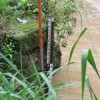
Colombian River Basin Passes the Test of El Niño and La Niña
Patricia Gómez, an engineer, is leading a training workshop for a group of 11 men at the fire station in Neiva, the capital of the department of Huila in southwest Colombia.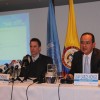
Illegal Wiretapping Continues in Colombia, U.N. Says
Illegal spying on human rights activists and journalists is still happening in Colombia, according to a new report by the Office of the United Nations High Commissioner for Human Rights.Community Radios in Colombia Tune In for Peace
Cleaning up a stream that used to be a garbage dump and restocking it with fish, or helping demobilised far-right paramilitaries reintegrate into society by returning to school, are some of the early outcomes of a project involving community radio stations in a remote area of northwest Colombia.COLOMBIA: Of Blackmail and Fake Guerrillas
After Colombia's attorney general announced that she was bringing charges against a former government peace commissioner for his role in a staged surrender of a fake guerrilla unit, he called for an investigation of her husband – which she promptly ordered.
Q&A: “Opposition to Restitution of Land Not Surprising”
"I find it extremely painful to see that there are people in Colombia trying once again to deceive" people displaced from their land, just when "they have hope of being recognised and compensated," said Swedish diplomat Anders Kompass on a visit to this country to support rural victims of the civil war.
RIGHTS-COLOMBIA: Int’l Mission Says Dire Situation Getting Worse
The human rights situation in Colombia is extremely serious, and getting worse, reported an International Verification Mission made up of 40 delegates from 15 countries who visited the country this week.
COLOMBIA: Worse than Fiction
A teenage love story is the fictional plot device in a new Colombian film, Silence in Paradise, about the all-too-real phenomenon of the "false positives" – the euphemism used to describe army killings of young civilians passed off as guerrilla casualties.COLOMBIA: Perils and Lessons of U.S. Aid
A new report has highlighted a connection - and not always a positive one - between U.S. foreign aid to Colombia and Mexico and violence and crime rates in those countries, pointing out that U.S. policy toward Mexico deserves careful application of lessons learned from the aid the U.S. has supplied Colombia since 2000.
COLOMBIA: Student Protesters Demand Quality – and Equality
The "occupation" of Bogotá by students, backed by parents and professors as well as social and cultural sectors, is continuing even after the Colombian government offered to withdraw its controversial bill to reform education if the protests were called off.COLOMBIA: Election Campaign Marred by Violence
"Political power will be fought for metre by metre in the Oct. 30 local and regional elections in Colombia, because this is a country imbued with violence, with different armies disputing different parts of the territory," said Alejandra Barrios, director of the election observation mission (MOE).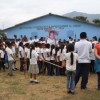
COLOMBIA: When Humanitarian Law Is Just Rhetoric
The constant violations of international humanitarian law in Colombia claimed the life of an 11-year-old indigenous girl a month ago in the mountains of the southwest province of Cauca.
COLOMBIA: “I Was Ready for Anything – Except for Mourning a Daughter”
In the wooden, sheet-metal roofed house, the exact spot where Vanesa Coicué, an 11-year-old Nasa Indian girl, fell is marked by white and yellow chrysanthemums in a plastic soda bottle, along with a lit candle and an orange tree seedling.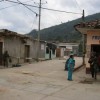
COLOMBIA: Nasa Indians: “The Armed Groups Won’t Let Us Live in Peace”
Indigenous children in the southwestern Colombian province of Cauca do not know what peace is. For the government forces and the leftwing guerrillas, the territory of the Nasa people is a strategic battleground.« Previous Page — Next Page »


The Week with IPS

NEXT STOP - SDGs
Tracking global progress towards a sustainable world
Tracking global progress towards a sustainable world
