Languages
Thursday, October 22, 2026



News and Views from the Global South
Culture
CHILE: Preserving the Kaweshkar Language – In the Nick of Time
Sound files containing recordings of spoken Kaweshkar - a nearly extinct indigenous language of southern Chile – have been put together thanks to the work of ethnolinguist Óscar Aguilera and anthropologist José Tonko, and donated to national and foreign institutions with the aim of preserving the culture of one of Chile’s nine native groups.VIETNAM: Anti-Smoking Drive Fails to Curb Male Tobacco Abuse
At a ‘tra da’ (iced tea) stand in Hanoi’s Truc Bach area, men in baggy white singlets sit on low plastic stools drinking strong green tea poured from a chipped porcelain tea pot.
DEVELOPMENT: ‘Gender Is No Distraction in Climate Change Talks’
As the countdown to the Copenhagen Climate Change Summit draws to a close, gender and climate change advocates are doubling their efforts to make sure that 23 gender-related paragraphs in the negotiating text will make it to the new treaty that will be hammered out in December.DEVELOPMENT: Gender Advocates Keep a Close Eye on Climate Talks
After nine months of a rollercoaster ride pushing for a gender perspective on climate change, advocates are finally beginning to reap the fruits of their labour.RIGHTS-JAPAN: Women Talk: ‘We Want Greater Gender Equality’
"I hope to see a society where women can comfortably work and raise a family ... at the same time."POLITICS-CHINA: Coming Soon: A Stage-Managed 60th Anniversary Bash
When it comes to pageantry, China’s communist leaders leave little to chance. This October, which marks six decades of their rule over the Middle Kingdom, mass events and grand spectacles would have needed little choreography to elicit a joyous mood.ARGENTINA: New Voice for Sexual Minorities
A monthly magazine published by an Argentine umbrella group of some thirty organisations of lesbians, gays, bisexuals and trans (LGBTs) seeks to become a major communications channel for the community and an instrument for disseminating the actions that sexual minorities undertake to defend their rights.LATIN AMERICA: Ensuring Democratisation of Digital Broadcasting
Just as they did with analogue television, the countries of Latin America have opted for different digital broadcasting standards. But more than this technological diversity, what concerns social organisations is the absence of policies and regulatory frameworks to ensure a true democratisation of this means of communication.POLITICS-BURMA: Two Years After, Monks Remain Closely Watched
"I'm being watched all the time. I am considered an organiser. Between noon and 2 p.m., I am allowed to go out of the monastery. But then I'm followed," Buddhist monk U Manita said. "I'm prepared to march again when the opportunity arises. We don't want this junta. And that's what everyone at my monastery thinks as well."CUBA: Peace Concert Bridges Borders and Differences
Although it was the target of threats from radical Cuban exiles and the focus of controversy and opinion polls from the moment it was announced, Colombian musician Juanes' idea of staging his "Peace without Borders" concert in Cuba proved a success at promoting understanding, in spite of differences.MUSIC: Afro-Brazilians Priced Out of Back2Black Concert
On stage, singer-songwriter Gilberto Gil highlighted Brazil's "genetic and cultural" connection to "Mother Africa," to applause from a predominantly light-skinned audience at a concert that black people generally could not afford - symbolic of the country's "veiled racism" at an international festival organised to combat it.RUSSIA: The Language of Influence Weakens
Nearly all of the former Soviet republics have adopted native languages that were suppressed during the communist era at the expense of Russian. This is affecting Russia's influence over the commonwealth of independent states.JAPAN: New Ruling Party Poised to Lift Foreign Press Restrictions
The newly elected Democratic Party of Japan (DPJ) plans to open government organisations to the foreign press, party member Kuniko Tanioka revealed in an interview with IPS.
Q&A: Women Are Not Wallpaper
Something new is appearing on the Italian screen. About time, some may say.ARGENTINA: In Children’s Art, the Sky’s Not Always Blue
The young students taught by Maruca, who has been giving free painting classes to children in a town in Argentina's pampas for the last 50 years, have won more than 1,000 international prizes for their artwork.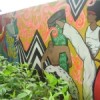
BRAZIL: Art is the Best Education
A broad range of projects in Brazil are using ballet and folk dances, classical and popular music, theatre, circus arts, capoeira - an Afro-Brazilian combination of dance and martial arts - fashion, visual arts and the audiovisual media to reach disadvantaged and at-risk children.RIGHTS-INDIA: Gujarat State on Trial for Extrajudicial Killings
When police in western Gujarat state claimed to have shot dead four members of the militant Lashkar-e-Toiba (Soldiers of God) group, otherwise known as LeT, including a 19-year-old girl student, on Jun. 15, 2004, in an ‘encounter,’ few believed them.
EDUCATION-BRAZIL: Public Schools Fend Off Invasion of New Ideas
Two non-governmental initiatives managed to penetrate the walls around public education in Brazil, temporarily assuming responsibility for the administration of schools where they left their seeds planted. But ultimately they discovered how resistant the school system is to innovation.MIDEAST: To Rap Is to Resist
In a backstreet open-air café in Gaza late at night, Khaled Harara from the Black Unit Band starts to talk about rap.SRI LANKA: Gov’t to Resettle Displaced Tamils Ahead of Monsoon
The Sri Lankan government, accused of keeping the refugees who fled fighting between the military and Tamil rebels against their will, is preparing to resettle these minority civilians ahead of next month’s monsoon period, officials from non-government agencies said Friday.
BRAZIL: Artistic Energy as Antidote to Exclusion
Putting the power of art to the test in extreme situations has become an unintended but necessary task for the Axé Project, a Brazilian non-governmental organisation (NGO) aimed at creating the conditions for street kids and other at-risk children to overcome educational, family and community exclusion.« Previous Page — Next Page »





The Week with IPS

NEXT STOP - SDGs
Tracking global progress towards a sustainable world
Tracking global progress towards a sustainable world
