Languages
Monday, November 2, 2026



News and Views from the Global South
Culture
MEDIA-LATIN AMERICA: Bringing Millennium Goals to Life
"Daniel San Juan Tolentino dug his own grave. A pile of earth fell on him and buried him." So begins the article on child labourers in Mexico that won first prize in the "Latin America and the Millennium Development Goals" Journalism Awards, organised by IPS and UNDP.ECUADOR: ‘21st Century Socialism’ Heats Up Constituent Assembly Campaign
Controversy in Ecuador over the meaning of so-called "21st century socialism" has heated up the campaign for Sunday’s elections to a constituent assembly that will rewrite the Ecuadorean constitution.BOOKS-US: G.I. Joe's Midlife Crisis
When George W. Bush made an instantly-famous speech last month that used the legacy of Vietnam to justify a continued U.S. presence in Iraq, it marked the completion of a rhetorical journey that few would have anticipated six years earlier.
RIGHTS-BURMA: Soldiers Fire Into Crowds, Regain Rangoon Streets
After turning its guns on the country’s protesting Buddhist monks and at least three monasteries in this city, Burma’s heavily armed soldiers had no hesitation firing at a group of civilian protesters chanting angry slogans near a high school in the Tamwe Township.
ENVIRONMENT-AFGHANISTAN: Goodbye Stinky, Dry Latrines
The pervasive smell of human ordure is warning enough that this is a city that badly needs a sanitation system.
RIGHTS-BURMA: Growing Calls for UN Action
Several countries on the United Nations Human Rights Council have begun making consultations to propose a special session to study the brutal crackdown this week by the military regime in Burma/Myanmar on young Buddhist monks and other demonstrators.ARGENTINA: Gay World Cup Tries to Level the Playing Field
For the first time in its 10-year championship, the gay football World Cup is being held in Latin America, with teams from more than 20 countries hosted by Argentina this week.DEATH PENALTY-JAPAN: Lone Voices in a Land of Hardening Views
For years after his brother was killed in January 1982, Masaharu Harada, 57, says he grappled not only with the trauma of personal loss but also with deep anger and hatred for the perpetrator.RELIGION: Episcopal Leaders Forestall Split over Gays
A compromise has been worked out over the consecration of gays in the Episcopal Church that may mend what has been nearly an unraveling of the third largest Christian community worldwide.RELIGION-PAKISTAN: Shia-Sunni Tensions Surface on Campus
Prayer time at Pakistan’s hallowed University of the Punjab (PU), normally a solemn averment of the brotherhood of the faithful, is nowadays marked by the deep Shia-Sunni schism that has riven the Muslim world.EGYPT: State Piles Pressure on Islamist Opposition
The government has stepped up a campaign against the Muslim Brotherhood with a new wave of arrests in August and the resumption of a military trial involving dozens of the group's leading members.
RIGHTS-BURMA: Protesting Monks Set Upon by Riot Police
In a desperate bid to cling on to power, Burma’s military junta stomped on the country’s rich Buddhist traditions on, of all days, a religious holiday, when people usually spend their time in prayer at the hundreds of pagodas that dot this country.
SPAIN: Rock Stars Collect 600,000 Signatures for Fair Trade with Africa
Several popular Spanish rock groups helped collect 600,000 signatures and delivered them to the government Tuesday in support of an international campaign calling for the Spanish government to modify its trade policy towards Africa and eliminate restrictions on imports from that region.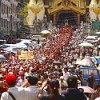
BURMA: Monks Lead Protests, Challenge Junta
Like they did for over a week, the monks who gathered at Burma’s most sacred site - the Shwedagon pagoda - performed a ritual on Tuesday under a blistering mid-day sun. They sat on the hallowed grounds of the majestic temple in Rangoon to pray for the people’s ‘victory'.
HEALTH-PAKISTAN: 'Organ Transplant Law Won't Stop Kidney Trade'
Few in Pakistan believe that a presidential ordinance, passed earlier this month, regulating organ transplantation will stop a flourishing but gruesome trade in human kidneys.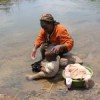
DEVELOPMENT-MALAWI: Lack of Running Water Puts Girls' Education at Risk
Rita Kalikokha of Dowa, a rural district in central Malawi, thinks about abandoning school every time she menstruates.CULTURE-CHINA: Inflation Bites Into Moon Cake Festival
The beloved national tradition of nibbling sweet pastry mooncakes and admiring the fullness of the harvest moon in mid-Autumn, or Moon Festival, has been hit by China’s runaway inflation, forcing vendors to opt for frugal variations of the rich treat.CORRUPTION-MALAYSIA: Video Clip Lands Top Judiciary in the Dock
An explosive, eight-minute video clip, that opposition lawmakers allege implicates a controversial lawyer and a top judge by showing them conspiring to 'fix' high profile cases and the promotion of judges, has shaken the country and sparked widespread demands for an investigation and overhaul of the judiciary.
ENVIRONMENT-SOUTH ASIA: Superstition May Yet Save Marine Reserve
India’s plans to dredge a navigable canal between the Gulf of Mannar (which separates India from Sri Lanka) in the face of strong economic and ecological objections have now run, of all things, into a religious obstacle.MOROCCO: Polls Largely Maintain the Status Quo for Women in Parliament
This month's parliamentary elections in Morocco have seen the number of women legislators decline from 35 to 34 in the 325 member body. With 30 of the female representatives elected under a quota, the results would seem to indicate that women face challenges in making their presence felt in the lower house - even though a proportional representation system is used for polls.POLITICS-US: Far Right Sells Iraq War to "Values Voters"
In the late 1960s and early 1970s, then U.S. President Richard Nixon appealed to the country's "Silent Majority" to oppose growing anti-Vietnam War sentiment in the United States.« Previous Page — Next Page »





The Week with IPS

NEXT STOP - SDGs
Tracking global progress towards a sustainable world
Tracking global progress towards a sustainable world
