Languages
Thursday, October 22, 2026



News and Views from the Global South
East Africa
HEALTH: Uganda’s Counterfeits Bill Threatens Access to Medicine
Uganda is considering an anti-counterfeit bill which analysts say will impair the country’s ability to import and export cheap but effective generic medicines. Activists fear that the bill, once enacted, will deny Ugandans access to safe, effective, quality and affordable generic medication which currently forms the bulk of Uganda’s medicine imports.AFRICA: Drug Subsidy Key to Anti-Malaria Effort
Just three percent of malaria-infected children in Africa get World Health Organisation-recommended drugs. One expert has equated this to a death sentence for sick children.
RIGHTS-UGANDA: Baganda Fight for Their Heritage
Specioza Nakabugo (63) sits on a mat under a mango tree on a well-mowed grass patch, her expression a blend of boredom and gloom.
UGANDA: Palm Project Accused of Environmental Destruction
It is a public-private partnership intended to reduce Uganda's dependence on imported vegetable oil while creating sustainable jobs and income for several thousand people. Its critics say it's destroying forests with no regard for environmental regulations.AGRICULTURE-KENYA: Finally, a Windfall for Tea Farmers
Despite the sweltering sun and with a heavy load on her back Mary Muthoni strides to the tea buying centre with joy and pride painted on her face. "This is a different year," she smiles, hurriedly greeting other women farmers at the centre. For them, the story is the same: blessings in times of calamity.ZAMBIA: Give Us Our Constitution
Pressure is mounting for a new constitution that is inclusive of all citizens' views as the ongoing delays by the body granted to draft it still continues.RIGHTS-UGANDA: Colliding with the Fourth Estate
Charles Odobo Bichachi, editor of the Independent Newspaper has in a span of a year, been summoned to the police several times accused of publishing seditious statements. And just last month, Bichachi fell into trouble again: this time over a cartoon.
KENYA : Practical Measures Needed on Teen Sexual Education
Kenyan teenagers are having sex. And they appear to have no clue how to go about it.
WATER-UGANDA: Reducing Run-off To Protect Lake Victoria
The Ggaba landing site on Lake Victoria is the nearest wholesale fish market to the Ugandan capital, Kampala. More than 6,000 people live and work in this fishing community.
UGANDA: Rebuilding Home and Hearth
Dusk gathers in the thickets of Palemy village, in the Gulu district of northern Uganda. Men, women, and children follow foot paths through the dark to the residence of Mzee Otto Yuvani.UGANDA: Lifting Silence on Menstruation to Keep Girls in School
More than half of Ugandan girls who enrol in grade one drop out before sitting for their primary school-leaving examinations.KENYA: AIDS Prevention Amongst Drug Users a Challenge
The United Nation Office on Drug and Crime (UNODC) claims that Kenya has more drug users than any other East African country. UNODC estimates there are 100,000 cocaine users, 200,000 using opiates like heroin and four million who smoke cannabis.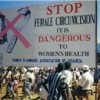
RIGHTS-UGANDA: Female Circumcision Still a Vote Winner
Over three decades ago a 14-year-old girl, her sister and a group of young teenagers from Bukwo headed to the River Amana for a ceremony that would change their lives forever.
AFRICA: Uneven Progress on Development Goals
The Millennium Goals cannot be achieved at the United Nations. The U.N. can create a platform for governments to make commitments but cannot force compliance by member states.UGANDA: The Media is Not Free
Every Saturday afternoon at a public house in the capital city, Lynne Anite, a journalism student at Makerere University, would join senior government officials, academics, and even business people to debate about current affairs.UGANDA: Wanted: New Messengers on Women’s Rights
Activists have spent decades trying to get new laws passed to secure the rights of Ugandan women in the private sphere. As a fresh set of gender-related laws comes before parliament, activists are this time seeking to enlist male legislators as partners in advocating their passage.Q&A: Women’s Empowerment: ‘Men Are Interested’
A trident of gender legislation will be debated in Uganda's parliament in November: the Marriage and Divorce Bill, the Domestic Violence Bill and the Female Genital Mutilation Bill.
HEALTH-AFRICA: If Men Were Dying En Masse…
Maternal mortality rates in Africa constitute a "monumental tragedy" that requires urgent attention by African governments, health experts say.HEALTH-KENYA: Affordable New Weapon Against Cervical Cancer
Faced with an increase in the number of cervical cancer cases, Kenya has adopted a simple, cheap yet effective visual inspection method of detection. Ideal for low resource settings, the test is offering reprieve to thousands of women who die annually from the disease.AFRICA: Youth Wars Cause Turmoil in Jonglei
There was no moon the night the armed men from the Murle tribe attacked the fishing village: it took place in complete darkness. Nyakong Both grabbed her two youngest boys and fled across the nearby river, as the men from the Murle tribe burnt down huts.
UGANDA: Business Wants to Put Brakes on New Common Market
The plans for a common market in the East African Community (EAC) are proceeding apace and should fall in place on Jan 1, 2010, the target date of implementation. But Uganda’s traders are concerned that they will be unable to compete with traders from their country’s larger neighbour Kenya when the new common market starts.« Previous Page — Next Page »





The Week with IPS

NEXT STOP - SDGs
Tracking global progress towards a sustainable world
Tracking global progress towards a sustainable world
