Languages
Tuesday, October 20, 2026



News and Views from the Global South
East Africa
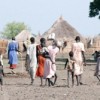
SOUTH SUDAN: Making of a Nation still Holding on to the Past
The five children of Mary Muwombi have grown up in the war of south Sudan. It was a harsh existence - living on the brink of death and eating whatever they could find just to survive.ZAMBIA: Justice Delayed Becoming Justice Denied
Harry Mubita was tired of his wretched condition in prison. He had been in Lusaka Central Prison for more than a year, and still there was no sign that his theft case would be heard.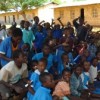
MALAWI: Women Fight Harmful Cultural Practices
An experience which Belita Simpokolwe went through in December last year remains deeply etched in her memory. "Sometimes I fail to concentrate in class when these things come back to my mind," laments 13-year-old Simpokolwe, a grade six pupil at Kawale Primary School, in the northern Malawi district of Chitipa.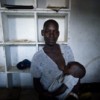
RIGHTS-TANZANIA: ‘I Feel Like Less of a Woman’
In the darkest corner of the room, under the clamour of twelve women’s voices, sits Ghati Chacha*, she can barely be heard. Her newborn suckles as she speaks softly about how she refused female circumcision.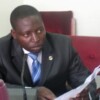
RIGHTS-UGANDA: Anti-homosexuality Bill Means ‘Targeted Killings’
Uganda will be going back to the days of the Idi Amin regime if it passes a Bill which will arrest or kill people for being gay or lesbian and for repeatedly engaging in homosexual sex, say rights activists.
UGANDA: Mob Justice Increases as Court Backlogs Escalate
Sam Kubo had gone to lease out his 600 hectares of land in Kayunga district. But instead he went to his death.ETHIOPIA: New Election Code Sparks Furore
Opposition parties are troubled by what they say is government’s strategy to keep them out of the general elections in May 2010.
Q&A: Punitive Laws Problematic For HIV Response – UNAIDS
The East African Community is currently developing a law to guide the region's response to HIV/AIDS. The move comes ahead of the commencement of the East Africa common market protocol.
EAST AFRICA: No Laws to Fight HIV Stigma in Schools
Although he was born with the virus, it was only 15 years after his birth that Robert* and his family discovered he was HIV-positive.
EAST AFRICA: Move Towards Common HIV/AIDS Law
All HIV-positive east Africans could soon access free anti-retroviral treatment even as they move freely from country to country, if a new proposed law comes into effect.
WORLD AIDS DAY: Growing Up with HIV
Sixteen-year-old Andela Milambo* wants a husband. She is not looking for love, but for someone to share the burden of living with HIV. She wants to be able to take her medicine without having to hide, to discuss the recurring herpes with someone who understands.Q&A: ‘You Have To Be Educated To Be A Leader’
Traffic flowing in and out of her office, each interruption addressed with effortless calm, the nurse in charge of Hospitalisation and Immunisation at Nyamata Health Center in Bugesera District, is a confident woman in her element.
SUDAN: Peace Agreement Proving Less Than Comprehensive
The 2005 Comprehensive Peace Agreement (CPA) ended one of Africa's longest and complex civil wars, with nominal agreement reached on security, wealth sharing, and governance issues. But there are renewed fears that conflict could erupt again in the country as divisions between the north and the south deepen.CORRUPTION-UGANDA: Leaders’ Integrity Questioned
Seated at a u-shaped table is an assembly of middle-aged men and women clad in business suits, faces stern and expressionless. Refreshments - bottled water, sodas and giant flasks of tea - clutter the long table, competing for space with piles of documents.
ENERGY-TANZANIA: Charcoal a Dirty Trade-Off
The sun is setting slowly over Dar es Salaam's Tabata Changombe neighbourhood. Ameenah and Skukulu Juma lean against the corrugated iron walls of their makeshift charcoal shop.SOUTH SUDAN: Media Give Us a Fair Deal – Women
The guns have gone silent – except for sporadic conflict in parts of the vast South Sudan region, such as the Eastern Equatoria State. It may not be the absolute end of the conflict in the region, but it is a reason for renewed hope.TRADE: Kenya Faces Job Losses, Collapsing Sectors in Wake of Doha
The consequences of the Doha Round of trade talks for larger developing countries in sub-Saharan Africa could include job losses and deindustrialisation if a new study forecasting how Kenya is set to be affected is anything to go by.KENYA: Foreigners in Their Homeland
Resistance to a government scheme to upgrade housing in Nairobi's Kibera slum is enmeshed in economics, history and identity.
UGANDA: “Mount Elgon Eviction Has Reduced Us to Beggars”*
"We have been reduced to begging from relatives and to migrate to urban areas where life is not safe. We were living in the mountain for more than 200 years. Transferring us means burying us, completely. We want to stay in our area and develop."
ZAMBIA: Media Face Beatings and Attacks
When journalists were beaten by political supporters for covering the president’s return trip from abroad, and cabinet ministers and police officers looked on without stopping it, it seemed to be the last straw in the victimisation of the media. But it was not.
RIGHTS-UGANDA: “You Cannot Tell Me You Will Kill Me Because I’m Gay”
The Ugandan government will put to death gay citizens repeatedly caught having sex and throw into jail those who touch each other in a "gay" way, if a new proposed Bill becomes law.« Previous Page — Next Page »





The Week with IPS

NEXT STOP - SDGs
Tracking global progress towards a sustainable world
Tracking global progress towards a sustainable world
