Languages
Tuesday, October 27, 2026



News and Views from the Global South
East Africa

ENVIRONMENT-TANZANIA: Villagers Fearful After Mine Water Discharged Into River
Water from a storage pond at Barrick Gold's North Mara mine in Tanzania is seeping through containing walls, leading local villagers to fear their water sources are contaminated.HEALTH-AFRICA: Global Financial Crisis Leads to HIV Budget Cuts
International donors and African governments are likely to cut health budgets due to the global financial crisis. Health experts fear that increasing unemployment and poverty will lead to less food security and quality of nutrition, which will in turn put more stress on already weak health systems.AGRICULTURE-AFRICA: Knowledge Is Power for Farmers
Following training by the Alliance for a Green Revolution in Africa, a hundred farmers in central Kenya, armed with an improved understanding of their local markets are commanding higher prices for their bananas.HEALTH-KENYA: Contraceptives: Stock-Outs Threaten Family Planning
Kenya's new national plan for reducing maternal mortality recognises the importance of a steady supply of contraceptives across the country. In principle, contraceptives are already available for free or heavily-subsidised at government clinics and hospitals, but for women who rely on public health system, the reality is somewhat different.
RIGHTS: Against Sexual Violence: Solidarity Among African Women
Increased cases of rape and sexual abuse of women and girls is closely associated with armed conflict and its aftermath in Africa.AFRICA: Women's Bodies Have Been Battlefields
Religion, cultural norms and tradition promote discrimination and unequal power relations between men and women in Africa. Akina Mama wa Afrika's Christine Butegwa doesn't hesitate when asked what explains the horrific levels of sexual violence against women in conflict-affected areas on the continent.
Q&A: Average Marks for East African Press Freedom
Four years ago, a furious Lucy Kibaki, Kenya's First Lady, marked World Press Freedom Day by storming the offices of leading independent publisher the Nation Group with her entourage."RIGHTS: Kenya Cannot Fail to Prosecute Extra-Judicial Killings
When stock is taken of the Kenyan coalition government’s first year in office no marks will be awarded to its handling of extra-judicial killings in the country. Human rights activists claim that the police have murdered about 500 people in the past 16 months.
HEALTH-ZAMBIA: Sanitation Backlog To Blame for High Child Mortality
Dehydration caused by severe diarrhoea is a key cause of infant deaths in Zambia, a country with one of the highest child morality rates in the world, according to a new report by Zambia’s health department.
TRADE-AFRICA: Flip-flops Transformed Into Toys to Save Turtles
Art and fashion, environmental conservation, poverty alleviation and fair trade come together at UniqEco’s Marula Studios in an upscale suburb of Nairobi. A visit to its workshop and display centre is a delight to the eyes as well as an occasion to learn about the problem of marine pollution and its eco-friendly, community-based and business-savvy solutions.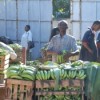
DEVELOPMENT-AFRICA: A Msg of Hope to Farmers
Mobile phones are being used to diagnose and treat crop diseases that cause massive losses to farmers, presenting an opportunity to increase yields as location-specific information about disease threats is made available.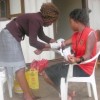
HEALTH-UGANDA: Shifting the Weight to Bear the Burden
There is no lunch break for the staff at the Kiswa Health Centre. With the closure of the nearby Mbuya hospital for renovation earlier this year, the six-room centre is offering pre- and antenatal services, HIV/AIDS testing and general healthcare to 400 patients a day.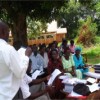
UGANDA: Village Health Teams – First Draft of a Solution
Primary health care in Uganda is hampered by a shortage of doctors and nurses, but trained volunteers from the community are stepping into the breach.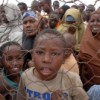
POLITICS-SOMALIA: Refugees Suffering in Kenyan Camps
In early March, Amina Ayanna Yusuf strapped her two-year-old son to her back and set off for the Kenyan border with her small savings.MINING-AFRICA: Help Yourself, There's Plenty
The African continent is rich in natural resources; but the terms under which multinational companies exploit these resources mean that governments - and Africa’s people - enjoy only a tiny fraction of the benefits.
CULTURE-ETHIOPIA: Old Master Challenges Film-makers to Look Within
Haile Gerima's film "Teza" may only have come to the world's attention when it won Africa’s highest prize in Ouagadougou on Mar. 7, but it has been a sensation in his native Ethiopia since it premiered in Addis Ababa at the start of the year.
WATER-UGANDA: Creating a ‘Safe Water Chain’
Uganda spends close to $10 million each year treating waterborne diseases; the productive time lost to illness and caring for the sick has an even greater financial impact. But residents of Katosi village on the shores of Lake Victoria aren't waiting for the government to find a solution.ENVIRONMENT-KENYA: Rainwater Harvesting: Two Birds With One Stone
Bitter irony: in recent years Nairobi has experienced severe flooding and widespread water shortages, due to poor urban planning and collapsing infrastructure systems that are failing to support the Kenyan capital's expanding population.
AGRICULTURE-AFRICA: Livestock Vital to Rural Livelihoods
The Nairobi-based International Livestock Research Institute estimates 250 million people in Africa - a quarter of the population - rely on livestock for their livelihoods, yet African governments invest almost nothing to support the sector.
EAST AFRICA: Milk Trade War Spills Over Uganda and Kenya
Ugandan exporters of dairy products to Kenya are bitter. They are accusing their bigger neighbour of imposing non-tariff trade barriers to block their produce from entering markets in Kenya and elsewhere.HEALTH-KENYA: Drug Shortages Threaten Public Health
When public health facilities are so often short of drugs that a community worker has to buy basic medicines like painkillers in bulk for use by the community, then there is a problem.« Previous Page — Next Page »





The Week with IPS

NEXT STOP - SDGs
Tracking global progress towards a sustainable world
Tracking global progress towards a sustainable world
