Languages
Saturday, October 17, 2026



News and Views from the Global South
Education Cannot Wait (ECW)

Education Cannot Wait Secures Future of Children in CAR Conflict Zones
Nine-year-old Marguerite Doumkel sits among other children in a classroom in Paoua, a sub-prefecture of Ouham Pende, in the Central African Republic (CAR).
International Women’s Day, 2022
Girls’ Education Must Come First
For decades now, world leaders have talked about ending hunger and poverty and building a new world order based on human rights and gender-equality.

Children with Disabilities are Not Problems to Solve, but Potential to Nurture, says Nujeen Mustafa
Struggling with stigma and discrimination in an unaccommodating environment, Nujeen Mustafa knows all too well the difficulties children with disabilities face in emergency and protracted crises.
Dream. Dare. Do.
Conflict, forced displacement, climate change and COVID-19 are disrupting the education of millions of crisis-affected children and adolescents around the world.
Education Cannot Wait Interviews The Rt. Hon. Gordon Brown, UN Special Envoy for Global Education and Chair of ECW’s High-Level Steering Group
ECW: You played a critical role in establishing Education Cannot Wait just five years ago. As the Chair of ECW’s High-Level Steering Group, what are some of the key successes achieved by ECW over the last five years; and what needs to be done in the next five years as we approach the 2030 Agenda for Sustainable Development deadline?
Investing in a Child’s Education is Investing in all of Humanity, Says ECW’s Yasmine Sherif Welcoming Germany’s €200 million Donation
Education lifts millions out of poverty, but because the COVID-19 pandemic wiped out gains made in recent decades, a holistic approach to providing education in crises is crucial, says German Minister for Economic Cooperation and Development, Svenja Schulze.
We Must Rise to the Occasion, Now.
In 2021, COVID-19 continued to plague the world – a world already burdened by armed conflicts, climate-induced disasters and forced displacement. Communities, nations and people struggled to maintain normalcy in the midst of the abnormal. This was especially notable in the education sector – a sector that is the very foundation for achieving all human rights and all Sustainable Development Goals.
The Future of an Entire Generation Hangs in the Balance
COVID-19 has upended our world, threatening our health, destroying economies and livelihoods, and deepening poverty and inequalities. It also created the single largest disruption to education systems that the world has ever seen.
ECW Interviews UK Special Envoy for Girls’ Education, Helen Grant
Helen Grant became actively involved in politics in 2006 and was elected as Member of Parliament for the Kent constituency of Maidstone & The Weald at the 2010 General Election.
ECW Joins Call to Action on Protection from Gender-Based Violence in Emergencies: Global Community Urged to Orange the World and End Gender-Based Violence Now
The statistics are dire: One in three women have experienced a form of gender-based violence in their lifetime, be it sexual violence, physical violence, or child marriage. The message is clear: Women and girls deserve a safer, brighter future – free from gender-based violence.
Education Cannot Wait Interviews Patricia Danzi, Director General of the Swiss Agency for Development and Cooperation
Patricia Danzi was appointed Director General of the Swiss Agency for Development and Cooperation (SDC) in May 2020. For nearly three decades, she has dedicated her career to serving the world’s vulnerable populations.
Education Cannot Wait Investments Change Lives for Children, Including At-Risk Girls, Children with Disabilities and Teachers in South Sudan
Ayom Wol sits under a tree in South Sudan in the scorching midday sun. He is a newly-trained teacher, preparing for tomorrow’s lessons. His school principal says he has to prepare while at school because there is no electricity at home.
Education Cannot Wait Calls For Urgent Funding To Fulfill The Right To Education Of All Children And Youth In Afghanistan
Immediately following the first all-women UN mission to Afghanistan since takeover by the de facto authorities, Yasmine Sherif, Director of Education Cannot Wait - the United Nations global fund for education in emergencies and protracted crises - appealed to donors to significantly increase financial support for a robust collective humanitarian-development nexus response. This includes urgent scaled up funding to UN agencies and NGO partners delivering life-saving education to vulnerable children and adolescents on the ground.
Education Cannot Wait Urges Urgent Action for World’s Biggest Humanitarian Crisis in Afghanistan
Education Cannot Wait Director Yasmine Sherif urged the world to support their efforts to provide education to children living in Afghanistan – in what she called the “biggest humanitarian crisis” on earth.
Bringing Quality Education to Syria’s Most Vulnerable, Crisis-Impacted Children – Their Education Cannot Wait
In war-torn Syria, the support of Education Cannot Wait (ECW) – the United Nations global fund for education in emergencies and protracted crises – is bringing positive, life-changing educational opportunities tailored to children like 11-year-old Ali.
Winning the Human Race, Together
“Now is the time for a stronger, more networked and inclusive multilateral system anchored in the United Nations,” said UN Secretary-General António Guterres in his latest report “Our Common Agenda.” Indeed, there is a fork in the road: we can either choose to breakdown or to breakthrough.
Education Cannot Wait Interviews the LEGO Foundation’s New CEO Anne-Birgitte Albrectsen
Anne-Birgitte Albrectsen is the CEO of The LEGO Foundation. Ms. Albrectsen has spent almost 30 years in fields of international development, human rights and diplomacy, most recently holding the position of Global CEO at Plan International since September 2015.
New Education Cannot Wait Annual Results Report Highlights Multiplying Education Challenges for Children & Adolescents Living in Emergencies & Protracted Crises amid Covid-19
On this World Teachers’ Day, Education Cannot Wait (ECW), the United Nations global fund for education in emergencies and protracted crises, announced it has reached more than 4.6 million children and adolescents (48% of whom are girls) with quality education in more than 30 of the worst humanitarian crises around the world.
Education Cannot Wait Annual Results Reveals the Devastating Impact of COVID-19 on Learning for Children in Emergencies and Protracted Crises
The COVID-19 pandemic has changed the face of education globally, but for children in emergencies and protracted crises, its blow has been particularly devastating.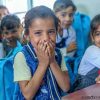
Donors Come Together with US$138.1 Million in New Funding for Education Cannot Wait During Un General Assembly to Leave No Child Behind
– On the sidelines of this year’s United Nations General Assembly, public, private and philanthropic donors announced a total of US$138.1 million in new contributions to Education Cannot Wait (ECW).
We Stay and Deliver until the Light Shines
Kabul 1990. I land in the capital of Afghanistan for my very first mission with the United Nations. Controlled by the government, Kabul was surrounded by the Mujahedeen. As a young female professional, living and working across the country, I felt protected by the Afghans, whether walking in the bustling cities or meeting with the Mujahedeen in the rural countryside. Afghanistan had already been at war for over ten years and we all worked with the hope that the fighting would come to an end soon.« Previous Page — Next Page »





The Week with IPS

NEXT STOP - SDGs
Tracking global progress towards a sustainable world
Tracking global progress towards a sustainable world
