Languages
Thursday, October 22, 2026



News and Views from the Global South
Egypt
Crowds in Cairo Praise Morsi’s Army Overhaul
The Egyptian president has ordered the powerful head of the army and defence minister, Field Marshal Hussein Tantawi, and several senior generals into retirement and canceled constitutional amendments issued by the military restricting presidential powers.
Egypt Opening Doors to Gaza, Slowly
With the election of the Muslim Brotherhood's Mohamed Morsi as Egypt's first-ever freely elected president, the Gaza file – especially as it pertains to Egypt's border with the besieged enclave – is fast becoming one of the new president's first major foreign policy challenges.
What Do Egyptians Know
During the uprising that ended Hosni Mubarak’s 29-year rule, Egyptian protesters stormed state security headquarters in Cairo. Inside they discovered a trove of documents – including surveillance reports on activists, transcripts of telephone conversations, and intercepted emails – that revealed the meticulous records the state kept on the activities of its citizens.
Brotherhood Wins, Military Prevails
The first major confrontation between Egypt's new Islamist president and its quasi-ruling military council – fought over the issue of legislative authority – appears to have been won by the latter.
Egypt’s New Unions Face Uncertain Future
The independent trade unions that have sprung up across Egypt over the last 17 months face an uncertain future, caught between Islamists and the military and operating under labour laws that have not changed since Hosni Mubarak was in power.
Muslim Brotherhood Rises Under a Military Thumb
The Muslim Brotherhood's Mohamed Morsi faces a host of daunting political hurdles after being officially declared Egypt's first freely-elected president on Sunday.
Brotherhood Vs Former Regime in Egypt Runoff
Egyptians are returning to the polls this weekend to choose between Muslim Brotherhood candidate Mohamed Morsi and Ahmed Shafiq, ousted president Hosni Mubarak's last prime minister, in a hotly-contested presidential runoff.Women Targeted in Tahrir Square
It is becoming increasingly uncomfortable to be female or foreign in Cairo’s Tahrir Square, birthplace of the January 2011 Egyptian revolution.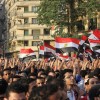
U.S.: “No Going Back” on Democratic Transition in Egypt, Says Clinton
As angry demonstrators gathered once again in Cairo's Tahrir Square to protest what many are calling a "soft coup" by the military, U.S. Secretary of State Hillary Clinton insisted that Washington still expects "a full transfer or power to a democratically elected civilian government" in Egypt.Verdict Revives Egyptian Anger
If the life sentences for former Egyptian president Hosni Mubarak and one of his key allies were meant to placate Egyptians, they have had the opposite effect.Verdict Revives Egyptian Anger
If the life sentences for former Egyptian president Hosni Mubarak and one of his key allies were meant to placate Egyptians, they have had the opposite effect.Women Look for a Place in New Egypt
"It was so frustrating but so exciting at the same time," recalls 15-year-old Mariam Assam, a year-10 student in Cairo. Assam was recalling the days she tried to join protestors during the Egyptian revolution in January 2011 but was intially prevented by her parents who said street protests were no place for a girl to be.Women Look for a Place in New Egypt
"It was so frustrating but so exciting at the same time," recalls 15-year-old Mariam Assam, a year-10 student in Cairo. Assam was recalling the days she tried to join protestors during the Egyptian revolution in January 2011 but was intially prevented by her parents who said street protests were no place for a girl to be.Egyptians Protest Choice Between Right and Right
Like the delayed after-effects of an earthquake below the ocean before the subsequent tsunami hits adjacent coastlines, Egyptian anger finally exploded this week after several days of stunned silence following the controversial results of Egypt’s first-round of presidential elections.Egyptians Protest Choice Between Right and Right
Like the delayed after-effects of an earthquake below the ocean before the subsequent tsunami hits adjacent coastlines, Egyptian anger finally exploded this week after several days of stunned silence following the controversial results of Egypt’s first-round of presidential elections.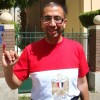
A Sort of President Awaits Egypt
Candidates competing in Egypt's first presidential election since Hosni Mubarak was ousted are vying for a prestigious position whose job description – oddly enough – has not yet been written. An unresolved dispute over who will write a new constitution for post-Mubarak Egypt has put the country in the unusual position of voting for a president with undefined authority.
EGYPT: And Finally, To Vote
As Egyptians head to the polls Wednesday and Thursday to elect the country's first post-Mubarak president, local analysts say that voting results - even on the very eve of the balloting - remain impossible to predict.
Ahead of Elections, Military Well Entrenched
As Egyptians prepare to elect their country’s first president since the uprising that toppled dictator Hosni Mubarak, the military junta that has ruled for the last 15 months has shown little sign it is prepared to accept civilian oversight.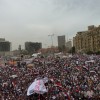
From Mubarak To Worse
More than 15 months after Egypt's Tahrir Square uprising and four months after free parliamentary polls, many Egyptians say that daily living conditions are worse now than they were in the Mubarak era.
Presidential Hopefuls Haunted by their Past
One is a conservative Islamist attempting to reinvent himself as a pragmatic liberal, the other is a secular statesman trying to distance himself from the authoritarian regime he once served. Both aspire to be Egypt’s first civilian president.U.S. Wins Release of NGO Workers, Aid to Egypt Still Vulnerable
After weeks of political pressure from the U.S., Egyptian officials announced Wednesday that the remaining employees of two U.S. government-supported organisations facing a criminal investigation would be permitted to leave the country.« Previous Page — Next Page »





The Week with IPS

NEXT STOP - SDGs
Tracking global progress towards a sustainable world
Tracking global progress towards a sustainable world
