Languages
Friday, October 9, 2026



News and Views from the Global South
International Cooperation - More than Just Aid
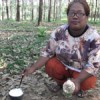
THAILAND: Women with HIV Break Silence, Confront Stigma
Veena Panudej makes a living in the night like so many other women and men in this quiet eastern corner of Thailand. They work under the light of the stars in rubber estates spread beyond this city close to the Cambodian border.POLITICS-PHILIPPINES: Rice and Condom on the Election Agenda
Rice and condoms do not usually land on the same list of household basics in the predominantly Catholic Philippines, but extremely poor couples here with huge families would choose rice if given the two options.DEVELOPMENT-ASIA: ‘Poverty Still Has a Woman’s Face’
Women and poverty still share an uncomfortable spot on the development matrix of countries across Asia-Pacific that are struggling to end deprivation, according to the newly launched third joint report of the United Nations and the Asian Development Bank (ADB) on the Millennium Development Goals (MDGs).SOUTH PACIFIC: ‘Poverty Measures Need Support of Rich Nations’
Social protection programmes could help alleviate poverty in the Pacific Islands region, but without the help of developed countries, they will not materialise, said an economic expert in this capital of Fiji.
EDUCATION-NEPAL: Unique School Aims to Be a Ticket to Equality
Had Uttam Sanjel stayed on in the Indian city of Mumbai to pursue his dream of becoming a Bollywood director years ago, the Samata (‘equality) schools that he set up here in Nepal may not be around today.CLIMATE CHANGE: European Firms See Windfall in Renewable Energy
European governments failed to help along an international treaty to stop global warming at the United Nations climate change summit in December, but their engineering and power industries see business opportunities in renewable energy sources and their smart management.
NEPAL: Communities Take Up Cudgels for Forest Conservation
Tired of walking, Shankar Prasad Ghimire, 87, a retired government worker, puts his walking stick aside and takes rest on a vast expanse of lush green land.BURMA: Ethnic Women Expose Opium Fields in Junta Strongholds
A report exposing the spreading opium fields in the north-eastern corner of the military-ruled Burma has brought to light an equally revealing story. It was produced by a team of ethnic women who risked their lives to document the heroin-filled world they inhabit.ENVIRONMENT-ASIA: Future of China’s Tiger Farms in the Balance
The road to the world’s first tiger summit in Vladivostok later this year will have to be paved with answers about the future of tiger farms in China and other East Asian countries, said conservationists.
RIGHTS-UGANDA: Fugitives in Their Own Country
Every morning Pepe Julian Onziema wakes up not knowing if she will live to see another rising sun. Onziema is transgender and she lives in fear for her life because of a national campaign against gay people.LABOUR: Migrant Domestic Workers’ Rights Next on ILO’s Agenda
Po Po has been enduring long hours of hard work, poor pay and abuse within the confines of her employer’s home for the past seven years. Poverty forced her to leave her family in eastern Burma and abandon a university education to work as a domestic helper in Thailand.AFGHANISTAN: Officials’ Optimism on Economy Belies Deep Poverty
Afghanistan may be one of the poorest countries in the world, but official figures do not quite paint a picture of a country deep in the throes of poverty and underdevelopment.CLIMATE CHANGE: ‘Copenhagen Accord Not Legal, Kyoto Protocol Is’
While the BASIC bloc countries - Brazil, South Africa, India and China - will submit their plans for voluntary mitigation actions by the Jan. 31 deadline stipulated by the Copenhagen Accord, they have taken care to emphasise that the agreement, reached at the end of the December climate change summit in the Danish capital, has no legal basis.Q&A: ‘Saving Tigers is Good for Ecosystems, Biodiversity’
The first Asian ministerial meeting to protect the tiger, one of the world’s most storied animals, is poised to test a new commitment between government leaders, the World Bank and the global conservationist movement.CLIMATE CHANGE: After Copenhagen, Back to Basics for BASIC Bloc
As environment ministers from Brazil, South Africa, India and China (BASIC) prepared to meet in the Indian capital on Sunday to draw up a post-Copenhagen strategy, there were great expectations on the role they could play in pushing a consensus on how the world should go about dealing with climate change.FRANCE: Time to Pay Back Haiti
As thousands of people filled Notre Dame Cathedral here Saturday evening in a special mass for victims of the earthquake in Haiti, the solidarity and sadness reflected the historical ties that bind France to the Caribbean nation.Q&A: From Simple Anti-War Agenda to Expansive Peace Initiatives
Of approximately 170 peace museums that exist around the world, a third are found in Japan.ECONOMY-BRAZIL: Going Up in the World
Brazil's economic achievements are being enthusiastically recognised abroad as never before. "Brazil takes off" was the Nov. 12 cover title of the British weekly The Economist.SRI LANKA: A Nation Struggles to Forget a Tragedy
Waves hitting a train and carriages half submerged in water. Scores of men, women and children leaping above the water, hands outstretched, bodies strewn all over.ENVIRONMENT-JAPAN: Solar Trend Catches Fire among Households
The global community may have been dismayed by the outcome of the recently concluded climate change talks in Copenhagen, but Mami Naito, 42, is not about to put off dealing with this global phenomenon in her own small way. "We very much like the idea of joining the efforts to prevent global warming," says the mother of two.URUGUAY: ‘Dry Toilets’ Provide Ecological Solution in Slums
Marisabel's modest home had no plumbing, like the rest of the dwellings in this poor suburb on the outskirts of Montevideo, the capital of this small South American country.« Previous Page — Next Page »





The Week with IPS

NEXT STOP - SDGs
Tracking global progress towards a sustainable world
Tracking global progress towards a sustainable world
