Languages
Friday, October 9, 2026



News and Views from the Global South
IPS UN Bureau
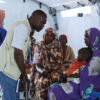
UNICEF to Deliver 1.4 million Cholera Vaccines to Sudan Amid Supply Chain Breakdowns
In Tawila, North Darfur State in Sudan, more than 1,180 cholera cases, including 300 cases in children, and at least 20 deaths have been reported since the first case was detected on June 21. Tawila has absorbed 500,000 internally displaced people who are escaping violence, many of them fleeing about seventy kilometers from the state capital of Al Fasher, making this rapid surge in cases a major health concern amidst worsening hygiene, medical, and food supply chain deteriorations.
Feminist Electrification: the Power Africa Needs
Chad is one of the most extreme examples of energy poverty, with just 10% of the population connected to electricity, a rural electrification rate below 2%, and a global per capita electricity consumption rate that’s just 18% of the global average. This hinders its economic development.
IPC Officially Declares Famine; More than Half a Million Starving in Gaza
The Integrated Food Security Phase Classification (IPC) has officially declared that there is famine in Gaza. The world’s biggest food monitoring system raised its classification to Phase 5, the highest level on its food insecurity scale.
2025 Is On Track To Mark The Deadliest Year for Humanitarian Aid Workers
World Humanitarian Day (August 19) honors humanitarian aid workers, raises public awareness for humanitarian crises, and advocate for strengthened international cooperation. Through this year’s theme, A Call to #ActForHumanity, the United Nations underscored the need for increased funding for lifesaving humanitarian missions, stronger protections for aid personnel, and accountability for violations of international law.
Sexual Exploitation & Abuse at UN Reveals “Significant Underreporting”
A system-wide UN survey of sexual exploitation and abuse (SEA), described as “grave violations of human rights”, has revealed that in 2024, there were 675 allegations reported. A UN message to staffers last week says this is “widely believed” to be “significant underreporting” because the real numbers may be much higher.
Human Rights Watch Warns of Surge in Executions in Saudi Arabia
Human rights groups have expressed alarm over the surge in unprecedented executions in Saudi Arabia in 2025. Humanitarian experts have underscored the Saudi Arabian monarchy’s use of the death penalty to silence peaceful dissent among civilians and impose justice for minor offenses, with little to no due process.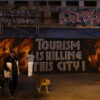
Overtourism: Civil Society Mobilising
It’s peak holiday season across Europe and North America, and people are hitting the beaches and crowding into city centres in ever-increasing numbers. They’re part of a huge industry: last year, travel and tourism’s share of the global economy stood at US$10.9 trillion, around 10 per cent of the world’s GDP.
Education Cannot Wait Interviews Dr. Faiza Hassan, Director of the Inter-Agency Network for Education in Emergencies
Dr. Faiza Hassan is the Director of the Inter-Agency Network for Education in Emergencies (INEE). A chemical engineer who transitioned into education leadership, Dr. Hassan brings close to 20 years of diverse experience in education, social policy reform and humanitarian response. She has a proven track record in strategic management, technical leadership and driving impactful, large-scale complex programmes.
Seeding Strength: Farmer Cooperatives and the Future of Food Systems
“The future of agriculture lies not in the hands of a few giants, but in the joint hands of many.” This quote captures the spirit of farmer cooperatives—values-driven, collectively run enterprises rooted in solidarity and self-help. As global food systems grow more fragile and inequitable, cooperatives offer a compelling model: putting people before profits, and communities before corporations, while advancing social equity, economic empowerment, and environmental sustainability.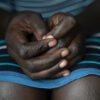
Accountability on Trial: UN’s Unabated SEA Crisis Erodes Trust in World Body’s Leadership
After taking oath of office in December 2016 as Secretary-General, Mr. Antonio Guterres described the eradication of sexual offenses by UN peacekeeping and all other UN personnel as the first item on his reform agenda.
Plastic Talks Held Hostage by Petrochemical Lobby
On August 7, a tar-like slurry glistened on the roads leading up to the gate of the Palais Des Nations in Geneva, Switzerland. For fear of sticky substances sticking to tires, no vehicles were allowed to go inside for a while, forcing officials arriving from different parts of the world to disembark and walk through a side entrance.
Climate Change Breaking the Journalists Who Tell its Story
My family lost six herds of cattle during the devastating El Niño-driven drought that swept Zimbabwe in 2024. The loss was as emotional as it was financial. Guilt gnawed at me.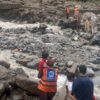
Swept Away: Flash Floods, Failed Systems Bane of Pakistan’s North
Intense rainfall over small areas in Pakistan’s mountainous regions caused massive destruction, sweeping away entire villages. On August 15, the district of Buner in Khyber Pakhtunkhwa (KP) province experienced a weather anomaly in which glacier melt and intense monsoon rains caused floods that buried villages under mud and rock.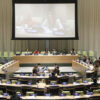
Can the UN Trusteeship Council be an Important Part of the Solution in the Middle East?
Many feel desperation and anger that the genocide of the Palestinians is not being stopped. How can the US, Germany and others continue to pour funds and weapons into Israel despite decisions in the UN's highest bodies indicating complicity in accordance with the Convention against Genocide?
Environmentalists Confident Case Against US Funding of Mozambique LNG Project Will Succeed
Environmental campaign groups are confident that a suit filed in the United States, seeking to stop the country’s Export-Import Bank (EXIM) from the ‘unlawful’ lending of nearly USD 5 billion to the controversial Mozambique Liquefied Natural Gas (LNG) project, will succeed.
UN Report Uncovers “Systematic Torture” in Myanmar
Myanmar’s security situation has deteriorated significantly, with the nation still reeling from the devastating earthquake in March last year, and continued military offensives driven by the ongoing civil war. In 2025, the humanitarian crisis reached a critical turning point, with the United Nations (UN) underscoring a litany of severe human rights abuses inflicted on civilians by the military and armed groups.
UN Staff Federation Remembers with Sorrow the Many who have Fallen in the Line of Duty
On this World Humanitarian Day, the members of CCISUA Staff Federation honour colleagues who dedicate their lives to protecting people in crisis, and we remember with sorrow the many who have fallen in the line of duty.
Green Jobs on the Rise in the Arab Region
In the Arab region, a thought-to-be oil oasis, green jobs constitute 29 percent of energy sector roles, and 23 percent of the oil and gas sector. These numbers signify a push towards sustainable business and practices, with the Arab region striving to get away from oil, in their advancement towards the completion of the SDGs on time for 2030.
UN Security Council Confronts South Sudan’s ‘Compounding Crises’
The UN Security Council convened today (August 18) to discuss South Sudan and the "interlinked challenges of climate change and conflict" affecting the region.
Sexual Health Rights: Contradictions in East African Laws, Policies
Sarah Namukisa nearly missed her final year exams earlier this year. She was subjected to a mandatory pregnancy test—the 25-year-old student at the Medical Laboratory Training School in Jinja was then expelled because she was pregnant.
Will the US Blacklist Bar Political Leaders & Delegates from UN’s 80th Anniversary Summit?
When the 193-member General Assembly commemorates the UN’s 80th anniversary during a high-level meeting in mid-September, how many political leaders and delegates will be barred from entering the United States --despite the 1947 US-UN Host Country Agreement?« Previous Page — Next Page »





The Week with IPS

NEXT STOP - SDGs
Tracking global progress towards a sustainable world
Tracking global progress towards a sustainable world
