Languages
Tuesday, October 20, 2026



News and Views from the Global South
Iran
U.S. Says Only Reason for Talks with Iran Is Enrichment Halt
The agreement on draft Security Council resolution sanctions against Iran has grabbed the headlines on the Barack Obama administration's response to Iran's nuclear swap proposal brokered by Turkey and Brazil. But the more consequential response is the acknowledgement by the U.S. State Department Monday that the administration is not willing to hold talks with Iran unless it agrees to a complete halt in uranium enrichment.Iranian Nuclear Threat Spurs Mideast Arms Sales
The United States, and most of the Western world, have transformed Iranian President Mahmoud Ahmadinejad into a virtual bogeyman, thereby spreading fear throughout the neighbouring countries of the Gulf Cooperation Council (GCC): Bahrain, Kuwait, Qatar, Oman, Saudi Arabia and the United Arab Emirates (UAE).IRAN: Brazil-Turkey-Mediated Deal Puts Ball in U.S. Court
The administration of President Barack Obama has reacted sceptically to the nuclear swap accord signed Monday by Iran, Turkey and Brazil, suggesting that Tehran would have to take significant additional steps to satisfy U.S. and Western demands to curb its nuclear programme.
MIDEAST: Israel, Iran Talking War to Ward Off War?
Suddenly, the Middle East is awash with talk of war this summer. Or, is the talk of war merely meant to keep war at bay?IRAN: Rights Group Condemns Secret Executions
Iran's nuclear ambitions and the bloody disturbances following its elections last year have so dominated media reporting on the country that many equally critical issues have been virtually forgotten.Talk of a Nuclear Deal Gains Steam in Iran
President Mahmoud Ahmadinejad's return to Tehran after attending the Nuclear Non-Proliferation Treaty (NPT) review meeting at U.N. headquarters has been received with the usual bombast by the conservative and hard-line media in Iran, which declared him victorious and an indispensable global leader.U.S. Business Groups Fault Rush to Sanctions on Iran
The U.S. Congress is moving forward with a bill to sanction companies that do business in Iran despite the White House's efforts to build international support for U.N. sanctions against the Islamic Republic.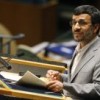
Israel, Iran Targeted at Nuke Non-Proliferation Meet
A month-long Review Conference on the Nuclear Non-Proliferation Treaty (NPT) began Monday with a predictable target: Israel.U.S./IRAN: Sanctions Debate Heats Up
Wednesday's highly unusual public launch of a "conference committee" of both houses of Congress to hash out differences in long-pending legislation to impose unilateral sanctions on Iran marks a new stage in the escalating debate over what to do about Tehran's nuclear programme.U.S. Nuclear Option on Iran Linked to Israeli Attack Threat
The Barack Obama administration's declaration in its Nuclear Posture Review (NPR) that it is reserving the right to use nuclear weapons against Iran represents a new element in a strategy of persuading Tehran that an Israeli attack on Iranian nuclear sites is a serious possibility if Iran does not bow to the demand that it cease uranium enrichment.
New Software Could Outwit Tehran’s Censors
While the Iranian government has intensified its aggressive efforts to expand Internet filters, Austin Heap, a young programmer in the U.S., says he has developed software that would enable Iranians to evade their censors.U.S. Image Brightens Overseas
Global perceptions of the U.S. have improved over the past year but ratings of many other countries, including Britain, Japan, Canada and the European Union, have declined over the same period, according to a poll released Sunday.POLITICS: World Leaders to Meet on Nuclear Security
On Apr. 12 and 13, U.S. President Barack Obama will host over 40 world leaders in Washington to develop a strategy to secure nuclear materials and prevent nuclear terrorism, following up on his announcements this week that that the U.S. would significantly modify its nuclear strategy and reduce the number of nuclear warheads in its stockpile by one-third.
Q&A: “They Knew I Was Not a Spy”
When world leaders meet in Washington later this month for a summit on nuclear security that is expected to include discussion of sanctions on Iran, they should also address the country's human rights situation, says Iranian-American journalist Roxana Saberi.US-CHINA: Spring Thaw in the Air?
Springtime appears to be bringing a thaw in U.S.-China relations, with U.S. President Barack Obama and Chinese President Hu Jintao holding an hour-long phone conversation Thursday in which both leaders expressed a desire to build a more positive bilateral relationshipIRAN: Obama Sanctions Strategy Complicated by Congress
President Barack Obama is hoping that relatively quick approval by the U.N. Security Council of a new round of sanctions against Iran will relieve growing pressure on Capitol Hill to take stronger measures against Tehran.IRAN: New Budget May Add to Uncertainties, Political Strains
Iran's 347-billion-dollar budget for the 2010-11 fiscal year, finally approved by the Guardian Council in Tehran Tuesday - just days before its scheduled implementation on the Iranian New Year Mar. 21 - appears likely to add to the tensions and uncertainty that have bedeviled the country since the disputed June 2009 elections.
Q&A: Equality Is Feminism
"I think that Islam has been misinterpreted. No Islamic law says violate women's rights and repress women," says Nobel Peace Prize laureate Shirin Ebadi. "Democracy, human rights and women leadership are absolutely not hostile to the Islamic doctrine." And women in Iran are well aware of that, she says.MIDEAST: Iran, Israel Spoiling for a Fight?
Iran and Israel appear to be spoiling for a fight, going by recent belligerent statements emanating from several regional capitals.US-TURKEY: Armenian Genocide Vote Threatens Ties at Key Moment
Thursday's vote by a Congressional committee condemning the deaths of up to 1.5 million Armenians during World War I as "genocide" is almost certain to complicate U.S. ties with Turkey, a long-time strategic ally and increasingly influential player in the Middle East and central and southwest Asia.US-IRAN: Debate Over Military Action Against Iran Gains Steam
While the ongoing U.S. military "surge" in Afghanistan continues to capture the headlines, Iran's nuclear programme – and how best to deal with it – is rapidly emerging here as this year's biggest foreign policy challenge.« Previous Page — Next Page »





The Week with IPS

NEXT STOP - SDGs
Tracking global progress towards a sustainable world
Tracking global progress towards a sustainable world
