Languages
Thursday, August 27, 2026



News and Views from the Global South
Latin America: Dictatorships Meet Justice

RIGHTS-PERU: Army Chief Complains that Trials Hurt “Morale”
Trials on human rights abuses committed during Peru’s 1980-2000 civil war hurt military morale because "they leave the impression that those of us who fought in the counterinsurgency war were only dedicated to killing civilians," said Peruvian army chief Otto Guibovich.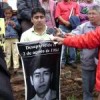
PERU: ‘My Father Was Killed for Reporting on Rights Abuses’
"I became a journalist to find out how they killed my father, to discover where his body is, and to take those responsible for his death to court," Boris Ayala told IPS. "I am not going to rest until I find out the whole truth."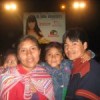
PERU: Drama Exposes Rape as Weapon of War
The film La Teta Asustada/The Milk of Sorrow, the big winner at the Berlin Film Festival, drives home the brutal effects of Peru’s armed conflict on thousands of women who were raped and have lived with the pain and a lingering sense of shame and fear ever since.RIGHTS-PERU: “No Thanks” to Donation for Memorial Museum
Heduardo, one of the most scathing caricaturists in the Peruvian press, published a cartoon showing President Alan García more interested in a "museum of amnesia" than a proposed "museum of memory."
Q&A: Fighting "the Dark Side of Globalised Society" *
Spanish Judge Baltasar Garzón, known for prosecuting alleged tyrants, terrorists and perpetrators of corruption, believes that progress toward a global justice system began in 1996, with the trials in Madrid of Argentine and Chilean torturers, and especially with the arrest of Augusto Pinochet in October 1998.POLITICS-PARAGUAY: Twenty Years of Transition
Paraguayan society is marking the 20th anniversary of the fall of former dictator Alfredo Stroessner (1954-1989) amid uncertainty surrounding the loss of power of the Colorado Party, which ruled the country for 61 years.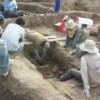
PERU: Furnaces Used to Remove Evidence of Dirty War Killings
The discovery of more and more bodies of victims of Peru’s dirty war on the grounds of the Los Cabitos military base, which served as a torture and extermination centre during the 1980-2000 armed conflict, have substantiated the accounts of political prisoners who managed to survive.CHILE: Ex Political Prisoners in Therapeutic Theatre
A group of former political prisoners in Chile will become actors and actresses this month to heal the wounds left by the 1973-1990 dictatorship. They will be performing a cycle of plays written in torture camps and in exile.EL SALVADOR: Spanish Judge to Investigate Murders of Jesuit Priests
A Spanish judge's decision to investigate 14 Salvadoran military officers for the 1989 killings of six Jesuit priests in El Salvador is a "sign of hope against impunity," according to lawyers and activists.RIGHTS-EL SALVADOR: Impunity Defies Inter-American Court
The Inter-American Court of Human Rights ordered the Salvadoran state to fully comply with its sentence in the case of the murder of businessman Mauricio García Prieto, and to put an end to threats and harassment of the victim's parents by government agents.RIGHTS-CHILE: False Disappearances Trigger Debate on Truth Commissions
A debate is on in Chile as to whether to reopen the truth commissions that documented the victims of the 1973-1990 dictatorship, after four cases of false disappearances were confirmed.RIGHTS-PERU: Advocates of Military Impunity, Back on the Bench
Members of the military and one police officer who sat on military tribunals and covered up for alleged human rights violators during the authoritarian regime of Alberto Fujimori (1990-2000) have been reappointed as military judges by Peruvian President Alan García.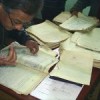
PERU: Undocumented War Survivors to Regain Identity Cards
More than half a million Peruvians who lost their personal documents during the 1980-2000 civil war will no longer have to assume the often impossible task of proving their identities, thanks to a new law.CHILE: Finding a Place for Memory
Chile’s socialist President Michelle Bachelet recently laid the foundation stone for the Museum of Memory and Human Rights, thus coming one step closer to carrying out one of the projects she has put a priority on, which has however given rise to criticism and reservations from both ends of the political spectrum.PERU: El Fronton Massacre Case Heads Back to Inter-American Court
A ruling by Peru’s Constitutional Court that makes it impossible to bring the case of a 1986 massacre of 118 prisoners to trial will be taken to the Inter-American Court of Human Rights.ARGENTINA: Controversy Over Court Order to Release Rights Abusers
An Argentine court order to release on bail nearly 20 officers accused of committing human rights abuses during the 1976-1983 dictatorship shows the slow-moving justice system’s limitations in dealing with cases against those prosecuted for crimes against humanity, say activists.RIGHTS-PERU: Fears of Bias in Fujimori Trial
Lawyers representing the families of the victims of two high-profile massacres committed in the early 1990s in Peru, and who are taking part in the trial against former president Alberto Fujimori, have questioned the independence of the future heads of the Supreme Court and Lima High Court.RIGHTS-PERU: Activists Warn of “Impunity Measures”
The governing party in Peru is working to keep members of the military and police accused of human rights violations committed in the context of counterinsurgency operations out of the courts, on the argument that they are being unfairly targeted by the justice system.RIGHTS-EL SALVADOR: Ex-President Cristiani Faces Charges in Spain
Charges filed by two human rights groups in Spain’s National Court Thursday against former Salvadoran president Alfredo Cristiani and 14 members of the army in connection with the 1989 slaughter of six Jesuit priests, their housekeeper and her teenage daughter represent "a ray of hope" for victims of human rights abuses, say lawyers and Jesuit authorities.RIGHTS-PERU: Pressure to Amnesty Military, Police
The chairman of the congressional committee on defence and internal order in Peru, Edgard Núñez, has introduced a draft law to grant an amnesty to members of the military and police facing trial for human rights violations.RIGHTS-PARAGUAY: New ‘Archives of Terror’ Unearthed
The discovery Friday of new archives from the dictatorship of Alfredo Stroessner is expected to shed new light on the regime that ruled Paraguay from 1954 to 1989.« Previous Page — Next Page »


The Week with IPS

NEXT STOP - SDGs
Tracking global progress towards a sustainable world
Tracking global progress towards a sustainable world
