Languages
Sunday, November 8, 2026



News and Views from the Global South
Millennium Development Goals (MDGs)
Medicine Alliance Fighting Corruption in Zambia
"I had always associated corruption with politics and business," laments Chalwe Kabwesha. "When I failed to access ARVs and TB drugs at our clinic because of corruption, I got worried."
KENYA: Profiting From Better Sanitation
She contributed towards building toilets for her community; in return Teresia Wasuka is getting a home to call her own.
WOMEN’S DAY: A Historic Opportunity Unveiled
In 1945, more than half a century ago, the signing of the United Nations Charter in San Francisco wrote women's equality into its canon, creating an indisputable commitment to gender equity in the post-World War global order.
WOMEN’S DAY: Female Scientists Abound in Brazil – But Not at Senior Levels
There are nearly as many female as male scientists in Brazil. But in academia or in private laboratories, women face subtle barriers to career advancement and equal salaries.
Q&A: “The Sky Is My Laboratory”
When it comes to breaking through the glass ceiling, astronomers are among the most determined of female professionals. And they have high aspirations. "The sky is my laboratory," Argentine astrophysicist Gloria Dubner told IPS.
Q&A: Rural Women Need Concrete Actions
Burundi will put U.N. Resolution 1325 on Women, Peace and Security into practice with a National Action Plan (NAP) that is ready to be signed within the coming months.Shining a Light on Women’s Rights
How does a woman challenge deeply entrenched cultural practices to convince her husband, her brother or father that she can demand equal rights?Meet the Other U.N. Women
Tucked away from the high-level plenary sessions of the 55th Commission on the Status of Women (CSW), a small chapel opposite the United Nations headquarters came to life Wednesday morning with the voices and stories of the real women behind U.N. Women.Pregnancies Don’t Wait for Emergencies to End
When disaster strikes, the initial humanitarian response tends to focus on basic commodities like food and shelter. But as the crisis or conflict drags on, other critical needs often go unmet – such as prenatal care for pregnant women, and emergency contraception for victims of sexual assault.Vicious Cycle of Maternal Mortality
Addressing the National Convention of the Medical Committee for Human Rights in Chicago, Illinois in 1966, Dr. Martin Luther King Jr. stated unequivocally that, "Of all the forms of inequality in the world, injustice in health care is the most shocking and inhumane."
No Quiet Old Age for South Africa’s Grannies
Grannies are indispensable in South Africa. They may have been hoping for a restful old age, but the AIDS epidemic has seen them taking on motherhood for a second time, caring for grandchildren whose parents have died of the disease.BRAZIL: Women in “Pacified” Favelas Claim Their Rights
The peace imposed on the more than 200,000 people living in the Complexo do Alemão group of favelas in Rio de Janeiro by Brazil's military police is helping to pave the way for the recognition of basic human rights.
SOUTHERN AFRICA: Tri-Partite Agreement Presages Wider Zambezi Agreement
Mozambique, Zambia and Zimbabwe are poised to sign a memorandum of understanding to improve power generation along the length of the Zambezi River.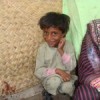
PAKISTAN: New Fears Over Malnutrition
"She was just skin and bones, even crying seemed a huge effort," Hajiani says of one-year-old Samreen Tauqir, when she saw her for the first time two months ago.MEXICO: Eco-Friendly Livelihoods for Women in the Sierra Madre
They live in a town with an apt name, Soledad (Solitude) de Guadalupe, of just 50 houses, most of which are inhabited by women on their own, in the Sierra Madre mountains in the small state of Querétaro in central Mexico.Q&A: ‘Doing Good and Doing Good Business Are Not Incompatible’
It is short sighted to dismiss the benefits or potential of engaging the private sector in human rights matters, says Sara Lulo, director of the Avon Global Center for Women and Justice at Cornell Law School.Q&A: Ordinary Women Have Extraordinary Stories to Tell
Ordinary women's voices are too often ignored when it comes to solving their own problems, admonishes Loga Virahsawmy, Director of the Southern African NGO Gender Links, Mauritius and Francophone Office.KENYA: Civil Society Defends Access to Generic Drugs
Access to affordable medicine for millions of people in the South could be at risk if the production and distribution of generic medicine from India is restricted.Zimbabweans Turn to Indigenous Medicine
Zimbabwe's government recently announced that the country had run out of the critical painkiller morphine. It was just the latest development in a debilitating health care crisis that has seen hospitals turn away patients because of drug shortages.Malawi Business Keen on Power From Mozambique
The feasibility study looking at connecting Malawi's electricity grid to Mozambique's Cahora-Bassa hydropower station was completed 15 years ago; a price for power was long ago agreed by the respective governments: but somehow the project is yet to go ahead.SOUTHERN AFRICA: Energy Pie Greater Than the Sum of its Parts
Two million compact fluorescent lamps will be distributed to households and industry in Malawi by June, in just one of several measures to bridge the gap between electricity supply and demand. Across Southern Africa, energy shortfalls threaten to choke development.« Previous Page — Next Page »





The Week with IPS

NEXT STOP - SDGs
Tracking global progress towards a sustainable world
Tracking global progress towards a sustainable world
