Languages
Wednesday, November 11, 2026



News and Views from the Global South
Millennium Development Goals (MDGs)
WORLD: Fair Trade – An Old Idea That’s Become a Fashion Statement?
The idea of making trade fair is as old as ethics itself.
AGRICULTURE-SOUTHERN AFRICA: Investment, Information Keys To Productivity
Sustained investment in agriculture accompanied by effective and inclusive policies are key strategies for Southern Africa to address the global food crisis.DEVELOPMENT: Home Stretch for MDGs Looks Bumpier Than Ever
At a time when the world's cash-strapped developing nations, particularly in Africa, have admitted their inability to meet most of the U.N.'s eight Millennium Development Goals (MDGs), one Latin American country stands apart - confident it could even beat the deadline set by the United Nations.EUROPE: Failing to Step Up Medical Support to Africa
Almost two years after the European Union resolved to step up its efforts to address the shortage of doctors and nurses in poor countries, its progress has been found unsatisfactory by the bloc's own officials.DEVELOPMENT: Matching Struggling Farmers with the World’s Hungry
In a significant policy shift, the Rome-based World Food Programme (WFP) announced Wednesday that it will start buying food directly from local farmers' associations in developing countries.CENTRAL AMERICA: Violence Exacts Increasingly Heavy Toll
Violent crime costs Central America an estimated 6.5 billion dollars a year, equivalent to 7.7 percent of gross domestic product in the region, where the two least violent countries are the wealthiest - Costa Rica - and the poorest - Nicaragua, according to a study carried out in El Salvador.
TRADE-AFRICA: Art Creating Hope in the Midst of Death and Disease
Zulu artists working at the Ardmore Ceramic Studio in South Africa’s coastal province of KwaZulu Natal have gone from poverty to international acclaim.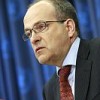
ENVIRONMENT: No Hope for MDGs Without Climate Plan
With 2.6 billion of the world's poor affected daily by climate change, the linkages between environment, health and poverty cannot be questioned any longer, U.N. experts say.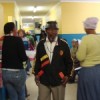
SOUTH AFRICA: Nurse Shortage Cripples Health System
In the impoverished informal settlement of Du Noon, 20 kilometres north of Cape Town, sick residents rely on a single clinic staffed by six nurses to meet their health needs.
Q&A: 'Corruption Nourishes Poverty'
A new report by Transparency International (TI) lashes out at some of the world's poorest countries for an "ongoing humanitarian disaster", and deplores the wealthiest for not doing enough to stem graft.ECONOMY-SOUTH AFRICA: Manuel, Mbeki Resignations Welcomed by Some
Minutes after the news broke today that Trevor Manuel, South African minister of finance, resigned from his post, the South African currency lost ground against international currencies, falling 20 cents against the dollar within less than an hour.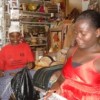
UGANDA: Women Wield Fair Trade Tools to Beat Poverty
Producing baskets and mats in central Uganda has traditionally been women’s work. Women made these items for use in homes. The National Association of Women Organisations in Uganda (NAWOU) has changed this practice into a powerful force fighting poverty.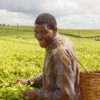
KENYA: Tea Market Tumultuous as Trading Partners Change
Tea used to be Kenya’s major cash crop earner but ever since the world’s largest consumer of tea, Pakistan, entered into a free trade agreement with seven of its Asian neighbours, the local tea industry has been haemorrhaging.
MEDIA: Lula a "Tireless Advocate" for the Poor and Landless
Brazilian President Luiz Inacio Lula da Silva, who rose from a poor childhood to lead a growing economic powerhouse that has placed the ideal of inclusive prosperity at the centre of its development policies, received the Inter Press Service (IPS) International Achievement Award 2008 Monday.
RIGHTS-SENEGAL: Street Children at Risk of Exploitation
The Senegalese capital, Dakar, is filled with street children from villages in Guinea Bissau. These boys from Senegal's southern neighbour - aged anywhere between four and twelve - have been sent by their families to study the Koran, but many are getting very little education.CARIBBEAN: The Stormy Face of Climate Change
The devastation wrought by hurricanes Gustav, Hanna and Ike in the Caribbean has fuelled concern about the effects of global warming on the formation and intensity of tropical storms, an issue that has divided the scientific community and is causing alarm among island nations and coastal communities.DEVELOPMENT: Poverty Reduction Claims Under Scrutiny
The World Bank's recent estimates on global poverty, particularly in relation to China, are being challenged by an international non-governmental organisation (NGO) which monitors poverty eradication and gender equality.
AFGHANISTAN: Severe Hunger Can Help Taliban
If 11-year old Zayainullah doesn't bring home enough money today, he says he will get beaten. "We don't have food and my aunt threatened me, saying I have to bring back enough money to buy bread," he says.ARGENTINA: Soup Kitchens Feel Impact of Rising Food Prices
"It breaks my heart because I know these kids don't have anything to eat, but I can’t serve any more people," says Estela Esquivel, talking about children who have been turned away at dinnertime from the La Casita de la Virgen soup kitchen in La Cava, a slum neighbourhood on the north side of the Argentine capital.DEVELOPMENT: Ending Africa's Food Crisis
Africa's food crisis can be alleviated by modernising agriculture and reforming supply chains so that small-scale farmers get cheaper fertiliser and high-yield seeds, experts and officials at a conference in Oslo have argued. But so far, they say, funding is lacking.DEVELOPMENT: Huge Gender Gap Between Rhetoric and Reality
When over 150 world leaders attend a summit meeting next week to discuss the status of the U.N.'s eight Millennium Development Goals (MDGs), one of the primary issues on the agenda will be goal number 3: promoting gender equality and gender empowerment.« Previous Page — Next Page »





The Week with IPS

NEXT STOP - SDGs
Tracking global progress towards a sustainable world
Tracking global progress towards a sustainable world
