Languages
Wednesday, November 11, 2026



News and Views from the Global South
Millennium Development Goals (MDGs)
POLITICS-GUINEA: "Sheep Who Vote?" Women Say No
Long absent from the top posts in the civil service and under-represented in political parties, Guinean women are calling for changes during legislative elections planned for December.
OBAMA: "Subsidising Big Oil Makes No Sense"
Democratic presidential nominee Sen. Barack Obama sat down with IPS correspondent Bankole Thompson again on Thursday for a one-on-one interview in Grand Rapids, Michigan, where over 15,000 enthusiastic Obama supporters turned out to hear his message of change at downtown's Calder Plaza.
AGRICULTURE-SOUTH AFRICA: GM Sorghum Test Approved
As Africa grapples with the question of food insecurity, biotechnology buffs seem to have an answer: genetically modified crops that could feed a continent vulnerable to famine and food deficits. But environmentalists warn of new dangers.
ARGENTINA: Guardians of the River
"There is no water...there are no fish," says Olga Ledesma, her skin weathered from 40 years of small-scale fishing, as the boat slowly winds its way along a branch of the Paraná river, South America’s second-longest river.
ECONOMY: Kenyan Companies Cautiously Venture Into Regional Market
Dr. Manu Chandaria (79) has been lionised as East Africa’s most respected chief executive officer of a company.HEALTH: Dengue Threatens Asia Pacific Region
Over the past three decades, dengue fever has affected more and more countries in the Asia-Pacific region and is now regarded as the fastest of emerging mosquito-borne diseases.
ARGENTINA: Women Create Food and Jobs in Wetlands
Wearing a cap and a white apron, Melina Lucero cuts the heads and tails off fish caught in the Paraná River, before skilfully filleting them. Her co-workers will process and package the fish to sell as traditional, small-scale fish preserves at food fairs along the banks of the river in Argentina.DEVELOPMENT-ANGOLA: Building Sustainable Water Systems
Angola may be emerging as an African super power with its plentiful oil exports and a booming property market. But look behind the façade of this boom and real entrenched poverty continues to blight millions of lives.ECONOMY-CUBA: Speculate No More
The Cuban government is seeking to curb excessive food prices in farmers’ markets by cracking down on speculation and theft, which will benefit consumers but may discourage producers, according to economists.
SIERRA LEONE: Ghost Schools, Phantom Progress On Education
Magnus Kamara is a school inspector with a difference. He has been hired to find schools that don't exist.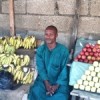
NIGERIA: Ramadan Marred By High Food Prices
As the holy month of Ramadan draws to a close, residents of the northern Nigerian city of Kano have endured double pain: already high food prices have been driven through the roof.DEVELOPMENT: No "Bailout" for the World's Poorest
As a spreading financial crisis threatens to deepen the economic recession in the United States, the news of an unprecedented 700-billion-dollar bailout package reverberated through the corridors of the United Nations last week as over 100 world leaders gathered in New York for the annual talk-fest: the 63rd session of the General Assembly.
SPAIN: Some Retailers Have Still Not Caught Up With Fair Trade Boom
Fair trade has grown in leaps and bounds since the mid-1990s but retailers such as El Corte Ingles, the department store chain with the most sales in Europe, are still not giving consumers the choice to buy these products.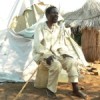
SWAZILAND: Torn Social Fabric Leaves Many Exposed
An abandoned straw hut slumps amidst overgrown bushes on a somewhat deserted homestead. Only a foot path leading past it indicates that the place is still occupied. Beside it is the mis-shapen tent that is Joseph Mathe's new home.
DEVELOPMENT-TANZANIA: Lighting Up Women’s Lives
Anneth Laizer shoved her kerosene lantern onto the top shelf and switched on the lights after her home in Tanzania's third-largest city, Arusha, was connected to electricity earlier this year.DEVELOPMENT: Presidents Boost Maternal and Child Health
As world leaders gather at the United Nations to discuss progress toward achieving the Millennium Development Goals (MDGs), Presidents Michelle Bachelet of Chile, Tarja Halonen of Finland, and Jakaya Mrisho Kikwete of Tanzania are calling for more attention to be paid to maternal and child health.
EDUCATION-ZAMBIA: Food Insecurity Hits Schools
"Sometimes there is barely any food at home, so I only eat at school, at lunch," said Justin Banda, a 12 year old student, at Chikumboso school in Lusaka’s Ngombe township.DEVELOPMENT: Food Security Hostage to Climate Trends
More than 50 African leaders meeting at the United Nations this week focused on strategies to overcome a myriad of interrelated problems - food shortages, droughts, HIV/AIDS, an energy crisis, climate change and military conflicts - on the troubled continent.
DEVELOPMENT: Poverty Hearings Show People Behind the Numbers
Benjamine Agbodjan Ablavi of Togo says she scraped together the money to pay her own school fees by selling fruit.
Q&A: "Violence Is Part of the History of El Salvador"
He says he has read the Bible three times and that gang members are "not only victimisers but victims of the system of violence" in El Salvador.ECONOMY-CUBA: No Calm After the Storm
Contrary to the saying that after a storm comes a calm, in Cuba the shockwaves left by hurricanes Gustav and Ike will prevent any peace of mind for people living not only in the most affected areas but in the whole country for a long time to come, as they ask themselves if the worst is really over yet.« Previous Page — Next Page »





The Week with IPS

NEXT STOP - SDGs
Tracking global progress towards a sustainable world
Tracking global progress towards a sustainable world
