Languages
Wednesday, November 11, 2026



News and Views from the Global South
Millennium Development Goals (MDGs)
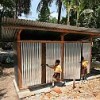
DEVELOPMENT: Global Fund Puts Spotlight on Sanitation
The Global Sanitation Fund (GSF), created last March with a 100-million-dollar target per year, is being billed as a key financing mechanism aimed at meeting one of the eight U.N. Millennium Development Goals (MDGs).ECONOMY-KENYA: Shady Deals and Intrigues Haunt Privatisation
The Kenya Railways Corporation was more than a national utility. It was a repository of Kenya’s history, beginning in the 19th century when indentured Indian labourers were brought to the East African region to build the Kenya-Uganda railway line.WEST AFRICA: Cotton Symbolises Global Trade System’s 'Iniquity'
The international cotton trade has been a sad tale for West African countries. The region produces five percent of the world’s cotton and 15 percent of the global cotton fibre trade. Yet West African cotton farmers are among the poorest in the world.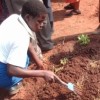
AGRICULTURE-SWAZILAND: Young Farmers Improving Food Security
When her friends go out to play with skipping rope during break, 12 year old Noncedo Masina takes her watering can and goes to work on her plot at the school vegetable garden.
RIGHTS: Women Fight to Put Violence on Global Agenda
Joyce and Tanya - two women of different ages, nationalities, cultures and religions - share something: both became victims of a missing goal.
Q&A: "The Notion that Water Is Forever Is Wrong"
Venality, greed, corruption - the documentary film "Flow: For Love of Water" could just as easily be subtitled "The Evil That Men Do."DEVELOPMENT: Millions More Children Attending School
Despite the world not being on track to meet the Millennium Development Goals (MDGs), there has been real progress - even in some of the world's poorest countries.KENYA: Ready For New Abortion Law?
In May 2008, a group of civil society activists launched a campaign to reform Kenya's archaic abortion laws, sparking a countrywide debate. Now, as a new draft bill on women's reproductive health and rights seeking to decriminalise abortions is set to be tabled in parliament, the battle lines between opponents and advocates of abortion are clearly drawn.HEALTH: Goal to Halt AIDS by 2015 Recedes Further
What if HIV/AIDS was just another chronic disease instead of a widespread epidemic? This could be the case if the world community takes serious action, according to Human Rights Watch and other activists. But today, the Millennium Development Goal (MDG) on HIV/AIDS is nowhere near being realised.DEVELOPMENT: Less Than Half of EU Aid Tackles Poverty
Less than half of development aid approved by the European Commission is explicitly linked to international objectives on reducing poverty, a new study has found.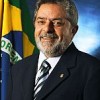
ANNOUNCEMENT: Brazilian President Wins IPS Award
President Luiz Inacio Lula da Silva of Brazil, who has successfully championed the cause of fair trade, social justice and economic equity for the developing world, has been named the winner of the Inter Press Service (IPS) International Achievement Award 2008.CLIMATE CHANGE: Chemical Lobby Weakening Ozone Treaty
In hard economic times, protecting the environment is often seen as a luxury - or ignored completely. But had that attitude prevailed 20 years ago when it came to taking action to protect the ozone layer, skin cancer rates would have soared and climate change would be even more dramatic than it is today.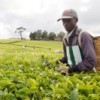
TRADE: Africa’s Export Performance Still Dismal, Says UNCTAD
Despite the liberalisation of trade over more than two decades, the level and composition of Africa’s exports have not substantially changed, according to the 2008 report by the United Nations Conference on Trade and Development (UNCTAD) on economic development in Africa.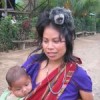
PERU: Birthing Houses Combine Native Traditions, Modern Medicine
"Ashaninka women give birth at home, in accordance with tradition," declares José Ponce, the head of the health committee in Puerto Ocopa, a village of 253 Ashaninka indigenous families deep in the central Peruvian jungle.
Q&A: Unravelling the Knots of Tied Aid
The forum on aid effectiveness in Accra has delivered "profound" decisions to change the way aid is structured, OECD Secretary-General Angel Gurria told IPS in an interview.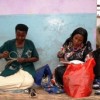
DEVELOPMENT-WORLD: What Is So Fair About Fair Trade?
Fair trade is held up as promoting fair prices for producers and guaranteeing social and environmental standards. These ideas are neither new nor controversial. But the recent boom in fair trade has drawn attention as standards and models multiply while authentication mechanisms lag behind.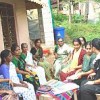
INDIA: Empowering Women is About Basic Funding
Kudumbasree (Family Prosperity) is India’s one success story in getting down to the job of helping poor women take care of their own basic needs - from health care and housing to self-employment.
Q&A: Zimbabwean Women Have Had ‘‘More Trauma'' After Independence
Zimbabwean women have experienced higher levels of trauma, including violence and lack of food, after the country's independence from Britain in 1980 than before.ASIA PACIFIC: MDGs – Children Under Five Straggling
Children under five years across Asia and the Pacific are being left behind in the race to reduce poverty even as the region boasts impressive strides in meeting major United Nations development goals.
DEVELOPMENT-MALAWI: Irrigation Promises to Increase Food Security
Wyson Chandanga, a small-holder Malawian farmer from the northern district of Mzimba, does not care if the country receives enough rain this year. He is also not concerned on whether the rains come on time or not.
TRADE-SOUTHERN AFRICA: The Deal’s Signed But Where’s The Action?
Cross-border trader Florence Tjani is sceptical about the free trade agreement (FTA) recently signed by southern African states.« Previous Page — Next Page »





The Week with IPS

NEXT STOP - SDGs
Tracking global progress towards a sustainable world
Tracking global progress towards a sustainable world
