Languages
Sunday, October 25, 2026



News and Views from the Global South
Namibia
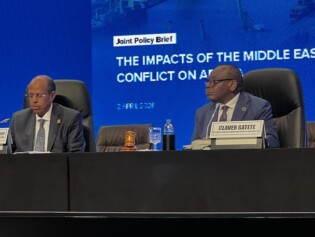
African Institutions in Plan to Stabilise Food, Fuel and Fertiliser Amid Mideast War
Fearing the Middle East war could drive millions into hunger and cripple economies, Africa’s leading institutions are drafting a strategy to mobilise domestic and "innovative" finance and harness national competitiveness to stabilise food, fuel, and fertiliser supplies.
Financing Africa’s Biodiversity Conservation With Dwindling Donor Support
As the global community marks 2026 World Wildlife Day today (March 3), this year's focus is on Medicinal and Aromatic Plants: Conserving Health, Heritage and Livelihoods. However, beneath these celebrations, a difficult question emerges: who will bear the cost of conservation when traditional donor funding becomes uncertain and in the face of climate change?
Transformative Change Will Save a Planet in Peril—IPBES
Nature is at a tipping point. With human activity having pushed up to 1 million plant and animal species close to extinction, securing sustainable development and halting global biodiversity collapse is no longer just an option but a requisite for human wellbeing.
Interlinked Solutions Key to Tackling Biodiversity, Water, Food, Health and Climate Change, says IPBES
Biological diversity is on the decline worldwide, and current approaches to address its loss have been piecemeal and ineffective in tackling the crisis facing nature—this is despite estimates that over half of global GDP (USD 58 trillion of economic activity in 2023) is generated in sectors that are moderately to highly dependent on nature, a new report by the Intergovernmental Platform on Biodiversity and Ecosystem Services (IPBES) finds.
Calls to Halt Construction of Massive Oilfield in One of Africa’s last Wildernesses
Wildlife and environmental campaigners have called for international action as concerns grow over a project to create a massive oilfield in one of Africa’s last wildernesses.
Despite Petitions & Mounting Pressure, Namibian Government Proceeds with Sale of 3% of Country’s Last Elephants
Over 100,000 concerned petitioners have urged the Namibian government to scrap its plan to auction off 170 wild elephants -- which include rare desert-adapted elephants -- but the country’s Ministry of Environment, Forestry and Tourism said this week that today’s Jan. 29 sale will go on as planned.
Prepaid Meters Scupper Gains Made in Accessing Water in Africa
While many countries appear to have met the U.N. Millennium Development Goal (MDG) of halving the proportion of people without sustainable access to safe drinking water, rights activists say that African countries which have taken to installing prepaid water meters have rendered a blow to many poor people, making it hard for them to access water.First Genocide of 20th Century Was in Africa, Says Nigerian Writer, Correcting Pope
An Anglo-Nigerian writer has respectfully urged Pope Francis to look beyond Armenia for the first genocide of the 20th century.
Land Seizures Speeding Up, Leaving Africans Homeless and Landless
There is a new scramble for Africa, with ordinary people facing displacement by the affluent and the powerful as huge tracts of land on the continent are grabbed by a minority, rights activists here say.
Activists Protest Denial of Condoms to Africa’s High-Risk Groups
Tatenda Chivata, a 16-year old from Zimbabwe’s Mutoko rural district, was suspended from school for an entire three-month academic term after he was found with a used condom stashed in his schoolbag.Namibian President Wins $5 Million African Leadership Prize
Outgoing Namibian President Hifikepunye Pohamba was Monday named winner of the Ibrahim Prize for Achievement in African Leadership, believed to be the most lucrative individual award in the world.

Palau Proves Sharks Worth More Alive Than Dead
Sharks have a safe haven the size of France, and the Republic of Palau that protects them is making millions of dollars from shark tourism.





The Week with IPS

NEXT STOP - SDGs
Tracking global progress towards a sustainable world
Tracking global progress towards a sustainable world
