Languages
Tuesday, November 17, 2026



News and Views from the Global South
Politics
MIDEAST: Advantage Hamas After Flotilla Fiasco
Israel may allow soft drinks, juice, canned fruit, salads, biscuits and potato chips into the Gaza Strip from next week. What should be an unremarkable event is making news headlines and portends unseen consequences.Iran “Determined to Shut Down all Dissent”
One year after massive protests erupted over Iran's disputed June 2009 presidential election - and just days before the U.N. Human Rights Council releases its report on Iran - the Islamic Republic is still conducting a widening human rights crackdown that has left hundreds of journalists, academics, lawyers, students, clerics, political and rights activists unjustly imprisoned.Israeli Push for Sanctions Losing Legitimacy
Israel has given guarded approval to the new round of sanctions imposed by the UN Security Council in the international community's bid to haul back Iran's nuclear programme.EU: ‘Aid Must Also Aid the Giver’
Aid to poor countries should be tailored more towards benefiting European firms, a top-level Brussels official has recommended.BOLIVIA: Complex Challenge of Making Decentralisation a Reality
Putting together the complex puzzle of the different kinds of provincial, municipal and indigenous autonomy in Bolivia will be a delicate task that will have to overcome struggles over funds, jurisdiction and ideology, said analysts consulted by IPS.Concerns Grow over Bagram’s Prison within a Prison
The administration of President Barack Obama is considering using Afghanistan's U.S.-run Bagram Air Base prison to indefinitely detain terrorism suspects captured far from a battlefield and who have not been charged with a crime - without any judicial oversight.JAPAN: Challenges Temper Optimism as New Premier Vows Reform
Expectations are high for Japan’s new prime minister, Naoto Kan, who has taken over the reins of a country saddled with massive public debt and a domestic furore over the failure of the former head of the Democratic Party of Japan (DPJ) and newly resigned premier Yukio Hatoyama to deliver on his campaign pledge to move the controversial U.S. military base out of the southern island of Okinawa.
Q&A: ‘True African Leaders Have Nothing to Fear From ICC’
As the first Review Conference of the Rome Statute that established the International Criminal Court takes stock of the ICC's achievements and considers amendments to strengthen the pursuit of justice around the world, the first African woman to win the Nobel Peace Prize is one of its strongest defenders.IRAN: Sanctions’ Effectiveness Widely Questioned
While top U.S. officials touted the U.N. Security Council's approval Wednesday of a new sanctions resolution against Iran as a major diplomatic breakthrough, most nuclear and Iran specialists say it is unlikely to be effective and could prove counterproductive.Brazil, Turkey Defy U.S. on Nuke Vote Against Iran
After several months of closed-door negotiations and shuttle diplomacy, the United States succeeded Wednesday in getting a new Security Council resolution - the fourth in a series - imposing a fresh set of sanctions penalising Iran for its nuclear programme.
As “Temporary” Camps Linger, Tensions Rise with Haitian Landowners
Thousands of victims of the January earthquake in Haiti are at risk of being displaced for a second time as private landowners throughout the nation's capital city grow impatient with makeshift tent camps on their properties.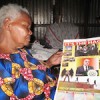
Kenyan Women Look to the Hague for Justice
Hanging from a rafter in Jane Wanjiku’s home is a calendar bearing the image of the International Criminal Court's chief prosecutor, Luis Moreno-Ocampo. It's an illustration of how the ICC has seized the imagination of ill-treated people around the world.NATO ‘Singing Israeli Tunes’
Strategists with NATO are eager to maintain the strong bonds they have developed with Israel in recent times, even though its forces last week attacked a ship flagged in Turkey, a steadfast member of the alliance.U.S.: Neo-Conservatives Lead Charge Against Turkey
As the right-wing leadership of the organised U.S. Jewish community defends Israel against international condemnation for its deadly seizure of a flotilla bearing humanitarian supplies for Gaza, a familiar clutch of neo-conservative hawks is going on the offensive against what they see as the flotilla's chief defender, Turkey.
Ecuador and the United States “Make Up”
"Ideological differences should not stand in the way of dialogue between governments": this was the common message sent out Tuesday by U.S. Secretary of State Hillary Clinton and her host, Ecuadorean President Rafael Correa.Draft U.N. Treaty Targets Security Firms in War Zones
A United Nations Working Group that monitors the activities of mercenaries worldwide is now trying to rein in the widespread human rights abuses by private military and security companies (PMSCs), which are being increasingly deployed in war zones and peacekeeping operations.
AMERICAS: OAS Debates Same Old Problems, Few New Solutions
The 40th General Assembly of the Organisation of American States, held in the Peruvian capital this week, failed to issue a decision on the reinstatement of Honduras, and instead served as a forum for Argentina, which seeks sovereignty over the Malvinas/Falkland Islands, and for Bolivia, in its fight for access to the Pacific Ocean.CAMBODIA: Premier Hun Sen Profits from Suppression and Aid
Cambodian Prime Minister Hun Sen is savouring another victory. His latest triumph: a string of verdicts against an outspoken female opposition lawmaker, Mu Sochua, who had accused him of making derogatory remarks about her.SUDAN: Oil Consortium Behind War Crimes – Aid Agencies
The entry of a Swedish-led oil consortium into southern Sudan in 1997 triggered civil war and crimes against humanity, claims a European coalition of aid agencies.NEPAL: Under-Five Deaths Show Robust Decline But Hurdles Remain
With still five years left before the expiry of the Millennium Development Goals’ (MDGs) 2015 deadline to reduce under-five mortality rate by two-thirds from the 1990 level, a mid-term survey of Nepal Family Health Program (NFHP) II shows the country has already achieved the target.BRAZIL: Thirst for Energy Drives Construction of More Dams in Amazon
Electricity consumption in Brazil will rise by 5.9 percent a year until 2019, and hydroelectric plants will continue to be the main source of power because they generate it at a lower cost, the government announced.« Previous Page — Next Page »


The Week with IPS

NEXT STOP - SDGs
Tracking global progress towards a sustainable world
Tracking global progress towards a sustainable world
