Languages
Friday, November 20, 2026



News and Views from the Global South
Politics
NICARAGUA: Young People Exiled by Poverty
If they could, about 60 percent of Nicaraguans under 30 would go to live abroad, according to studies on migration, which find that the country's chronic poverty is the main reason for wanting to migrate.RIGHTS-EGYPT: Invoking Religion Against Liberals
Self-appointed guardians of public morality are invoking an ancient instrument of Islamic jurisprudence against those whose ideas they deem immoral or heretical - or simply to gain fame.TRADE: Govt’s May Need to Do for Workers What They Did for Banks
The finding by the World Trade Organisation (WTO) and the International Labour Organisation (ILO) that the dropping of trade tariffs leads to jobs being lost in the formal sector while informal jobs grow is another confirmation of the adverse consequences of forced trade liberalisation.CULTURE-TAIWAN: Film Lets Audiences Revisit Overlooked Past
An overlooked piece of Taiwan’s cultural history is slowly making its way back into people’s hearts and minds with the documentary ‘E Sha Age’, due to be shown this week.SOUTH-EAST ASIA: No Welcome Mat for Civil Society at ASEAN Summit
A summit of regional leaders due to begin in Thailand on Oct. 23 has brought into relief a rift within the 10-member bloc about the space that should be given to civil society voices at such a gathering.MIGRATION-EL SALVADOR: Broken Homes, Broken Families
Zoila, 54, is raising her two grandchildren, who were left behind when her daughter headed to the United States in search of a better income. There are many women like her acting as surrogate mothers to their grandchildren in El Salvador, one of the Latin American countries with the largest proportion of its population living and working abroad.DEVELOPMENT-SOUTH ASIA: Women’s Peace Offensive
‘Give peace a chance' may just be another cliché for many, but for women who have suffered the ravages of war, endless strife and other forms of conflict, joining hands to find meaningful solutions to their collective aspiration lends it a whole new meaning.IRAQ: U.S. Diplomatic Adviser’s Troubling Role in Oil Politics
In 2003, U.S. diplomatist Peter Galbraith resigned at the end of a distinguished, 24-year government career. Over the years that followed, he worked as a contract-based adviser to leaders in Iraq's Kurdish community, while also arguing passionately in public media that Iraq's Kurds should be given maximum independence from Baghdad - including full control over any new sources of oil.BULGARIA: Migrants Denied Even Medicine
Hasun Albaadzh, an asylum-seeker from Syria, died Oct. 6 at the Busmantsi detention centre on the outskirts of Bulgarian capital Sofia. He had been held at Busmantsi for 34 months - considerably more than the maximum legal period of detention - and had been denied proper medical care.US-IRAN: Congress Begins Pressing Sanctions Legislation
As the administration of U.S. President Barack Obama prepares for a critical series of talks about the fate of Iran's nuclear programme, Congress has begun moving long-pending legislation to impose new unilateral sanctions against the Islamic Republic.
CLIMATE CHANGE: Taking Forests into Account
What role can forests play in the fight against climate change? What impact do tree plantations have? What effect will the bioenergy craze have on forests? These are some of the questions that experts, government officials and business leaders from around the world will try to answer next week in Argentina.POLITICS: U.N. Body Backs War Crimes Charges on Israel, Hamas
The 47-member Human Rights Council (HRC) approved a resolution Friday endorsing war crimes charges against Israel and the Palestinian militant group Hamas, as spelled out in a report by a four-member international fact-finding mission headed by Justice Richard Goldstone.AFRICA: Deal with Guinea Raises Questions About Chinese Role
Reports of a large infrastructure and minerals agreement between Guinea and Chinese investors this week have turned a harsh spotlight on the human rights and geopolitical stakes of the scramble for Africa's natural wealth.POLITICS-ZIMBABWE: Unity Govt In Chaos
Zimbabwe's eight-month-old inclusive government suffered its biggest setback to date, when Prime Minister Morgan Tsvangirai announced that his Movement for Democratic Change (MDC-T) was partly disengaging from the government.ECONOMY-CUBA: Cutting Subsidies to Balance the Budget
Cuban President Raúl Castro is willing to risk unpopular measures to free the state from its excessive burden of subsidies and for-free services, as part of a programme to adjust public expenditure to shrunken government revenues and balance the budget.SOUTH AFRICA: "If You Are Landless, You Are Damned"
A group of small-scale South African farmers has lodged a complaint with the South African Human Rights Commission (SAHRC) against the government, accusing the authorities of not sufficiently assisting small farmers to make a living and therefore undermining their human right to food security.INDIA/CHINA: Hopes for Early Border Settlement Recede
Hopes for an early settlement of the ‘world’s oldest standing border dispute’ receded last week after Asian neighbours China and India engaged in a tit-for-tat spat that ran counter to the spirit of a formal dialogue they are engaged in.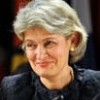
CULTURE: First Woman Head Seeks New Direction for UNESCO
The rapturous applause that greeted Irina Bokova Thursday as she was confirmed UNESCO's new director-general was a sign that the organisation is keen to move on from recent controversies.LABOUR-EUROPE: This Job Is Killing Me
A spate of suicides in France is raising new questions about precarious working conditions imposed by authoritarian management models.AGRICULTURE-ZIMBABWE: "The Rule of Law Just Isn’t There"
Agriculture used to be Zimbabwe’s economic mainstay but it has been on the decline since 2000 when the ZANU-PF government embarked on a so-called land reform programme that resulted in about 4,000 productive white farmers losing their farms, many to members of the politically connected elite.SRI LANKA: Newly Reopened IMF Office Launches Budget Probe
The International Monetary Fund’s new resident representative in Sri Lankan is likely to receive his baptism of fire once he settles into his new post this week.« Previous Page — Next Page »


The Week with IPS

NEXT STOP - SDGs
Tracking global progress towards a sustainable world
Tracking global progress towards a sustainable world
