Languages
Thursday, November 26, 2026



News and Views from the Global South
Politics
POLITICS-INDIA: Communists Turn Unpopular Over SEZ Plans
When acclaimed filmmaker Aparna Sen refused to participate in a state-run film festival, that began on the weekend, it was a sign of how alienated Bengali intellectuals have become from a programme of economic reforms undertaken by Marxists who have ruled West Bengal state for 30 years.IRAQ: A Tale of One City, Now Two
The separation of religious groups in the face of sectarian violence has brought some semblance of relative calm to Baghdad. But many Iraqis see this as the uncertain consequence of a divide and rule policy.MIDEAST: All Not Quite Aboard for Annapolis
U.S. Secretary of State Condoleezza Rice has again paid a visit to the Middle East, held meetings with Israeli Prime Minister Ehud Olmert and Palestinian President Mahmoud Abbas, spoken about the seriousness of the two sides in their efforts to revive the peace process, but has again left the region without issuing invitations to a planned U.S.-led peace summit in Annapolis, Maryland.MOLDOVA: Peace Plan Fails to Fit Russian Agenda
Moldovan President Vladimir Voronin has been promoting what he calls a new plan for the resolution of the status of Transdniester. But the separatist government in Tiraspol and its strong ally, Moscow, are not willing to discuss it for the moment.SERBIA: Forget the Obstacles En Route to EU
Serbia has finally initialled a long awaited deal that could lead eventually to full membership of the European Union (EU).DEATH PENALTY-MOROCCO: King Seen as Final Arbiter in Long-Running Debate
The months-long political impasse over death penalty abolition in Morocco can only be finally broken by King Mohamed VI, according to a leading rights campaigner.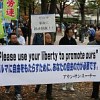
RIGHTS-JAPAN: Cut Aid to Burma Say Demonstrators
About 1,300 Burmese expatriates rallied in the capital’s Yoyogi Park on Sunday afternoon, appealing to the international community to put pressure on the Japanese government to cut aid to their military-ruled country.DEATH PENALTY-JAPAN: Dissenting Judge Breaks 40-Year Silence
Norimichi Kumamoto says he still feels "tremendous anger" and cannot maintain his silence any longer. In 1968, he was one of three judges who sentenced a boxer to death on charges of murdering a family of four, although at the time he was convinced the man was innocent.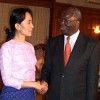
POLITICS-BURMA: Aung San Suu Kyi’s Release Fits Junta’s Agenda
Tentative talks between Burma’s pro-democracy leader Aung San Suu Kyi and the country’s military rulers have begun, raising hopes of a political breakthrough. "If the talks go well, she may be released soon," a spokesman for her party, the National League for Democracy (NLD), told journalists on the weekend.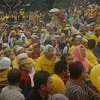
RIGHTS-MALAYSIA: Rally Defies Police Ban to Demand Poll Reforms
Tens of thousands of people defied riot police, water cannon and pouring rain to march through the capital city, on Saturday, to demand electoral and other reforms and deliver a strong rebuff to Prime Minister Abdullah Badawi.URUGUAY-ARGENTINA: Smoke from Pulp Mill Clouds Relations
Everything was in place for the beginning of the end of the long-running conflict: a friendlier face about to be sworn in as president in Argentina, a tiny bit of flexibility on the part of Uruguay, a few points of agreement, and a Spanish mediator appointed by the King.IBERO-AMERICA: Summit on Track to Protect Migrants’ Social Rights
The Multilateral Convention on Social Security, to be signed at the 17th Ibero-American Summit in Chile, is an important step toward improving the quality of life of poor people in this community of nations, according to its governments.
RIGHTS-US: Case Crumbles Against Officer Who Refused Iraq
First Lt. Ehren Watada, the first commissioned officer to refuse deployment to Iraq, won what his backers are calling a "huge victory" in court Thursday.
Q&A: 'Don't Think of Migrants in Numbers Alone''
The clash among cultures is not the inevitable destiny of our times, says Predrag Matvejevic. Intellectuals and politicians must both do their bit "to foster the concrete utopia of the alliance of civilisations."SPAIN: Biofuels – Good for Business, Bad for the Poor, Say Activists
Making fuels from plants is strongly supported by the business community in Spain, but equally strongly criticised by environmental organisations because of its negative impact on food production.LABOUR-IRAN: Sugar Industry Strikes Bespeak Bitter Conditions
Labour protests and strikes, though firmly suppressed in Iran, are gaining momentum as failure to manage the frail economic structure pushes more and more state-owned factories and private enterprises into bankruptcy.IRAQ: Fewer Deaths Bring No Reassurance
Despite claims by Iraqi Prime Minister Nouri al-Maliki and Bush administration officials that violence in Iraq is decreasing, residents in the capital tell a different story.ALBANIA: European Integration Takes More Than Attitude
Albanians are among the most Euro-enthusiastic people in the Western Balkans, surveys show. But that does not mean they believe they will join the EU in a hurry.MOROCCO: Interest Declines in a Parliament Under Monarchy
New moves towards some form of democracy are on offer in this North African nation ruled by a king. But there seems to be little faith in them, and there are relatively few takers.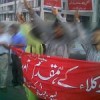
POLITICS-PAKISTAN: Intelligentsia Finds Ways to Beat Emergency Rule
Faced with a continuing news blackout and with street protests being met with police beatings and imprisonment, members of Pakistan’s civil society who oppose the ‘emergency’, imposed by President Gen. Pervez Musharraf a week ago, are finding alternative ways to express dissent.RIGHTS-ARGENTINA: Identifying the Remains of the “Disappeared”
With backing from the state, a non-profit scientific organisation in Argentina has launched a mass campaign to collect blood samples from the families of people who fell victims to forced disappearance during the 1976-1983 dictatorship, in order to identify the remains of some 600 people and create a database.« Previous Page — Next Page »


The Week with IPS

NEXT STOP - SDGs
Tracking global progress towards a sustainable world
