Languages
Friday, November 27, 2026



News and Views from the Global South
Politics
FRANCE: Sarkozy Charges Ahead
Since his inauguration as France's president in May, Nicolas Sarkozy has appeared as a whirlwind of activity following the often-lethargic decade-plus rule of his predecessor, Jacques Chirac.MIDEAST: A Divisive Word Surfaces
Right-wing lawmakers in Israel are fuming over a decision by Israel's education minister to permit use of a textbook in state-run Arab schools that includes the word "nakba" - Arabic for "catastrophe", the term Palestinians use to describe the founding of the Jewish state.CHINA: Close Sudan Links Cast Shadow On Olympics
Elaborate celebrations are being planned for the Aug. 8 one-year countdown to the Beijing Olympics, but Chinese leaders fear both the party and the games could be spoiled by an escalating international campaign to link the violence in Sudan's Darfur region to the 2008 Beijing Olympics.RIGHTS-COLOMBIA: Victims Speak Out and Demand Respect
"One encounter, many paths: united against forgetting," the placards read, as 3,500 victims of the civil war in Colombia demand recognition and respect, from the authorities and society.US-INDIA: ‘123’ Nuclear Agreement Completed
India and the United States have announced a bilateral agreement permitting the export of U.S. civilian nuclear technology to India in exchange for a promise that the South Asian giant will allow International Atomic Energy Association (IAEA) inspectors access to its nuclear facilities.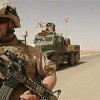
POLITICS-US: Symbolic Vote Rejects Permanent Bases
A bill that would ban permanent U.S. military bases in Iraq overwhelmingly passed the House of Representatives on Wednesday.ARGENTINA: Regional Leader in Traffic Deaths
Traffic accidents in Argentina have been claiming an average of 20 lives a day over the past decade, making it the top country in Latin America for these tragedies. They are also the main cause of death among people under 35, but in spite of this there are no official plans to end the slaughter on the roads.CARIBBEAN: Influx of Chinese Workers Irks Local Unions
When references are made to China in the Caribbean, eyes and ears are turned more to its ongoing dollar diplomacy fight for recognition by regional governments than to trade or other aspects of Sino-Caribbean relations.DEVELOPMENT-NAMIBIA: No Water In Babylon
Cardboard and rickety tin structures jostle for space on a barren outcrop in the sprawling suburb of Katutura in Namibia’s capital Windhoek. A putrid smell hangs in the still, afternoon air as flies wing their way over the debris.THAILAND: Countdown to Referendum Begins with Arrests and Warnings
Dr. Weng Tojirakan was in a defiant mood the morning after he was detained by the police at the Criminal Court in the Thai capital. "This happened because of the tyranny in our country," the 56-year-old medical doctor said in an interview Friday.
FILM-US: A Blurry Line Between Propaganda and News
A shocking thing happens midway through Norman Solomon's documentary film "War Made Easy".TRADE: Italian Delegation Finds More Than Big Five in S. Africa
‘‘Italians used to think of Africa in terms of safari and animals, especially the Big Five. Now they are realising that there’s business potential in South Africa,’’ says Giovanna Roma, secretary general of the Italian South African Chamber of Commerce and Industry of Northern, Eastern and Western Cape.
EDUCATION-PAKISTAN: Taliban Orders Girls Into Veils in Border Areas
Threatening letters sent by pro-Taliban rebels in a border area of the North West Frontier Province (NWFP) in Pakistan warning girls to wear a veil or keep away from school have had the desired results.IRAQ: Football Succeeds Where Politics Fails
An Iraqi football victory seems to have united Iraqis across the country where politicians only divide it.TURKEY: Erdogan Sailing Into Reality
Sunday's elections have elevated Turkey to the rank of mature democracy. By giving an impressive 46.7 percent of their vote to Recep Tayyip Erdogan, Turkish citizens have expressed determination for social stability, economic growth, and political emancipation of the urban middle class and rural populations.BULGARIA: Release of Medics Leaves Larger Issues Hanging
The release of six Bulgarian medics detained in Libya for eight years seems to have led to a sudden "normalisation of ties" between Libya and the European Union.RIGHTS: EU Firms Supplying Burmese Military via Indian Link
For nearly 20 years, the European Union has applied a ban on weapons sales to Burma in protest at the brutal military dictatorship in the country. According to human rights campaigners, this embargo risks unravelling because firms from several EU countries are involved in building military helicopters destined for Burma.CUBA: Raul Castro Acknowledges Day-to-Day Hardships
Cuba’s acting president, Raúl Castro, made a frank assessment of the situation in his country Thursday, acknowledging difficulties and challenges faced by Cubans in their daily lives, ruling out the possibility of short-term solutions, and warning that it is essential to bolster production, especially of food.
SRI LANKA: Not All Tsunami Reconstruction Is Equal
It has been 30 months since the waves struck the coasts of Sri Lanka in the morning hours of Dec. 26, 2004. Since then, in a pattern that has become symbolic of the divided nature of the South Asian island, parts of the country have motored ahead with the reconstruction effort, while others have lagged woefully behind.POLITICS: South Sceptical of North Korean Assurances
When the six-party talks on the denuclearisation of North Korea ended last week, there was plenty of scepticism in neighbouring South Korea: to what extent can the reneging North be trusted to keep its pledges and promises in the future?POLITICS-NEPAL: End of Road for Nepal’s Monarchy?
A republican wave that swept King Gyanendra out of power last year continues to blow strongly through Nepal.« Previous Page — Next Page »


The Week with IPS

NEXT STOP - SDGs
Tracking global progress towards a sustainable world
