Languages
Saturday, November 28, 2026



News and Views from the Global South
Politics
IRAN: In Catch-22 Over Release of British Mariners
A week after President Mahmoud Ahmadinejad ordered the release of 15 British mariners, detained on charges of trespassing into Iranian waters, it is still unclear if he got any mileage out of an incident that may well have sparked off a new war in the Middle East.RIGHTS: Indigenous Peoples’ Rights Ignored Again
The rights of indigenous people are given respect in speech after speech, but few countries have signed up to an international convention to protect those rights.MIDEAST: Israelis Torturing Palestinian Children
Mohammed Mahsiri, a resident of Dheisheh refugee camp in the occupied West Bank, sits in a crowded café, a red kuffiyeh wrapped around his neck and an iconic portrait of Che Guevara emblazoned on his black t-shirt.KYRGYZSTAN: Political Clashes Head for the Street
Political clashes between the President's supporters and his opponents seem headed for the street in conflicting demonstrations planned for Wednesday this week.CLIMATE CHANGE-US: Grasping the Geopolitics of Warming
The Central Intelligence Agency, National Security Agency, the Pentagon and the Federal Bureau of Investigation should pool data and offer a comprehensive review of the national security threat posed by global warming, say U.S. Senators Dick Durbin and Chuck Hagel.POLITICS: Elliott Abrams and Deja Vu All Over Again
It has an all too familiar ring to it.HUMAN RIGHTS: Mexico Under Scrutiny by Inter-American Commission
The delegates of the Inter-American Commission on Human Rights (IACHR) who began a visit to Mexico Monday will leave at the end of the week with their suitcases full of files and complaints by civil society groups, which say the human rights situation in the country remains serious and that the government is attempting to criminalise social protest.ZIMBABWE: “Mbeki Needs to Move from Quiet Diplomacy to Open Mediation”
A debate is underway among analysts and civil society activists about how South African President Thabo Mbeki should proceed in fulfilling the mandate given to him last month by the Southern African Development Community (SADC), to continue mediating between Zimbabwe's government and opposition.POLITICS: New Questions Emerge About Wolfowitz’s Influence
The nepotism controversy besetting World Bank President Paul Wolfowitz and his long-time partner and colleague Shaha Riza heightened Monday with new revelations that Riza may have had a history of flouting Bank rules while financially benefiting from jobs associated with Wolfowitz's former post at the Pentagon.BALKANS: Send Me A Dalekoumnozitelj, I Am Croat
Forget the past, they say, because the language it left in the Balkans is too mixed up with Serbs and Bosniaks. Croat linguists are now producing a language of their own. If you want to send them a fax about this, you'd have to call it a dalekoumnozitelj.HEALTH-ASIA PACIFIC: Stress on Community Approach to HIV/AIDS
Tired of waiting for governments to deliver on promises, activists, experts and people living with HIV/AIDS in Asia and the Pacific will push for stronger community leadership in the battle against the disease at a regional summit to be held in this city in August.EGYPT: ‘Return to a Police State’
The amendment of 34 articles of the constitution makes a "police state" of Egypt, opposition leaders say.AFGHANISTAN: Taliban Executes Freed Italian Scribe’s Colleague
A young Afghan journalist, who was abducted along with the freed Italian journalist Danielle Mastrogiacomo in southern Afghanistan by Taliban militants, was killed 48 hours ahead of the expiry of a deadline for negotiations issued to the government.IRAQ: And These Refugees Are Lucky
Salim Hamad, 33, glances at the sprawling buildings of the Yarmouk refugee camp in Damascus and sees business. He has set up a small tea shop at the camp.PAKISTAN: Military Ruler ‘Floored’ by Burqa Brigade
For a tough military ruler, who in recent weeks removed the chief justice from office and allowed police raids on leading newspapers, Pakistan President Gen. Pervez Musharraf appears curiously paralysed by roving bands of the ‘burqa brigade' - veiled female religious scholars armed with sticks and ready to enforce Shariah (Islamic law).CULTURE-CHINA: Tomb Traders Cash in on Costly Funeral Customs
The fact that in China the dead are venerated more than the living has opened up opportunities for businessmen attempting to cash in on the country's elaborate and costly funeral traditions that are seeing a revival.SOUTH ASIA: Regional Cooperation Finally in Sight
South Asia, home to more than one-sixth of humanity, and situated at the junction of three important sub-regions of the Asian continent, has made cautious moves towards mutual cooperation and greater integration.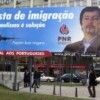
PORTUGAL: Extreme Right to Host Anti-Immigrant Conference
The miniscule but active extreme right groups in Portugal, which in the last few days have gained some notoriety in the press despite their small size, have invited like-minded organisations from other European countries to a "continent-wide" meeting of leaders opposed to immigration.BOLIVIA: Errors in Contracts Complicate Gas Nationalisation
In the face of gas shortages, Bolivians are criticising the way the nationalisation of the country's energy reserves is being carried out, and social activists have once again begun to demand the outright confiscation of the assets of the 12 foreign oil companies operating here.DEVELOPMENT: South Faults One-Size-Fits-All Approach
The Non-Aligned Movement (NAM) and the Group of 77 (G77), the two largest political and economic groups of developing nations, have expressed reservations on a proposed plan to restructure the U.N.'s operational activities for social and economic development.HUNGARY: Russian Energy Troubles West
Western powers are concerned that Hungary's relations with Russia, and especially the Russian state-owned energy giant Gazprom, are becoming too warm at a time when Europe seeks to reduce dependence from Russian natural gas.« Previous Page — Next Page »


The Week with IPS

NEXT STOP - SDGs
Tracking global progress towards a sustainable world
