Languages
Friday, November 13, 2026



News and Views from the Global South
Poverty & MDGs

Q&A: Water Pushed to the Limit
When it comes to water, "humanity does not have the full awareness of the danger it is facing and will only act under extreme circumstances. The bad news is that those extremes are drawing near," Manuel Baquedano, president of the Chilean non-governmental Institute of Political Ecology, told Tierramérica.SWAZILAND: Simple Solution – Save Rainwater
It's so early, the frogs are still croaking, as women push forward holding firmly onto their buckets while dodging cattle that are also scrambling for water in the pond at Gebeni. It has rained only a few times since the wet season began in October, and competition for water begins as early as 5:00 am.HEALTH: U.S. Urged to Pay Fair Share of Global Fund
The Global Fund to Fight AIDS, Tuberculosis (TB) and Malaria is facing a critical funding gap of five billion dollars - an amount that could save nearly two million lives in the coming year, leading public health advocates said at a teleconference Thursday.
MAURITIUS-RIGHTS: Sceptical Welcome for Equality Law
Nobody shall suffer prejudice in his social life or his place of work because of his or her ethnic origin, religion, age, sexual orientation, political conviction or physical handicap. This is the challenge of Mauritius's new Equal Opportunities Act (EOA).
SWAZILAND: Free Education? Maybe Next Year…
Although the Swazi constitution stipulates free primary education from 2009, parents will have to pay school fees this year. Only three days before the start of the January term, the country's government announced it will continue to charge for primary education, contrary to the law.RIGHTS-ZAMBIA: Vulnerable Children Must Fend For Themselves
There will be as many as one and a half million orphaned children in Zambia by 2010. Deprived of adult guardians by the AIDS pandemic, many of these children will end up living in the streets of the country's major towns and cities.DEVELOPMENT: Food Summit – Concern Yes, Concrete Steps No
A "High Level Meeting on Food Security for All" convened by the United Nations and the Spanish government ended Tuesday without approving concrete measures but with a commitment to redoubling efforts to bolster official development aid (ODA).POLITICS: Six Compete for Agriculture Agency Head
Against the backdrop of rising hunger, declining agricultural production and food shortages, the Rome-based International Fund for Agricultural Development (IFAD) is set to elect a new president next month.
HEALTH-MALAWI: Rains Expose Poor Sanitation
Zimbabwe - where cholera has claimed more than 2,700 lives so far according to the Red Cross - is not the only southern African country facing increased disease as rains set in across the region. Malawi is also battling a cholera outbreak which has killed 19 people since the onset of the rainy season, an unusually high death toll.HEALTH-AUSTRALIA: Fighting Dengue With Bacterial Ally
Australian scientists appear to have made a potentially major breakthrough in the battle to combat dengue fever, the mosquito-borne infection which leads to more than 20,000 fatalities worldwide each year.POPULATION: Bridging the Family Planning Gap
Some 43 countries around the world now have populations that are either essentially stable or declining slowly.
SOMALIA: Poverty Forces Children Into the Streets
Hassan Maye, 13, has been fending for himself and his family in the streets of Mogadishu since he was ten. He shines shoes in the Sinai neighbourhood in the southern part of the Somali capital. On a good day, he says he earns 18,000 shillings - equivalent to roughly 50 cents.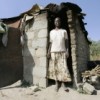
ZIMBABWE: Now a 'Factory for Poverty'
Over 75 percent of the people in crisis-riddled Zimbabwe are living in desperate poverty, with children bearing the brunt. And with rival parties still deadlocked over implementation of a power-sharing agreement signed four months ago, things are likely to get worse before they improve.
AFRICA: Climate Change Threatens Food Security
Climate change will have a significant impact on southern Africa’s already compromised food security, environmental experts warned at the fifth Alexander von Humboldt International Conference at the University of Cape Town (UCT) in South Africa.HEALTH-LATAM: Too Many Women and Children Dying
"Latin America is not in the tragic conditions of the least developed countries, but an average rate of 130 maternal deaths per 100,000 live births is very high," UNICEF representative Egidio Crotti told IPS.DEVELOPMENT-AFRICA: Better Education Improves Health of Mothers and Children
A new UNICEF report reveals there is still much to be done to reduce infant and maternal mortality in sub-Saharan Africa. Failure to improve care for pregnant women and newborns threatens to undermine progress on all health-related development goals.CLIMATE CHANGE: As Politicians Stall, Grassroots Fills Void
Global emissions of carbon dioxide must reach a peak in less than 10 years and then begin a rapid decline to nearly zero by 2050 to avoid catastrophic disruption to the world's climate, according to a new report.HEALTH-NEPAL: On Course to Achieve MDG on Maternal Health
Impoverished Nepal has dramatically reduced maternal mortality cases from 540 per 100,000 live births in 2001 to the present 280 - a feat experts attribute chiefly to the legalisation of abortion.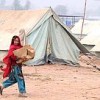
PAKISTAN: Nightmare for Civilians Uprooted by Conflict
"We are in hell! No electricity, no clean drinking water! This is no life, we were better off at home!" fumes Arjumand Khanum, a refugee from Bajaur Agency, on the Pakistan-Afghanistan border.AIDS-AFRICA: Some Signs of Progress
The latest UNAIDS Report estimated that 33 million people around the globe are living with HIV; 22 million in Sub-Saharan Africa alone. Around 2.7 million new HIV infections occurred worldwide in 2007. However, encouraging new data suggests there have been significant gains in preventing new infections in several African countries with high prevalence rates.SWAZILAND: Patients Fail to Adhere to TB Treatment
Every five minutes she gives a hacking cough. Ndlaleni Ndzinisa (70) says she has continuously suffered from tuberculosis for the past five years. Because she cannot afford to pay for transport to the nearest hospital, she has repeatedly failed to adhere to her tuberculosis (TB) treatment.« Previous Page — Next Page »


