Languages
Friday, November 13, 2026



News and Views from the Global South
Poverty & MDGs
CLIMATE CHANGE-BRAZIL: Calls for Adaptation Unheeded
Torrential rains have deluged several Brazilian states since November, causing nearly 200 deaths so far and reinforcing environmentalist campaigns calling for urgent climate change adaptation measures.BOLIVIA: Mothers Teaching Mothers to Combat Malnutrition
One of every two children under the age of five in the southwestern Bolivian highlands municipality of Betanzos suffers the effects of chronic malnutrition.DEVELOPMENT: Africa May Face ‘Centuries’ of Poverty
Extreme poverty will continue to blight sub-Saharan Africa for another 200 years unless action to overcome it is intensified, a new report has suggested.MEXICO: Films on Indigenous People – But Who Will See Them?
Half a century of films about indigenous peoples have been removed from forgotten corners of store rooms, recorded on compact discs and launched on the Mexican market, in order to bring to light views and realities that are seldom shown on commercial television and in movies.
PERU: A Mining Town’s Woes
A four-hour drive from the Peruvian capital, the town of Morococha ("coloured lake" in the Quechua language) is a living example of what the mining industry has brought to many poor rural villages and towns in this country.
PERU: Open-Pit Mine Continues to Swallow City
An immense open-pit mine located 4380 metres above sea level is swallowing up the centre of the city of Cerro de Pasco in Peru’s central highlands, while the damages, in the form of toxic waste, spread to nearby villages.HEALTH-MALAYSIA: Divided Over HIV Testing
A raging debate over mandatory HIV screening has exposed fear and ignorance within government, despite years of awareness campaigns to eradicate prejudice against people living with the virus and acquired immune deficiency syndrome (AIDS).ARGENTINA: Ecoclubs Draw Youngsters into Environmental Leadership
Ecoclubs, an international social movement of teenagers and young people who work with their communities to enhance quality of life through environmentally-related initiatives, while developing their own potential for leadership and action, were born in Argentina 16 years ago and have since expanded to 30 countries in Latin America, Europe and Africa.HEALTH-AFRICA: Maximising the Benefits of AIDS Funding
Significant new investments in the fight against the AIDS pandemic could have positive impacts on broader health systems in Africa if governments handle them right.SOUTH AFRICA: Community Gardens Contribute to Food Security
A few years ago 66-year-old grandmother Regina Fhiceka and her family of five ate vegetables only once a week. They would survive on maize and bread the rest of the time - the cheapest food available in the poor township of Philippi, just 15 minutes from the affluent business district of Cape Town.
SOUTHERN AFRICA: Climate Change Threatens Livelihoods
Climate change will affect the Zambezi River basin more severely than any other river system in the world, according to Kenneth Msibi, Water Policy and Strategy Expert for the Southern African Development Community (SADC). Increased floods, drought and increased levels of disease threaten lives and livelihoods all along the river’s length.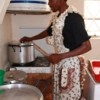
GENDER-SOUTH AFRICA: 'A Real Man Does Provide Care'
Sonwabo Qathula puts on his apron and starts peeling a pile of butternuts, while a pot of rice boils on the stove next to him. The 50-year-old is preparing lunch for poor and orphaned children who attend a rural school in the Eastern Cape.CHILE: Best Christmas Gift – a New House, Built by New Friends
Before the volunteers showed up at her house, Pamela Peña was nervous. She was embarrassed for others to see the poverty that her family lived in. But once the work started, she relaxed and enjoyed the unexpected Christmas present.
CLIMATE CHANGE: Arctic Peoples Claim Their Right to Cold Temperatures
"Terrifying" is the word that best describes the situation of a hunter who is lost on shifting ice, or of the homeowner whose house splits in two when its foundation sinks, says Canadian indigenous leader Mary Simon when asked about the effects of global warming on the Inuit people.CLIMATE CHANGE: African Proposal Yet to Gain Foothold
Africa's bid to expand carbon-trading mechanisms and create rewards for sustainable farming practices on the continent made little headway at the recently concluded climate change conference in Poznań, Poland.AIDS-SOUTH AFRICA: Balancing Individual Rights Against Public Health
Public health and individual human rights are poor friends. What may be good for society may be bad for the individual, or the other way round. And nothing sharpens this tension as starkly as AIDS.DEVELOPMENT-AFRICA: Sanitation: 'This Is the Way We Live'
In 1925, Mahatma Gandhi remarked that "Sanitation is more important than political independence." More than 80 years later, access to basic sanitation remains out of reach for 546 million people in sub-Saharan Africa.
COLOMBIA: New Meaning in Life for Young Shantytown Dwellers
After three of Viviana’s friends were killed, and one of them dismembered, she began to think things over, and decided to join the Legión del Afecto project in Colombia, leaving six years of gang life behind her.
SOUTHERN AFRICA: Building Regional Water Management
As southern Africa braces for the negative effects of climate change, calls for integrated water resources management become more strident.AGRICULTURE-SUDAN: Can Local Investors Beat Foreign Investment?
Sudan is hoping to use foreign cash to reinvigorate its under-performing agricultural sector, but there is growing disagreement over the extent to which outsiders, rather than local farmers, should be taking control of the industry.
DEVELOPMENT: Investing in a Better World
Developing countries will be able to share best practices for development more efficiently via the newly created South-South Human Development Stock Exchange (SS-HDSX), as social entrepreneurs meet up with potential social investors on this online platform.« Previous Page — Next Page »


