Languages
Sunday, November 15, 2026



News and Views from the Global South
Poverty & MDGs
IRAQ: Corruption Eats Into Food Rations
Amidst unemployment and impoverishment, Iraqis now face a cutting down of their monthly food ration – much of it already eaten away by official corruption.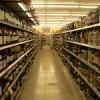
MEXICO: No Place for Small Farmers at the Supermarkets
A Mexican coffee grower receives about three dollars per kilogram of unprocessed coffee beans, and the consumer here pays 11 dollars. That price difference, in large part, is the result of the growing power of a handful of supermarkets.
RIGHTS-BOLIVIA: Guarani Families in Forced Servitude
Efforts by Bolivia’s land reform authorities to free 167 Guaraní families living in servitude in Alto Parapetí, a rural area in the eastern Bolivian lowlands province of Santa Cruz, have brought to light a phenomenon that had remained largely hidden and ignored until now in the country’s vast Chaco plains region.MOZAMBIQUE: Officials Master Floods – But Battle To Contain Diseases That Follow
More people have died of cholera following recent floods in Mozambique than the number of those who perished in the rising floodwaters. Most rivers in central and northern Mozambique burst their banks after heavy rains in December, January and February, and as a result of Cyclone Jokwe - which hit in early March.EUROPE: Tax Havens Cheating the Poor
Tax havens in Europe are depriving poor countries of more money than they receive in development aid, it has been alleged.Q&A: Circumcision an “Opportunity To Take Great Strides Forward” Against HIV
Results from trials in South Africa, Kenya and Uganda in 2006 showed that male circumcision reduced the transmission of HIV from women to men by up to 60 percent. On the basis of these results, the Joint United Nations Programme on HIV/AIDS and the World Health Organisation have recommended that countries encourage men to be circumcised.TRADE-RUSSIA: Ethiopia Seeks Preferential Treatment for Coffee
After several months of trade negotiations in the joint Russian-Ethiopian economic commission, Russia is considering allowing Ethiopia to bring in its different brands of aromatic coffees on a preferential basis.LABOUR-CAMBODIA: US Recession May Hit Anti-Sweatshop Campaign
Recession in the United States is endangering a unique experiment that has seen Cambodia become a leading player in the campaign to eradicate sweatshops in the textile industry.HEALTH-SOUTH AFRICA: Where Have the Piglets Gone?
Each psychiatric patient leaving Tower Hospital in the Eastern Cape Province under a new project to integrate patients into the community is sent home with two piglets. While at the hospital, patients are trained to raise pigs, the hope being that they will use the piglets for breeding to develop a sustainable source of income once discharged.DEVELOPMENT: Food Crisis May Get Worse Before it Gets Better
The spreading food crisis - triggered primarily by rising prices, declining outputs and growing scarcities worldwide - is threatening to impact heavily on the most vulnerable in society: women and children.FINANCE: Oil Majors Rapped Over Secrecy, Corruption
Leading oil firms impede efforts to stamp out poverty and corruption by shrouding their financial dealings in secrecy, says a global watchdog.SOUTH AFRICA: Water Supply Proposal Sparks Controversy and Suspicion
A plan to increase the supply of potable water to two coastal towns in South Africa's Eastern Cape Province is provoking heated debate.TRADE: Zimbabwe, ”A Hard Sell”
The Zimbabwe International Trade Fair (ZITF), which ended this past weekend, was once celebrated as a forum to showcase the vast investment opportunities in the then bread basket of the Southern African region. It was established almost five decades ago.KENYA: Relocation of Traders in Nairobi Still Beset With Problems
Jackson Gitonga’s business has suffered during the recent post-election violence. He could not leave his house to sell his wares - second-hand shoes which, he says, are of high quality. He recorded a loss for the first time since he had started working as an informal trader three years ago.ASIA: Food Crisis Adds to Women’s Burden
As if the burdens they shoulder are not enough, Asia’s women are being compelled to bear the additional weight of rising food prices, say women’s rights activists from across the region.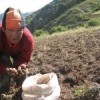
PERU: Preserving the Potato in Its Birthplace
Thousands of varieties of potato (Solanum tuberosum), one of the most widely-eaten and well-known foods in the world, have been developed in the heart of South America’s Andes mountains, where the crop was domesticated more than 8,000 years ago.MEXICO: New Recipe Against Poverty
The government of conservative President Felipe Calderón presented a new anti-poverty strategy in Mexico Monday, which will initially focus on delivering food aid to the poor.
DEVELOPMENT: If There's No Rice, Let Them Eat Potatoes
When a gaggle of unruly and starving peasants complained about a shortage of bread in 17th century France, the queen consort Marie Antoinette is said to have infamously remarked: "Let them eat cake."ARGENTINA: Training Health Agents to Reduce Child Mortality
An ambitious new programme for training health agents to help reduce infant mortality in small rural communities and indigenous villages, launched by one of Argentina’s best-known human rights groups, drew many more applicants than the organisers had hoped for.
Q&A: Singing to a Political Beat
If a European rock music fan has just one album by an African artist in his or her collection, there is a higher than average chance it was recorded by Youssou N'Dour. The Senegalese man's status as his continent's most lucrative cultural export was underscored in 2005, when he was the only African to appear at the main Live8 concert in London's Hyde Park, an event that attracted several billion TV viewers, according to its organisers.
AFRICA: Agricultural Extension Work Both Important and Under-valued
At a time of international concern about the future of the world's food supply, it's a comment that gives pause for thought: "I teach university students agriculture and extension but many of them opt for other professions, especially in ICTs, because agriculture is 'for those who haven't gone to school'."« Previous Page — Next Page »


