Languages
Wednesday, November 18, 2026



News and Views from the Global South
Poverty & MDGs
ENVIRONMENT-CHAD: Plastic Bags Convenient, Ubiquitous, Stifling
You see them in roads, public squares and dump sites. Even more are unearthed when road building operations get underway in Chad's capital, N'Djamena, making plastic bags one of the biggest sources of pollution in the city.DEVELOPMENT-INDIA: NGOs Balk at Tighter Gov’t Controls
Non-governmental organisations (NGOs) in India are up in arms against moves by the federal government to regulate the flow of foreign funds into their coffers through a new bill that would amend existing law governing contributions from abroad.TRADE-AFRICA: Where Are the EPA Impact Assessments?
Civil society organisations in southern and eastern Africa have urged John Kaputin, the secretary general of the African, Caribbean and Pacific (ACP) group of states, to insist that assessments be done to evaluate the potential effects of the European Union's proposed economic partnership agreements (EPAs).CHILE: Fine Tuning the Fight Against Domestic Violence
The trial of Alfredo Cabrera, a Chilean man accused of murdering his six-year-old daughter by throwing her from the window of their seventh floor apartment after trying to kill his partner, will open Wednesday, amidst a clamour for him to be handed the maximum sentence.ECONOMY-KENYA: Buying Airtime to Chat About Poverty
In an election year, it's undoubtedly something that Kenyan officials hoping to regain power will be pointing to: steady economic growth during President Mwai Kibaki's first term in office.GUATEMALA: Indigenous Women Last in Line for MDGs
Guatemala is making slow, uneven progress towards meeting the Millennium Development Goals (MDGs), with maternal mortality and illiteracy remaining the most persistent problems, mid-way to the 2015 deadline.POPULATION: NGOs Warn of World Bank “Fundamentalists”
When the United States tried to water down a longstanding policy on reproductive health and family planning at the World Bank last month, there was a storm of protests from population experts and activist groups worldwide.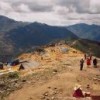
PERU: Blood and Gold on Algamarca Hill
While two companies are disputing a hill rich in gold in the extreme northwest of Peru, more than 3,000 informal sector miners are working there without the most basic safety or environmental protection measures.DEVELOPMENT: Global Campaign Calls for Tackling the Roots of Poverty
The Global Call to Action against Poverty (GCAP) made a commitment in Uruguay Saturday to extend their campaign until 2015, and to emphasise the structural causes that determine that over one billion people in the world are living in extreme poverty.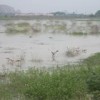
ENVIRONMENT-INDIA: Neglecting Ancient Reservoirs Carries a Price
The carved granite pagodas that dominate this town in southern Tamil Nadu state have earned it a place on UNESCO's list of World Heritage sites. Less noticeable, though, are the vast reservoirs that once took care of the water requirements of this millennia-old cultural centre.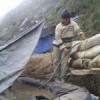
PERU: Farmers, Informal Gold Miners Clash Over Pollution
There is a cemetery at the foot of this hill full of gold and silver near the village of Algamarca in northwestern Peru - an indication of the risks involved in informal mining, which uses highly toxic substances like cyanide and mercury.DEVELOPMENT: Fight Against Poverty – a Marathon, Not a Sprint
Combating poverty is more like a long distance race than a sprint, and in the past two years progress has been made that would have been unthinkable decades ago. But much remains to be done, say activists from all over the world who have gathered together in the Uruguayan capital.VENEZUELA: The Gift of Native Tongues, On the Air
Eiker García and Nelson Maldonado took a deep breath, then exhaled slowly, producing a long "mmm" sound, following the instructions of the professional radio presenter who was giving them breathing and elocution lessons.RIGHTS-CENTRAL AMERICA: Turning Back to a Murky Past?
Social inequality is on the rise in Central America, and the region is backsliding with respect to the standards set forth in the American Convention on Human Rights, according to activists and analysts.COTE D’IVOIRE: New Farms, New Lives – At an Environmental Cost
For Katienéfoha Yéo, two decades of cotton farming that resulted in nothing but debt were enough to get him on the road, out of Tanikaha in northern Côte d'Ivoire to Sarala in the west.BIODIVERSITY: Farming Will Make or Break the Food Chain
As the world population swells to nine billion by 2050, global biodiversity will be under extreme pressure unless new ways to grow food are developed, experts say.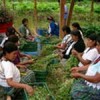
DEVELOPMENT-GUATEMALA: Fair Trade Begins to Bear Fruit
The living and working conditions of thousands of small farmers in Guatemala have seen much improvement since they joined the "fair trade" system, which sets new rules for the game in an otherwise difficult global market.Q&A: “You Have to Work Nine to Ten Times Harder Than a Male Farmer”
As activists focus on the challenges facing workers this May Day (May 1), Martha Moside is calling for attention to be paid to the situation of female subsistence farmers in South Africa.MAY DAY-BOLIVIA: New Style Work Force
The May 1 Labour Day marches in the Bolivian capital were a memorable sight two decades ago, a real celebration of workers' unity, led by thousands of helmeted miners carrying their drills. But today the workers' movement is a shadow of its former self, and the present generation of workers, out of necessity, are dispersed in new kinds of occupations.MAY DAY-KENYA: Export Processing Zones Still a Bone of Contention
With working conditions around the world set to be placed in the spotlight on May Day (May 1), Emily Mugo has an axe to grind about her place of employment - in one of Kenya's Export Processing Zones (EPZs).DEVELOPMENT-BRAZIL: Rural Residents Find Riches in Saltwater
A village in Brazil's dry Northeast region is putting to the test a project that began with machine to desalinise the little water available, and has ended up creating food and income and promoting sustainable agriculture.« Previous Page — Next Page »


