Languages
Monday, September 28, 2026



News and Views from the Global South
Syria

Civil Society Under Attack Around the World
In December 2011, 159 governments and major international organisations recognised the central role of civil society in development and promised to create an “enabling” operating environment for the non-profit sector.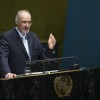
U.N. General Assembly Condemns Syria as Sceptics Multiply
When the 193-member General Assembly voted Wednesday to condemn the beleaguered government of Syrian President Bashar al-Assad, there was an increase in the number of sceptics who neither supported nor opposed the tottering regime in Damascus.
Syrian Attacks on Health Care System ‘Terrorising Population’
Humanitarian assistance groups in Washington are warning that the health care system has become a deliberate target in the increasingly brutal civil war in Syria, presenting major challenges to addressing the humanitarian and refugee crises spurred by the conflict.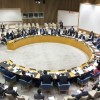
Israeli Attacks on Syria Escape Security Council Scrutiny
Israel, which has launched three air strikes inside Syria since January this year, has escaped scrutiny or condemnation by a Security Council which remains sharply divided.Hope, Scepticism Over U.S.-Russian Accord on Syria Conference
The surprise accord reached by the U.S. and Russia in Moscow Tuesday to try to convene an international conference to resolve the two-year-old civil war in Syria as soon as the end of this month has been greeted with equal measures of hope and scepticism.
Decade After Iraq, Right-Wing and Liberal Hawks Reunite Over Syria
Ten years after right-wing and liberal hawks came together to push the U.S. into invading Iraq, key members of the two groups appear to be reuniting behind stronger U.S. military intervention in Syria.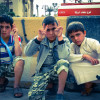
Obama Seen Unlikely to Sharply Escalate Intervention in Syria
Despite renewed pressure by hawks in Congress and the media, U.S. President Barack Obama appears determined to avoid sharply escalating U.S. involvement in the ongoing civil war in Syria.Syria Says PM Escapes Car Bomb Attack
Syrian Prime Minister Wael al-Halqi has survived a bomb attack that targeted his convoy in central Damascus, Syrian state media report.
White House Letter Fuels U.S. Involvement in Syria Debate
A White House letter Thursday to Congressional leaders suggesting chemical weapons use by the Syrian government of Bashar al-Assad has reignited debate about direct U.S. military involvement in the war-torn country.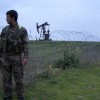
Oil Flows Beneath the Battlefield
At seven o’clock in the morning on Mar. 1, Kurdish militias took over the only operational oil refinery in Syria, located about 800 kilometres northwest of Damascus.
Tunisia Now Exporting “Jihadis”
Tunisian families have begun to dread knocks on their doors, or late-night phone calls, fearing that the messenger will bear the news that their son has been smuggled out of the country to join the “jihad” in Syria.
Libya Intervention More Questionable in Rear View Mirror
While the tenth anniversary last month of Washington’s invasion of Iraq provoked overwhelmingly negative reviews of the adventure except among its most die-hard neo-conservative proponents, a more recent - albeit far less dramatic and costly - intervention has faded almost completely from public notice.
Social Forum Spawns a New Form of Solidarity
The conference drew both supporters and opponents of Syrian President Bashar al-Assad; conflicting opinions about the Polisario Front and the politics of Western Sahara; Palestinian activists and the Jewish Anti-Zionist Network. In short, the 13th edition of the World Social Forum, held in Tunis on Mar. 26-30, was a melting pot of struggles and a search for common ground.BOOKS: Afpak Insider Dissects Obama’s Policy Missteps
Publication this month of Vali Nasr’s "The Dispensable Nation: American Foreign Policy in Retreat" is well-timed.
P5+1 Coalition Fraying on Eve of Second Almaty Talks with Iran
On the eve of its second round of talks with Iran on curbing its nuclear programme in Almaty, Kazakhstan, the so-called P5+1 (U.S., Britain, France, China, and Russia plus Germany) is showing signs of growing disunity, according to the European Union’s former top foreign policy official.
Arab Spring Shifts Focus of World Social Forum
The World Social Forum’s traditional focus on economic, political and social injustice caused by globalisation shifted towards the revolts and unrest of the Arab Spring, in the current edition of the global gathering in Tunisia.
Obama Boosts Syria Support as Congress Pushes Military Intervention
As the Syrian uprising enters its third year, the United States and its allies are preparing to materially increase their support of the armed opposition in Syria.
Guerillas and Civilians Converge for Peace
It was only seven in the morning when Mohamed Abdi spread out a rug a few metres away from an artillery crater, up in the Qandil mountains of northern Iraq. This Iraqi Kurd from Suleimaniyah, 260 kilometres northeast of Baghdad, was ready to celebrate the Newroz – the Kurdish and Persian New Year – along with his family.
Syrian Delegates Push for Peaceful Resolution of Conflict
Amidst ongoing violence between the Syrian regime and opposition forces, and serious international discourse on arming the opposition, some Syrian civil society leaders are insisting upon a non-violent approach toward conflict resolution.
At Home, and Not at Home
The influx of hundreds of thousands of war-weary refugees from Syria to Lebanon is putting an almost unbearable strain on many of the communities that have taken them into their homes. A domestic economic crisis compounded by the arrival of such large numbers of refugees is weighing heavily on many impoverished areas.
UNRWA Head Warns of Palestinian Crisis in Syria
A top United Nations official is warning that the plight of Palestinian refugees is being neglected amidst the ongoing crisis in Syria.« Previous Page — Next Page »


The Week with IPS

NEXT STOP - SDGs
Tracking global progress towards a sustainable world
Tracking global progress towards a sustainable world
