Languages
Saturday, October 24, 2026



News and Views from the Global South
Tanzania

Throwing the Tanzania-Zambia Railway a Lifeline
Some say it's the journey, not the destination that matters. Hop aboard the Tanzania-Zambia Railway Authority (TAZARA) line at Tanzania's Dar es Salaam port and begin the 1,860-kilometre journey to Kapiri Mposhi, a small town in Zambia's Central Province, and you may find yourself pondering this adage.
Protecting Tanzania’s Farmers from Weather Extremes
When Habiba Msoga from Kiroka village, in Tanzania’s Morogoro Region, first began applying a method of rice cultivation that was different from what her fellow farmers traditionally used, they laughed at her.
DRC Conflict Hinders East African Integration
As the majority of East African Community countries signed an agreement paving the way for a single tourist visa in the region from 2014, some believe that Tanzania’s hesitance to agree to this integration is largely due to the conflict in the Democratic Republic of Congo.
Power Struggle Rises Over Tanzania’s Pangani River
As farmers and herders fight over dwindling water levels in the Pangani River Basin in northeastern Tanzania, a new dispute is emerging between farmers and the state-run power utility firm over this precious resource.
Tanzania’s Coastal Communities Forced to Drink Seawater
The freshwater drinking supply of the coastal town of Pangani in northeast Tanzania is becoming increasingly contaminated as salt water steadily seeps in from the Indian Ocean.
Conflicts Over Water Rise in Tanzania
Conflicts over water are increasing in the sprawling Pangani River Basin in northeastern Tanzania as farmers and herders jostle for dwindling water resources in the face of climate change.
Tanzanian Traders Seek Rescue From Chinese
The Chinese characters boldly painted on a supermarket poster in Tanzania’s commercial capital Dar es Salaam say a lot about the growing influence of China on this east African nation.
For Africa Trip, Obama Urged to Prioritise Development
Advocacy groups here are urging U.S. President Barack Obama to focus on more than just economic development during his upcoming trip to Africa.
Stealing Gas from the Poor to Power the Rich
In Kilwa District in southern Tanzania local community leader and fisherman Salim Riziki stands next to a set of turbines, newly imported from Dubai, talking about the gas finds on Songo Songo, an island 15 km off the mainland.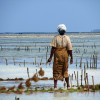
Zanzibar’s Encroaching Ocean Means Less Water
Khadija Komboani’s nearest well is filled with salt water thanks to the rising sea around Tanzania’s Indian Ocean island of Zanzibar.
The Challenge of Being a Maasai Woman
The Maasai tribe of Kenya and Tanzania has long been a beacon of traditional culture to many Africans - and for Westerners on safari through Maasai Mara, Samburu or Amboseli, a familiar face.
Preserving the Soil and Reaping Greater Harvests
Smallholder farmer Peter Mcharo, from Morogoro Region in eastern Tanzania, has a reason to smile. His fields are full of green, healthy maize plants, he has richer soil and he spends less time farming now than he did two years ago.
Two Million People Hold their Breath Over Lake Malawi Mediation
Over two million families who solely depend on Lake Malawi for their livelihoods are anxiously putting their hopes into an upcoming mediation between Malawi and Tanzania intended to put an end to a longstanding ownership dispute.
A River Runs Dry in Tanzania
Avelina Elias Mkenda, a 52-year-old small-scale farmer in the Mbarali district of Tanzania’s southwestern Mbeya region, can sense a change in her environment.
Saving Tanzania’s Poorest Children
Half asleep, Anuary lies exhausted on his bed in Amana Hospital in Dar es Salaam, Tanzania’s capital. His mother, Mariam Saidi, sits on the edge of his mattress, staring blankly out of the window. Every now and then, she turns to wipe her 18-month-old son’s forehead.
Second Chance For an African Green Revolution
As the world searches desperately for ways to boost food production by at least 70 percent by 2050 to feed an increasingly hungry planet, many are looking to Africa as the place where a large part of this potential can be realised, mainly for its huge portion of arable land.
Operating in Rural Tanzania “To Save a Life”
At the Kakonko Health Centre, about 250 kilometres from the nearest hospital in Kigoma Region, Western Tanzania, assistant medical officer Abdu Mapinduzi prepares to operate on Joanitha, a young pregnant mother.
East Africa’s Financial Integration Slow off the Starting Blocks
For months now East Africans have been expectantly waiting for an economic revolution to begin as they anticipate the launch of a new standardised payment system that will integrate the electronic transfer of money in the region. But continued delays in the launch of the system have economists fearing that the weak financial infrastructure here is hindering its implementation.
Iowa Firm Accused of Displacing Tanzanians for Profit
A major U.S. energy company, AgriSol Energy, is accused of engaging in land grabs in Tanzania that would displace more than 160,000 Burundian refugees who have lived there for decades, according to a report by the Oakland Institute, an organisation focused on environmental issues.« Previous Page





The Week with IPS

NEXT STOP - SDGs
Tracking global progress towards a sustainable world
Tracking global progress towards a sustainable world
