Languages
Wednesday, June 24, 2026



News and Views from the Global South
The Information Society
ARGENTINA: Through the Lens of Young Slum Dwellers
Two dozen young slum dwellers in Buenos Aires began filming a documentary about themselves this month, in an attempt to break down the negative stereotypes with which they are portrayed in the media.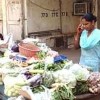
DEVELOPMENT: Rural India Set to Ring in 3G Mobile Technology
As India prepares to roll out third-generation (3G) mobile services in the world's fastest growing telecom market, there are high expectations that it will benefit people in the vast, impoverished rural hinterland most.U.S.: Public Sceptical and Hawkish on Iran
Despite strong support for diplomatic engagement with Iran, most U.S. citizens believe such efforts will ultimately fail and that Washington should be prepared to use military force to prevent Tehran from obtaining a nuclear weapon, according to a new poll released here Tuesday by the Pew Research Centre for the People and the Press.MEDIA: South-South Radio from Caracas to Africa
Poverty, attacks on human rights and corporate fraud will be among the main news coverage focuses of a new regional public radio network, Radio del Sur, which will link stations from South America and Africa.ENVIRONMENT-SOUTH AFRICA: Opportunities Spring From e-Waste
There was an audible gasp when Kirsten McIntyre told the audience that e-waste is the third fastest growing waste stream in the world, with between 40 and 50 million tons of computers, TVs and washing machines being "thrown away" each year.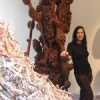
ENVIRONMENT: Turning Junk Mail Into Art
Like everyone else, Barbara Hashimoto hated the junk mail coming in through the door. Until she decided one day that it could be transformed into art, and lessons about the environment.MEDIA-INDONESIA: Children’s Newspaper a Breath of Fresh Air
In a country with more than 400 print media outlets, Indonesia's first and only children's newspaper is a breath of fresh air.EGYPT: Virtually, Some Real Freedom
Egyptians critical of their government are using new media and the Internet to expose its improprieties and press for social change.LATIN AMERICA: Ensuring Democratisation of Digital Broadcasting
Just as they did with analogue television, the countries of Latin America have opted for different digital broadcasting standards. But more than this technological diversity, what concerns social organisations is the absence of policies and regulatory frameworks to ensure a true democratisation of this means of communication.POLITICS-ITALY: From Democracy to Videocracy
Italian Prime Minister Silvio Berlusconi, one of the world's most powerful media moguls, is being increasingly accused of using his six news organisations and television channels to manipulate the country's political life and public opinion.COSTA RICA: Media Bill Languishes in Congress
A bill on the press and freedom of expression that has been kicking around in the Costa Rican Congress for the past eight years, which deals with questions like source confidentiality, access to public information, and libel and slander laws, was saved in late August from being permanently shelved by the legislature.JAPAN: New Ruling Party Poised to Lift Foreign Press Restrictions
The newly elected Democratic Party of Japan (DPJ) plans to open government organisations to the foreign press, party member Kuniko Tanioka revealed in an interview with IPS.
Q&A: Women Are Not Wallpaper
Something new is appearing on the Italian screen. About time, some may say.
MEDIA-ASIA: Senior Citizens Log On to the Wide, Wired World
They may be in their twilight years but Asia's senior citizens are not ready to be left behind — and forgotten — by the wide, wired world.SERBIA: Media Wakes Up to New Curbs
A controversial new law on media came into force in Serbia Tuesday, raising fears that freedom of expression will now be restricted by censorship or self- censorship.MEDIA-ASIA: Proofreaders Going Extinct in Newsrooms
They were usually the first to arrive at work and the last to leave, and often took the blame for boo-boos in the following day's issue of the newspaper. Now the newsroom's unsung heroes, who engage in a daily deadline battle armed only with their sharp eye for detail and those squiggly proofreading marks, are facing a new kind of threat — extinction.Q&A: "Blogmailing" to Foment Debate on Cuban Filmmaking
Blogging has taught him to share his deepest concerns with people who think differently, to treat others and himself more compassionately, to learn from even the most impassioned disputes, and above all, to show that far from being the sole possessor of truth, he is desperately seeking it.CLIMATE CHANGE: Early Warning Systems for the Coming Storm
Climate change is here. The challenge in Geneva this week is to find ways to help the world cope with a climate that will have more and worse extremes in terms of temperatures, floods, and storms.PAKISTAN: Female Journalist Pursues Sexual Harassment Case
When is a telephone call considered sexual harassment?
PERU: Rural Highlands Communities Coming Online
Little by little, rural communities in southern Peru are beginning to take advantage of the internet to acquire new knowledge and increase their income. But the use of computers in rural areas faces numerous challenges, from illiteracy to fear of the unknown or questions about the sustainability of these new communications initiatives once they are left in local hands.POLITICS-CAMBODIA: Khmer Rouge Tribunal Keeps the Country Informed
The ongoing Khmer Rouge tribunal here of Kaing Guek Eav, known as Comrade Duch, has heard some highly charged testimony in recent weeks, as civil parties have told the court of how the murders of their loved ones ruined their lives.« Previous Page — Next Page »


The Week with IPS

NEXT STOP - SDGs
Tracking global progress towards a sustainable world
Tracking global progress towards a sustainable world
