Languages
Wednesday, June 24, 2026



News and Views from the Global South
The Information Society

CULTURE-CAMBODIA: Pre-War Khmer Music Making a Comeback
Grainy black and white newsreel footage of B-52 bombing raids and fierce fighting are the images most frequently associated with Cambodia in the sixties and early seventies - not rock and roll, hot pants and wild dancing.MEDIA-LATIN AMERICA: Behind-the-Scenes Censorship
A study carried out in seven countries of Latin America found a "growing trend" in the region of subtle, largely invisible government interference with the media and journalistic independence.
MALAYSIA: Proposal to Liberalise Campuses Weak – Students
For nearly four decades undergraduates in this country were banned from owning loud hailers - a powerful symbol of dissent in the 1970s.
MEDIA: Olympics Draw Harvest of Online Protests
Say goodbye to the usual slogan-shouting and banner-carrying protest actions, because one does not even have to be anywhere near China to push a mix of causes - from Tibet and Burma to Darfur. Online creativity is the name of the game.RIGHTS-ETHIOPIA: Court Case To Test Limits of Press Freedom
A legal battle in Ethiopia over what constitutes contempt of court is likely to test the boundaries of free speech in a country where the liberty of press has deteriorated over the last three years.MEDIA-AUSTRALIA: TV Network Denies Censor Role in China
An electronic paper trail indicates that one of Australia’s leading television networks may be involved in dissuading foreign media in China against covering "forbidden" topics.ENVIRONMENT: Tierramerica Centre Born in Heart of Amazon Jungle
The Tierramérica International Centre for Sustainable Development and Environmental Defence held its founding assembly Thursday in Manaus, a city in the heart of the Brazilian Amazon, during a seminar on the world’s big environmental challenges.MIDEAST: Israeli Transcends Borders With a Virtual Bridge
Israelis are barred from travelling to the West Bank and Palestinians from entering Israel without a permit, but that has not deterred Zvi Schreiber, an Israeli living in Jerusalem, from creating a high-tech start-up company that does all its programming in the West Bank town Ramallah and its business development and marketing in the Israeli town Modi'in.
MIDEAST: Israeli Transcends Borders With a Virtual Bridge
Israelis are barred from travelling to the West Bank and Palestinians from entering Israel without a permit, but that has not deterred Zvi Schreiber, an Israeli living in Jerusalem, from creating a high-tech start-up company that does all its programming in the West Bank town Ramallah and its business development and marketing in the Israeli town Modi'in.FIJI: Another Move to Muzzle the Media
Since independence in 1970, this Pacific Island nation has had a succession of elected and unelected prime ministers. Both sets of leaders have tried to muzzle what they see as errant, if not dangerous, media.FRANCE: ‘Excited Little Boy’ Takes Hold of the Media
The media in France, already in a heavy financial and credibility crisis, did not need yet another blow. But that is just what it got in President Nicolas Sarkozy's announcement that he will personally pick the directors of the public television and radio broadcasting companies.POLITICS-US: New Spying Law Quickly Challenged
Civil liberties advocates have lost no time in asking a federal court to stop the government from conducting surveillance under the new wiretapping law passed by Congress and signed by President George W. Bush last week.RELIGION: UN Invited to Create Interfaith Council
The participants at the World Conference on Dialogue in Madrid have proposed that the United Nations create an interreligious council.NORWAY: Make Africa’s Tragedies Comic
How do you wake up comfortable Norwegians to the distressing realities of child deaths and maternal health in developing countries? Through the comic books they so love.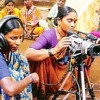
INDIA: Media Lessons From Rural Women
"We don’t know how to read or write, but we make our own films,’’ is how Narsamma, 42, a farmer from Pastapur village in Hyderabad, introduces herself and her colleagues.
HEALTH-MEXICO: Internet Can Be a Dangerous Pharmacy
Mexico is drafting measures to regulate the sales of pharmaceuticals over the Internet: reforms have been announced for laws dating back to the 1980s, when the world wide web did not yet exist, and new monitoring systems are in the works to track the who, how and what of online sales.UKRAINE: ‘Free’ Media Turning Into PR Agencies
Freedom of media has improved in Ukraine but media owners are using favourable coverage as a source of income, while journalists continue to face serious threats.RIGHTS-ETHIOPIA: New Media Law, New Threat to Press Freedom
A new media law - six years in the making - has been passed by Ethiopia's House of People's Representatives. Its preamble declares that "the proclamation removes all obstacles that were impediments to the operation of the media in Ethiopia." But an analysis by Ethiopian journalists finds it actually clears the way for government to continue to harass and persecute the messenger when the message is not in line with the whims of the rulers.
Q&A: What the Most-Seen Photographs Say
No matter how familiar they become, the photographs depicting abuse at Abu Ghraib prison never seem to lose their ability to shock.
IRAQ: Journalist Charges Censorship by U.S. Military in Fallujah
U.S. journalist Zoriah Miller says he was censored by the U.S. military in the Iraqi city of Fallujah after photographing Marines who died in a suicide bombing.
MIDEAST: When You Shoot the Messenger
The assault of IPS Gaza correspondent Mohammed Omer has left Israeli security personnel with a lot of explaining to do. And they are not doing a very good job of it.« Previous Page — Next Page »


The Week with IPS

NEXT STOP - SDGs
Tracking global progress towards a sustainable world
Tracking global progress towards a sustainable world
