Languages
Tuesday, September 29, 2026



News and Views from the Global South
Troubled Waters
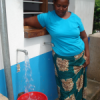
TANZANIA: Running Water Remains a Pipe Dream for Many
Juma Membe is a doorstep salesman with a commodity no one in his poor Dar es Salaam neighbourhood can refuse. Every inch of space in his handcart is occupied with canary yellow jerry cans of safe drinking water ready for home delivery.Q&A: "We Are Certainly Making Progress, But It's Slow"
When it comes to getting water supplies in Dar es Salaam, it's too expensive to be poor.HEALTH-SOUTH AFRICA: Suffer the Little Children
Located high in the Drakensburg Mountains of the Eastern Cape Province in South Africa, Sterkspruit is a picturesque rural area that includes several tribal villages. In the midst of this natural beauty, however, a tragedy has been unfolding over recent months.DEVELOPMENT: Food Security Requires New Approach to Water
The ongoing food crisis, characterised by growing shortages and rising prices of staple commodities, has far reaching implications for the world's scarce water resources, says a new study released here.
PAKISTAN: Water – At Much More Than a Turn of the Tap
For the uninitiated, it’s surreal: men and boys stepping out of their homes into the unpaved and narrow alleys of the Korangi Dhai slum in the wee hours before dawn, armed with rolls of colourful plastic tubing and heavy electric pumps.IRAQ: Nature Adds to Occupation Blows
Farmers in the Diyala province in Iraq have been hit by just about every crisis possible. First the security disaster dried up supplies and markets, then lack of electricity cut irrigation, and now comes a drying up of water resources.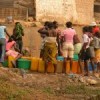
SOUTHERN AFRICA: Water "Undervalued and Not Treated With Respect"
A two-day conference on water issues in the Southern African Development Community (SADC), which opened Wednesday in Maseru, Lesotho, has seen representatives of government, civil society, the private sector, donors and other groups discuss the likely effects of climate change on development in the region.ENVIRONMENT-ASIA: Mekong Commission Fends Off Credibility Charges
The head of the Mekong River Commission (MRC) has defended the regional body against charges that it faces a crisis of credibility arising from inability to guide hydropower development on the Mekong mainstream.
CLIMATE CHANGE-CUBA: Prized Wetland in Danger
If the worst outcomes predicted for climate change in Cuba become reality, a large portion of the Ciénaga de Zapata, the largest and best preserved wetland in the islands of the Caribbean Sea, could disappear by the second half of this century.IRAQ: Running Out of Water in Rising Heat
Water supply is drying out in what was once the agriculturally rich Diyala province north of Baghdad. Baquba, the capital city of Diyala, is now running out of water both for drinking and for irrigation.DEVELOPMENT-ZAMBIA: Counting the Cost of Recent Floods
Samson Mwenda, a farmer from Namwala in Zambia’s Southern Province, recalls with bitterness the massive floods of the 2007/2008 rainy season and the harsh consequences they had for his life.MOZAMBIQUE: Officials Master Floods – But Battle To Contain Diseases That Follow
More people have died of cholera following recent floods in Mozambique than the number of those who perished in the rising floodwaters. Most rivers in central and northern Mozambique burst their banks after heavy rains in December, January and February, and as a result of Cyclone Jokwe - which hit in early March.SOUTH AFRICA: Water Supply Proposal Sparks Controversy and Suspicion
A plan to increase the supply of potable water to two coastal towns in South Africa's Eastern Cape Province is provoking heated debate.
HEALTH-DR CONGO: Water Everywhere, But Is It Safe To Drink?
The rain falls in battering sheets, rolling eastward along the Congo River through Kinshasa, capital of the Democratic Republic of Congo (DRC). It is midday, but the sky turns black and soon the potholed streets of this decrepit yet vibrant metropolis are filled with pond-sized puddles, many of them larger than the cars that traverse them.
Q&A: "Between Implementation and Planning, There Is a Disconnect"
Accounting for about a third of the gross domestic product in sub-Saharan Africa, agriculture clearly plays a significant role on the continent. But, figures only tell part of the story. A review of Africa produced under the International Assessment of Agricultural Science and Technology for Development (IAASTD) notes that agriculture is also "woven into the fabric of most societies and cultures in the region."ENVIRONMENT-INDIA: Water Aplenty, Nor a Drop to Drink
Over 37.7 million people in India are affected by water-borne diseases due to contaminated drinking water supply and an estimated 1.5 million children die of diarrhoea each year, according to newly available statistics.
CAMBODIA: Dwindling Fish Stocks Threaten Food Security
Soldier-turned-fisherman Im Vandang is not sure why there are fewer fish in the Mekong river but he is certain that the situation is getting serious.
WORLD HEALTH DAY: Climate Change a Challenge to Human Species
World Health Day, celebrated Apr. 7, is a good opportunity to "call attention to the fact that the survival of humanity is at stake" because of climate change, according to Mirta Roses, director of the Pan-American Health Organisation.CHILE: Environmentalists Defend Patagonian Wilderness from Dams
Robert Kennedy, senior attorney for the U.S.-based Natural Resources Defence Council (NRDC), is in Chile to support opponents of a plan for building five dams in the southern region of Patagonia.NICARAGUA: Houses Without Water or Water Without Houses?
Authorities in Nicaragua are facing the dilemma of generating thousands of jobs through the development of the construction and real estate industry in the capital or putting a priority on future water supplies for the city’s 1.2 million people.DEVELOPMENT-MALAWI: Water Utility Over-Stretched and Under-Maintained
Long known as a peaceful and quiet city, especially at night, Blantyre is steadily losing its reputation for tranquility. Residents now find themselves waking up to the hustle and bustle of women carrying metal and plastic buckets as they move around the city most nights and early mornings in search of water.« Previous Page — Next Page »


The Week with IPS

NEXT STOP - SDGs
Tracking global progress towards a sustainable world
Tracking global progress towards a sustainable world
