Languages
Monday, October 26, 2026



News and Views from the Global South
Troubled Waters
THAILAND: Bangkok Braces for Month of Floods
As the Thai Airways flight descends into Suvarnabhumi International Airport, passengers pull out cameras to snap pictures of flood waters rising inexorably and predicted to inundate the capital city by the end of the week.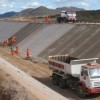
BRAZIL: Costly Water for the Poor Northeast
The visual impact is harsh: flattened hills, valleys full of mud, and kilometres and kilometres of bulldozed land - the modification of nature in Brazil's semiarid Northeast region is disturbing due to the enormous dimensions involved.Burma Exposes Fault Lines in China’s Dam-building Juggernaut
When Burma’s new president, Thein Sein, took the unusual step of opposing the construction of one of China's largest investment projects in the country – a mega dam – he did more than acknowledge the concerns of local communities and environmental activists.LATIN AMERICA: Murky Waters
More than 20 percent of the population of Latin America and the Caribbean lacks basic sanitation and 15 percent has no access to drinking water because of poor management, said experts at a meeting that ended Thursday in Brazil.200 Million Depend on Melting Glaciers for Water
At least 200 million people in the world are in danger of being left without water, because they depend for their supply on glaciers that are melting, although paradoxically the process creates the illusion of plentiful water resources.
INDIA: Kashmiris Hail Hague Stay on Dam
A ruling by the International Court of Arbitration (ICA) at The Hague, staying construction of a dam across a river that flows into Pakistan, has brought cheer to the tribal people who live around the site.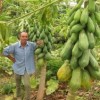
BRAZIL: Every Raindrop Counts
Brazil is considered a country rich in water resources, with its enormous underground aquifers and mighty rivers. But recognition of the vital importance of rainwater begins where it is most scarce: in the semiarid interior of the northeast.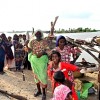
PAKISTAN: Flood Relief by Caste, Creed
With just the clothes on their backs, Moora Sanafdhano, 68, and his family of nine waded through waist-deep flood waters swirling through their village of Allah Ditto Leghari, saving themselves in the nick of time.Bottom Trawling Cuts Wide Swath of Destruction
Bottom trawling, a method of deep-sea fishing, is threatening the existence of ecosystems in the deep oceans, wreaking nearly irrevocable havoc on thousands of species and the very habitat in which they live.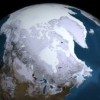
Record Arctic Ice Melt Threatens Global Security
All the analysis and commentary about safety and security on the tenth anniversary of 9/11 ignored by far the biggest ongoing threat to global security: climate change.
BRAZIL: Beating Drought in Semiarid Northeast
Violent clashes looked inevitable when some 1,500 desperately hungry peasants poured into this small Brazilian town. Riot police were staked out to prevent looting. It was the year 1993, and millions of people in Brazil's impoverished semiarid Northeast had been forced to the brink of starvation by three years of drought.U.S., EU Sign Pact to Combat Fishing “Piracy” on High Seas
Fisheries representatives from two of the world's four largest fish consumer markets, Europe and the U.S., signed an agreement here Wednesday pledging to combat illegal fishing on the high seas.Palestinians Thirsting for Justice in Water-Starved Occupied Territories
In the strife-stricken Middle East, oil has always been in the realm of politics. But in the Israeli-occupied territories of Gaza and the West Bank, oil has been supplanted by water.Africa Remains Hamstrung in Battle for Water and Sanitation
The statistics coming out of Africa are staggering: 40 percent of Africa’s 1 billion people live in urban areas and 60 percent live in slums, where water supplies and sanitation are "severely inadequate", according to the Nairobi-based U.N. Environment Programme (UNEP).‘Sustainable Development Must Start with People’
When world leaders meet in Brazil next June for a U.N. Conference on Sustainable Development, the third since the landmark 1992 Earth Summit in Rio de Janeiro, the question lingering in the minds of many is: what really is "sustainable development" in the context of a fast-changing world of growing poverty, hunger, pollution, political repression and social unrest?Mega Cities Could Trigger Water Shortages and Social Unrest
The rapid growth of urban population - described as one of the world’s major demographic trends - has triggered an explosion of "mega cities" in Asia, Latin America and Africa, causing a breakdown in basic services, including water supplies and sanitation facilities.OP-ED: Expanding Deserts, Falling Water Tables and Toxins Driving People from Homes
People do not normally leave their homes, their families, and their communities unless they have no other option. Yet as environmental stresses mount, we can expect to see a growing number of environmental refugees. Rising seas and increasingly devastating storms grab headlines, but expanding deserts, falling water tables, and toxic waste and radiation are also forcing people from their homes.
Too Much Water As Dangerous As Too Little
The international community is running the risk of losing the battle for water and sanitation in many cities around the world.
Q&A: Water Will Be Lifeblood of Smart Urban Expansion
The world's water map is being significantly redrawn due primarily to the mass migration of people into urban centres, threatening one of life's vital resources.
CUBA: Petrochemical Complex Poses Major Environmental Challenge
As it gears up for the creation of a major petrochemical complex of regional scope, this Cuban city faces the challenge of ensuring the sustainability of development that could compromise the health of the Bay of Cienfuegos, its main natural resource.
Q&A: “Governments Must Listen to the People, Not the Polluters”
The historic 1992 Earth Summit in Rio de Janeiro marked one of the world's seminal international conferences on the environment, creating or reinforcing a slew of U.N. treaties and protocols on climate change, biodiversity, desertification and forests.« Previous Page — Next Page »





The Week with IPS

NEXT STOP - SDGs
Tracking global progress towards a sustainable world
Tracking global progress towards a sustainable world
