Languages
Tuesday, October 20, 2026



News and Views from the Global South
United States

Opinion: The West and Its Self-Assumed Right to Intervene
The ‘West’ is a concept that flourished during the Cold War. Then it was West against East in the form of the Soviet empire. The East was evil against which all democratic countries – read West – were called on to fight.
Jazz as a Force for Peace and Freedom
Against the backdrop of civil unrest in Baltimore, Maryland, the fourth annual International Jazz Day was celebrated with events around the world and appeals for peace, unity and dialogue.
Middle East Conflicts Trigger New U.S.-Russia Arms Race
The escalating military conflicts in the Middle East – and the month-long aerial bombings of Yemen by an Arab coalition led by Saudi Arabia – have triggered a new arms race in the politically-volatile region.
Opinion: Arab Youth Have No Trust in Democracy
The results of a survey of what 3,500 young people between the ages of 18 and 24 – in all Arab countries except Syria – feel about the current situation in the Middle East and North Africa have just been released.
Shift to Renewables Seems Inevitable, But Is It Fast Enough?
Climate change may be one of the most divisive issues in the U.S. Congress today, but despite the staunch denialism of Republicans, experts say the global transition from fossil fuels to renewables is already well underway.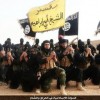
Foreign Fighter Recruits: Why the U.S. Fares Better than Others
More than 25,000 fighters seeking to wage “jihad” or an Islamic holy war have left home to join terrorist networks abroad.
Opinion: Two Winners and One Loser at the Summit of the Americas
U.S. President Barack Obama has earned a place in history for taking the first steps towards rectifying a policy that has lasted over half a century without ever achieving its primary goal of ending the Castro regime in Cuba.
Opinion: Shared Action for a Nuclear Weapon Free World
From the end of April, the Nuclear Non-Proliferation Treaty (NPT) Review Conference will be held in New York. In this year that marks the seventieth anniversary of the atomic bombings of Hiroshima and Nagasaki, I add my voice to those urging substantial commitments and real progress toward the realisation of a world without nuclear weapons.
From Punta del Este to Panama, the End of Cuba’s Isolation
U.S. President Barack Obama was only four days old when Comandante Ernesto “Che” Guevara publicly castigated the United States’ policy of hostility toward Cuba at an inter-American summit, reiterated then Prime Minister Fidel Castro’s willingness to resolve differences through dialogue on an equal footing, and held secret conversations with a Washington envoy.
Land Seizures Speeding Up, Leaving Africans Homeless and Landless
There is a new scramble for Africa, with ordinary people facing displacement by the affluent and the powerful as huge tracts of land on the continent are grabbed by a minority, rights activists here say.
Obama Prepares for Showdown with Congress Over Iran Deal
Two days after the deadline for reaching a deal over Iran’s nuclear programme had passed, negotiators looked like they would be going home empty handed. But a surprisingly detailed framework was announced Apr. 2 in Lausanne, Switzerland, as well as in Washington, and in the same breath, U.S. President Barack Obama acknowledged the battle he faces on Capitol Hill.
Opinion: Where Does Nigeria Go From Here?
After several tension-filled months, a majority of Nigerians swept in an opposition leader and former military man, Muhammadu Buhari, to succeed incumbent President Goodluck Jonathan, whose failure to contain a terrorist wave in the northern states doomed his re-election chances.
Opinion: World Leaders Lack Ambition to Tackle Climate Crisis
World governments expect to agree to a new global treaty to combat climate change in Paris in December. As the catastrophic impacts of climate change become more evident, so too escalates the urgency to act.
A “Year of Eye-Catching Steps Forward” for Renewable Energy
Driven by solar and wind, world investments in renewable energy reversed a two-year dip last year, brushing aside the challenge from sharply lower oil prices and registering a 17 percent leap over the previous year to stand at 270 billion dollars.
Opinion: Cuba and the European Union – The Thaw Begins
The visit to Cuba of Federica Mogherini, High Representative of the European Union for Foreign Affairs and Security Policy on Mar. 23-24, and the forthcoming visit in May planned by French President François Hollande, have fast-tracked the agenda of relations between the European Union and Cuba.
Opinion: Crisis Resolution and International Debt Workout Mechanisms
Debt restructuring is a component of crisis management and resolution, and needs to be treated in the context of the current economic conjuncture and vulnerabilities.
Opinion: Foreign Policy is in the Hands of Sleepwalkers
The United Kingdom has been accused of “sleepwalking” into the Ukraine crisis – and the accusation comes from no less than the House of Lords, not usually considered a place of critical analysis.
Opinion: What if Youth Now Fight for Social Change, But From the Right?
The “surprise” re-election of incumbent Israeli Prime Minister Benjamin Netanyahu in the Mar. 17 elections has been met with a flood of media comment on the implications for the region and the rest of the world.
Opinion: The Exceptional Destiny of Foreign Policy
For a long time, citizens of the United States have firmly believed that their country has an exceptional destiny, and continue to do so today even though their political system has become totally dysfunctional.
Why Investors Should Think Twice before Investing in Coal in India – Part 1
India’s Government under Narendra Modi is in overdrive mode to please businesses and investments in the country. The much aggrandised ‘Make in India’ campaign launched in September 2014 is a clarion call for spurring investments into manufacturing and services in India and all eyes have turned to the power sector which is expected to undergo dramatic shifts.Pro-Democracy Activists at U.S. Event Jailed in DR Congo
Journalists, activists, hip hop artists and a United States diplomat were rounded up by police at a pro-democracy event on Sunday in Kinshasa in the Democratic Republic of the Congo, sponsored in part by the U.S. government. Security forces charged them with threatening stability, according to a government spokesperson.« Previous Page — Next Page »





The Week with IPS

NEXT STOP - SDGs
Tracking global progress towards a sustainable world
Tracking global progress towards a sustainable world
