Languages
Friday, October 30, 2026



News and Views from the Global South
Asia-Pacific
Why Dowry Still Dictating Women’s Fate?
Dowry is still persisting in society in one form or another. This deeply entrenched social practice continues deepen household poverty and cause violence against women. The question is no longer whether Bangladesh has a law against dowry. It does. The more uncomfortable question is why the law has failed to make dowry socially unacceptable and practically difficult to demand. The Dowry Prohibition Act 2018 makes the demand for dowry a criminal offence. Direct or indirect demands can result in one to five years' imprisonment, a fine of up to Tk 50,000, or both. Giving, taking or assisting in the giving or taking of dowry is also punishable. The law even makes dowry-related agreements void. Yet, the existence of legislation has not eliminated the practice. Instead, dowry has increasingly adapted itself to modern economic and social realities.
COP17 Celebrates Indigenous Leaders Amid Demand for Greater Inclusion in Biodiversity Decisions
At the Convention on Biological Diversity (CBD) COP17, the presence of Indigenous Peoples and Local Communities (IPLCs) is impossible to miss. Indigenous representatives speak at side events, participate in contact groups, advise negotiators and engage across multiple forums shaping the future of global biodiversity policy.
Farwiza Farhan’s Fight To Save Tropical Hotspot of Indonesia – the Leuser
Forty-year-old Farwiza Farhan’s eyes light up instantly when she talks about the Leuser Ecosystem – a national strategic area encompassing a national park, a wildlife reserve, protected forests and other land uses.
From 44 Countries, One Shared Commitment: A Child Marriage-Free World
The message from Just Rights for Children (JRC) was clear: protecting children must take precedence over customs used to justify their marriage.
How Conflict Brings Biodiversity to the Brink
Less than 100 metres from military positions facing each other across the Armenia-Azerbaijan border, the forest suddenly disappears.
Upholding Human Rights & Public Safety: How Far Is Bangladesh?
Bangladesh has achieved remarkable economic progress over the past few decades. Its garment industry has become globally important, millions of people have entered the workforce, and private businesses have expanded across manufacturing, services, technology and trade. But economic growth alone does not create a healthy business environment. Businesses also need predictable laws, safe workplaces, fair competition, protection of property and contracts, and respect for the rights of workers, consumers and communities.
Bangladesh’s Hidden Climate Bill: How Much Are We Losing Without Counting It?
Bangladesh has earned global recognition for reducing deaths from cyclones and floods. Early warning systems, cyclone shelters, embankments and community preparedness have transformed the country’s disaster response. Yet another climate crisis is receiving far less attention: the economic damage climate change is quietly inflicting on households, farmers, workers, businesses and public finances.
As Winter Approaches, Afghanistan Faces Record Hunger and Mounting Human Rights Abuses
In recent months, Afghanistan’s humanitarian crisis has severely deteriorated, with the UN reporting record-high levels of acute malnutrition and hunger. Compounded by rampant human rights violations, limited access to basic services, and persistent barriers to humanitarian aid, the UN warns that conditions could considerably worsen in the coming months.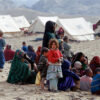
Food Insecurity and Child Malnutrition Worsen in Afghanistan Despite Strong Agricultural Season
Nearly 40 percent of the population of Afghanistan is projected to face high levels of acute food insecurity this winter, and cases of acute malnutrition are expected to soar during 2027, the Food and Agriculture Organization of the United Nations (FAO) and the United Nations World Food Programme (WFP) warned.
Afghan Women Defy Taliban Restrictions Through Online Protests
Afghan women have resorted to online protests as their only available recourse, even though the risks of being caught are high and carry enormous consequences.
CHINA: ‘My Sister Has Been in a Chinese Prison for Eight Years Because I Exercised My Freedom of Speech’
CIVICUS discusses the persecution of Uyghurs and activism in exile with Rushan Abbas, an Uyghur American activist, founder and executive director of Campaign for Uyghurs and chair of the Executive Committee of the World Uyghur Congress.

Finding Silver Linings Amid Haze of Climatic Uncertainty
With the city enveloped in a cloak of haze, the urgency of tackling the climate crisis could hardly have been clearer as the four-day Global Tipping Points Conference 2026 drew to a close at Malaysia’s Sunway University on Thursday.
Afghanistan’s Stolen Peace: The Women Who Refuse to Be Silenced
 When the Taliban took control of Afghanistan in August 2021, Zahra Nader was pursuing a doctorate in Women and Gender studies at York University in Canada. Nader had planned to return to Afghanistan to continue her research, possibly teach at Kabul University, and continue exploring Afghan women's role in political history.

How Nepal is Learning To Cope With the Psychological Toll of Its Missing
Nearly three decades ago, in the final stretch of Nepal's civil war, Dr Brandon Kohrt sat with parents whose sons had been conscripted as child soldiers and never returned.
Kazakhstan Has Spent 23 Years Bringing Faiths Together. Now Comes the Harder Part.
In a world increasingly divided by war, political distrust and competing ideologies, Kazakhstan has spent more than two decades pursuing an unusual diplomatic undertaking: keeping representatives of different religions in conversation.
Smartphone Ban Robs Afghan Female Journalists of a Vital Working Tool
It has become difficult for Afghan journalists to obtain information from the authorities, who are permitted to use smartphones only with special authorization. This ban particularly affects women, for whom face-to-face interviews are not an option.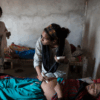
Climate Change Is Becoming a Pregnancy Hazard Worldwide, Survey Finds
Extreme heat is increasingly threatening pregnant women and newborn babies around the world, with almost all maternal health professionals surveyed across five continents saying they have cared for women or infants whose health was affected by high temperatures.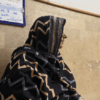
For Pakistan Rising Fistula Cases Make SDG 3 Goal Elusive
“You’re living a life drained of joy,” is how Shehnaz Sher Ali describes her “perpetually wet and stinky” existence. “I wouldn’t wish it on my worst enemy,” says the 35-year-old, who travelled by bus for more than 12 hours with her husband from their village in Rahim Yar Khan, Punjab, changing diapers whenever possible to keep the smell from reaching the fellow passengers.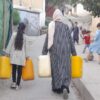
Afghanistan’s Drought Deepens, and Women Bear the Heaviest Burden
Drought has depleted wells, withered fruit trees, and reduced crop yields across Afghanistan. The heaviest burden of the water shortage falls on women in their daily lives, as they must fetch water from increasingly distant sources and use every single drop with extreme care.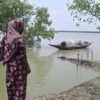
How to Protect Coastal Communities From Tide-Related Loss and Damage in Bangladesh
Villagers rush to the vulnerable spot of the embankment—early warning of the rising tide has alerted them. Together, they save the village from tidal flooding by repairing the vulnerable embankment, which is at risk from the impact of low pressure in July this year. The message is clear: early warnings of the rising tide save lives and property.
India Still Needs to Address Harmful Dark Skin Stereotypes
As a young girl, Sarada Murlidharan cringed at the thought of going to school. It was not the studies but the taunts of 'being black' or having dark skin, where fair skin was considered preferential, that made her unhappy.Next Page »





The Week with IPS

NEXT STOP - SDGs
Tracking global progress towards a sustainable world
Tracking global progress towards a sustainable world
