Languages
Sunday, October 11, 2026



News and Views from the Global South
Energy
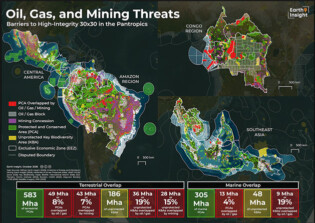
Protection That Holds: Keeping Nature Safe From Extraction
When governments gather in Yerevan this month for the 17th UN Convention on Biological Diversity, they will weigh a promise nearly 200 countries adopted six years ago: to effectively conserve at least 30 percent of land, inland waters, and sea by 2030. Achieving the ambitious 30x30 target is essential to sustaining the systems humanity relies on for survival—including crop pollination, purification of water and air, and climate regulation—as well as the biodiversity that underpins food production, fisheries, and tourism.
If We Can Start an Epoch, We Can Start a Farming Revolution
In November 1952, the United States detonated the world's first thermonuclear device at Enewetak Atoll in the Marshall Islands. The test, code-named Ivy Mike, erased the island of Elugelab and scattered a signature of plutonium across the planet that remains in lake beds, ice sheets and ocean sediments today.
“The Price of a Narrow Metric: Why Vulnerability Must Count”
From a distance, an island nation can appear to possess everything: pristine waters, a thriving tourism industry and a strong cultural identity. Its income figures may suggest prosperity.
BRICS: Growing Ambition, Zero Accountability
At the 18th BRICS Summit, held on 12 and 13 September in New Delhi, India’s Prime Minister Narendra Modi brought together presidents Xi Jinping of China, Vladimir Putin of Russia and Masoud Pezeshkian of Iran, along with Abu Dhabi’s Crown Prince, Sheikh Khaled bin Mohamed bin Zayed, representing the United Arab Emirates (UAE). Around the table sat longstanding rivals such as India and China and, in the case of Iran, Saudi Arabia and the UAE, states on opposite sides of an ongoing war. That the summit produced a joint declaration every member could sign was a modest multilateralist success.
Fragmented Policies Hold Back Agroecology Adoption in Africa’s Congo Basin
Agricultural, land, forestry, environmental and trade policies in the Congo Basin remain compartmentalised at country levels, leaving proven agroecological models trapped at pilot stages due to a lack of advisory services, organic inputs, market outlets and sustainable financing.
Overshoot of Paris Agreement and the Looming Super El Niño Drive Urgent Calls for Global Climate Action at UNGA 81
The United Nations 2026 Climate Summit addressed critical strategies to mitigate the compounding impacts of the climate crisis and accelerate progress toward the Sustainable Development Goals (SDGs).
BRAZIL: ‘Resistance Is Intergenerational, and Art Is How Energy Gets Renewed’
CIVICUS discusses the role of art in climate and rights struggles in the Brazilian Amazon with Tom Wheeler, executive director and co-founder of Treesistance. Treesistance is a platform operated by the Netherlands-based Sinchi Foundation that partners with Indigenous communities across four Brazilian states on cultural preservation and forest protection.

AI-Driven Climate Change Pushes Frontline Communities Further Into Environmental Degradation and Poverty
On September 21, Frontline Resource Institute (FRI) hosted its Climate Justice Hub at Fordham University at Lincoln Center in New York City under the theme “Building a Stronger Climate Coalition.”
Climate Week NYC Kicks off With World Leaders’ Commitments to Action
The Climate Group’s annual conference in New York City has attracted thousands of attendees this year, among them world leaders, corporate heads, philanthropists, and climate advocates. Those leaders present at the opening ceremony of Climate Week have made clear calls to collectively tackle climate issues.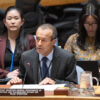
Renewed Hostilities In Yemen Inflame Displacement and Regional Risks
In recent days, the humanitarian situation in Yemen has deteriorated sharply following a new escalation of hostilities between the Iran-backed Houthi rebels and the Saudi-backed Presidential Leadership Council (PLC). This follows four years of relative stability, marking the most severe resurgence of violence since the collapse of the United Nations (UN)-mediated ceasefire in October 2022.
Remembering Fidel Castro, a Hero of the World’s Oppressed People
The 13th of August marked the 100th birthday of Cuba’s revolutionary leader Fidel Alejandro Castro Ruz - in short Fidel Castro. Amidst an intensified US siege and the threat of invasion, Cubans commemorated their dear leader’s centenary birth anniversary with events that included an International Book Fair, art exhibitions, concerts and gatherings of delegates from left-wing organisations across the continent.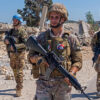
Impending UNIFIL Exit Pushes Lebanon Toward Uncertainty
Since the collapse of the ceasefire between Israel and Lebanon announced in June, the humanitarian situation in Lebanon has deteriorated sharply. Marked by high casualties, immense destruction to civilian infrastructure, and widespread displacement, access to essential services has become increasingly strained as the United Nations Interim Force in Lebanon (UNIFIL) is scheduled to end its operations by the end of the year.
Rising Trade Values Mask the True Cost of Global Supply Chain Disruptions
Global goods trade reached approximately USD 13.7 trillion in the first half of 2026, up 12.5 percent from the same period in 2025, while services grew 10.5 percent, together adding USD 2 trillion to global trade. While these figures point to continued expansion, much of the increase reflects rising prices rather than stronger trade volumes.
Malawi Bets on Battery Storage to Climate-Proof Its Fragile Power Grid
For years, Malawi's electricity supply has been at the mercy of droughts, floods and cyclones that have repeatedly exposed the vulnerability of a power system heavily dependent on hydropower.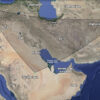
Saudi Arabia, Türkiye and Pakistan Forge Mutual Defence Pact, as Iran Pursues New Shipping Framework
In Makkah, the Kingdom of Saudi Arabia, the Republic Türkiye, and the Islamic Republic of Pakistan agreed to the framework for a joint defence agreement where an attack on any of the three states shall be regarded as an attack against them all.
The Earth Is Burning — And We Are Still Choosing to Let It
I have spent my life on an island. From the granite hills of Mahé, one can watch the sun rise over an ocean that has fed, protected and defined the Seychellois people for centuries.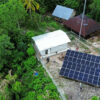
Asia’s Energy Progress Is Great, But Must Pick Up Pace
In much of the Asia-Pacific region, energy is a success story. Electricity access has greatly increased and the use of clean cooking fuels is now widespread. The region has kept pace with the rest of the world in adopting renewable energy. Many countries have made energy efficiency gains; the Republic of Korea is one of those in the lead worldwide. Progress has continued even in the face of recent energy crises sparked by the war in Ukraine and conflict over the Strait of Hormuz.
U.S.-Iran War Escalates Amid Growing Fears of Regional Instability and Rises In Arbitrary Executions
Over the past several weeks, the humanitarian landscape in the Middle East has deteriorated significantly, exacerbated by escalating security concerns and serious human rights violations. In late July, the United Nations (UN) highlighted a sharp uptick in hostilities between the United States and Iran, alongside growing concerns over wider regional instability.
Saudi Arabia Forms Multinational Red Sea Defence Alliance as U.S.-Iran War Threatens Global Shipping
As the United States and Iran continue to escalate with military strikes across both fronts, the conflict took a new turn with Saudi Arabia becoming militarily involved on July 29, following coordinated airstrikes with U.S. Central Command according to the Saudi Ministry of Defence.
Accepting What It Cannot Control, CARICOM Focuses on What It Can
From wars that drive up fuel prices to supply chain disruptions, inflation and increasingly frequent climate disasters, Caribbean leaders say many of the forces shaping the region's future lie beyond their control.
Who picks up the tab for AI’s unbridled genius?
For the last few years, Artificial intelligence has been making increasingly intrusive demands for our attention. It burst onto the scene like a child prodigy, enthralling us with feats of brilliance. With consummate ease, it removed drudgery from our tasks and began helping us achieve our personal and workplace objectives.Next Page »





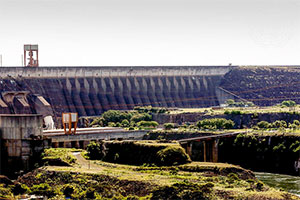 UN Power Plant, Paraguay. Credit: UN Photo/Evan Schneider
Energy has posed a great challenge for economies around the world. As global energy consumption skyrockets throughout the years, so does the need for sustainable solutions. The Sustainable Development Goals are essential in providing people with access to safe, affordable, and sustainable energy sources that minimize harm on the planet. Progress towards these goals opens the door for an advancement in modernization for communities on a global level and allows for a potential mitigation of tensions between nations.
The UN’s Summit of the Future in 2024 offered new initiatives that are being taken to achieve these goals, including a decreased reliance on fossil fuels, a switch to renewable energy sources, and improved climate financing.
IPS is well positioned to provide relevant, insightful, and compelling analysis of recent updates and measures being taken around the world to achieve a cleaner future.

The Week with IPS

NEXT STOP - SDGs
Tracking global progress towards a sustainable world
Tracking global progress towards a sustainable world
