Languages
Saturday, November 7, 2026



News and Views from the Global South
“Slippery Slope” between R2P and Regime Change
“What would we do if tomorrow there was another [genocide in] Rwanda?” asked former U.N. Secretary-General Kofi Annan, at an event hosted by the U.N. Bookstore. “It’s something that haunted me.”
A Hundred Killed, A Community Cornered
"I want justice,” says Shukria Jamali, 20. “But I wouldn't want my worst enemies to feel the intense pain I am feeling now."
In Caribbean, Climate-Smart Agriculture Bolsters Farm Production
A new initiative is catching on in the Caribbean that aims to increase and sustain agricultural productivity by incorporating information about weather and climate into the farming process, all under the umbrella of climate-smart agriculture.
OP-ED: Learning from Haiti’s Goudou Goudou
On a hillside overlooking Port-au-Prince, a muscular Haitian man in a green tank top raises a heavy steel pry bar over his head and brings it down into a hole, shattering a bit of Haiti’s limestone skeleton.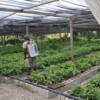
In Caribbean, Climate-Smart Agriculture Bolsters Farm Production
A new initiative is catching on in the Caribbean that aims to increase and sustain agricultural productivity by incorporating information about weather and climate into the farming process, all under the umbrella of climate-smart agriculture.
Bloody Entertainment Draws Thousands
It’s the time of the year when people of Hajo, a small town 30 kilometres from Guwahati, capital of the eastern Indian state Assam, get eager to witness the famous Bulbul fight. The Red vented Bulbul is a familiar bird on the Indian subcontinent.
Latin America and the Venezuelan Question Mark
A lot of water has passed under the bridge in Latin America since Hugo Chávez first took office as president of Venezuela in 1999, with left-wing and centre-left governments coming to power and the emergence of paths toward integration that exclude the United States.
Alternative Media Fights Back in Argentina
Sustained by editors and readers convinced that another kind of communication is possible, independent magazines are growing and strengthening in Argentina, offering a view different from the mainstream media coverage of political, cultural and advocacy issues.
South Africa-Brazil Trade Partnership Hits Potholes
As the five members of the BRICS group of emerging economies – Brazil, Russia, India, China and South Africa – tighten ranks and seek to expand their global influence, the inevitable trade spats have begun.
Official Failure Kills Hundreds of Children
It came as no surprise to Dr Zulfikar Ahmad Bhutta, a leading child expert at the Aga Khan University in Karachi, that an outbreak of measles has claimed the lives of more than 300 children in Pakistan. "The tragedy was in the offing," he said, putting the blame squarely on the abysmally low coverage of routine immunisation against childhood diseases.
Alternative Media Fights Back in Argentina
Sustained by editors and readers convinced that another kind of communication is possible, independent magazines are growing and strengthening in Argentina, offering a view different from the mainstream media coverage of political, cultural and advocacy issues.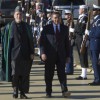
Obama to Accelerate Handover to Afghan Army
President Barack Obama announced Friday that U.S. forces will accelerate the transfer of primary security responsibilities to their Afghan counterparts and take on an exclusively support and training role beginning this spring.U.S. Urged to Stem Broader Ethnic Violence in Myanmar
Worried over the possibility of further escalation of armed conflict in Myanmar, activists here are calling on Washington to take stronger action to condemn state forces for aerial bombardment of ethnic Kachin rebels and civilians in the country’s north, which some say constitutes crimes against humanity.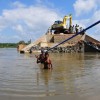
Experts Fear Collapse of Global Civilisation
Experts on the health of our planet are terrified of the future. They can clearly see the coming collapse of global civilisation from an array of interconnected environmental problems.
Water Summit to Focus on Resolving Scarcities in Mideast
Amidst a growing water crisis in the predominantly arid Middle East and North Africa (MENA), some of the world's most influential water experts will meet Jan. 15-17 at the International Water Summit (IWS) in Abu Dhabi, United Arab Emirates (UAE) to look for sustainable solutions.Fighting for a Future in Rio’s Toughest Neighbourhoods
Teachers at a local primary school here, the Escola Municipal IV Centenário, are trained to help their pupils find cover in case of gun battles.
In Haiti, Aid Dollars Corroded Social Fabric
A World Bank-funded community development project in Haiti appears to have inadvertantly harmed or even dissolved some of the grassroots organisations it was designed to strengthen.
World Bank “Success” Came at High Cost in Haiti
A 61-million-dollar, eight-year community development project funded by the World Bank and executed by the Haitian government and two international development agencies has raised questions of waste and corruption, and even carried out what could be called “social and political re-engineering".
Morphine Kills Pain but its Price Kills Patients
It took Gily Ncube’s daughters two weeks to sell enough chickens to raise the 18 dollars needed to buy the morphine tablets their mother takes every four hours.
Netanyahu Suffers From Being Too Popular
“We feel like we finally live a normal life in a normal country,” marvelled a popular radio host. Normalcy – this rare appreciation by Israelis of the privilege to indulge in small talk about the stormy weather that’s wreaked the whole region – is so abnormal here.Fighting for a Future in Rio’s Toughest Neighbourhoods
Teachers at a local primary school here, the Escola Municipal IV Centenário, are trained to help their pupils find cover in case of gun battles.« Previous Page — Next Page »





The Week with IPS

NEXT STOP - SDGs
Tracking global progress towards a sustainable world
Tracking global progress towards a sustainable world
