Languages
Thursday, July 30, 2026



News and Views from the Global South

Ideology and Terrorism
What causes a person to drive a truck through local citizens and tourists celebrating a national holiday? What compels someone to open fire on unsuspecting patrons at a nightclub?China Showing Big-power Attitude
China has been dealt a major setback this week at the United Nations-backed Permanent Court of Arbitration in The Hague, a tribunal established as way back as 1899 and to which 121 member states are signatories. The tribunal this week ruled in favour of the Philippines over the sovereignty of small but strategically significant and resource rich islands in the South China Sea. The tribunal held that China had “no legal basis” to its claim for “indisputable sovereignty” over these islands and dismissed its “historic rights” argument – something that Tamil Nadu Chief Minister (who is making similar claims over the Palk Strait) might take note of.
Ramifications of Terror Attacks in Bangladesh
At a time when Bangladesh has broken the 6 percent growth trap and has begun its journey towards achieving a faster growth of about 7 percent, and at a time when Bangladesh has achieved the status of a lower middle income country with a per capita income of USD1314 in 2015, it experiences the greatest shock in recent times. This has suddenly changed the perspective on Bangladesh. The ruthless killing of 20 lives, including 17 foreigners at the Holey Artisan Bakery of Gulshan in Dhaka on July 1, 2016, by terrorists has brought new realities for Bangladesh. A country which boasts to be a moderately Islamic country, holding the values of Islam yet being tolerant to other religions and a country that is reputed for its warmth and hospitality towards foreign nationals, has come under the global radar due to the brutality of recent terror attacks. While the grief for the lost lives is going to make a permanent place in our hearts, the implications of this painful episode on other spheres of lives cannot be ignored either.
Biodiversity, GMOs, Gene Drives and the Militarised Mind
A recent report from the National Academy of Science of The United States, titled Gene Drives on the Horizon : Advancing Science, Navigating Uncertainty, and Aligning Research with Public Values”, warns:
Rewriting Africa’s Agricultural Narrative
Albert Kanga Azaguie no longer considers himself a smallholder farmer. By learning and monitoring the supply and demand value chains of one of the country’s staple crops, plantain (similar to bananas), Kanga ventured into off-season production to sell his produce at relatively higher prices.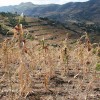
‘Monster’ El Niño Subsides, La Niña Hitting Soon
As if human-made armed conflicts, wickedness, rights abuse, gender violence, cruel inequality and climate catastrophes were not enough, now the saying “God Always Forgives, Men Sometimes, Nature Never” appear to be more true than ever. See what happens.
What can Development Banks do to Protect Human Rights?
In a petition signed by 150 NGOs, the Coalition for Human Rights in Development have called for development banks to make sure that human rights are respected by their beneficiaries.
Women Empowerment Holds the Key for Global Development
Latin America's inclusion of women in its development model, with greater participation within the work force and improved wage conditions, was a decisive factor in the region's successful diminishment of extreme poverty.Increased Adb Aid Will Help Cushion Economic Blows
The Philippines faces prospects of slower growth this year because of external factors. One such factor is the effect of Brexit on the world economy. With Brexit causing the European Union’s already sluggish economy to shrink further, Philippine exports to EU countries in 2016 may end up being less than half of last year’s.
Entrenched Inequalities
Do a girl born in a poor household in rural Balochistan and a boy born in a rich household in Karachi have the same or even a similar set of opportunities in life? Are their chances of acquiring an education similar? Do they have access to comparable healthcare services and facilities? Do they have equal opportunities for access to physical infrastructure and the freedom of movement and association?
Indigenous Villages in Honduras Overcome Hunger at Schools
Barely 11 years old and in the sixth grade of primary school, this student dreams of becoming a farmer in order to produce food so that the children in his community never have to go hungry. Josué Orlando Torres of the indigenous Lenca people lives in a remote corner of the west of Honduras.
Focus on the Supply Side of Terrorism
Clearly, this is a tipping point in our understanding of and approach to ideological terrorism so far as Bangladesh is concerned. Since we have been visited by a series of 'firsts' in so-called jihadi manifestations, perhaps a review is in order.
Displaced Youth: Selling Souls to Sex and Drugs
Omar’s striking blue eyes and well-built physique are accentuated by his fashionable, tight-fitting apparel. At first glance, one would regard him as a carefree young man, blessed with the gifts of intellect and beauty. However, appearances can be deceptive. The traumas of war, displacement and isolation hang over Omar like an ominous shadow.
South Sudan Tense but Calm Following Intense Fighting: UN
The situation in Juba, South Sudan on Thursday was "tense" but "calm" following recent intense fighting, UN Spokesperson for the Secretary General Stephane Dujarric told journalists here Thursday.
UN Staffers Protest Plans to Privatise $53 Billion Pension Fund
The Coordinating Committee for International Staff Unions and Associations of the UN system (CCISUA), which represents over 60,000 staffers worldwide, has expressed serious concern over the future of the UN Joint Staff Pension Fund (UJSPF) which guarantees the economic survival of retirees.
Teachers and Students: Tip of Iceberg of Mexico’s Human Rights Crisis
Mexico is experiencing a monumental human rights crisis. There is abundant evidence of widespread human rights violations in the country, including torture, extrajudicial executions, enforced disappearances and violence against journalists and human rights defenders.We’ve Won a Monumental UN Victory, so What?
The important thing about the West Philippine Sea (South China Sea), as far as day-to-day life for Filipinos is concerned, is that our fishermen may continue to do what they and their ancestors have been doing since time immemorial—fish in the waters of the West Philippine Sea. Both because of that, and the affirmation of Philippine sovereignty over those waters, which are inside the UN definitions of what belongs in our EEZ (exclusive economic zone), we rejoice that the UN Permanent Court of Arbitration decided in our favor on Tuesday.
Clueless in Iraq
For many Americans and Brits the 2003 Iraq war is seen as not only a disaster for Iraq and its neighbours but also as a defeat of the US and UK forces. The recently published Chilcot inquiry lends its considerable weight to this view. It went so far as to describe the circumstances in which the British pulled out of Basra, after negotiating a deal with a local militia there, as “humiliating”.
New Study on Earthquake
A new study using ground and satellite GPS monitors have concluded that the north-eastern corner of the Indian subcontinent encompassing Bangladesh, eastern India and parts of Myanmar is at risk of a major earthquake, and the effect when it occurs would be on a massive scale (8.2 to 9 on the Richter scale). The study conducted at the Lamont-Doherty Earth Observatory at Columbia University should be taken seriously, particularly by Bangladesh which has several issues going against it in the event of a major quake.
Is Sustainable Development Hindering Economic Recovery?
The global economic and employment situation is alarmingly protracted, with recovery not expected any time soon. In October 2012, then IMF chief economist Olivier Blanchard indicated he did not see a global economic recovery before 2016.
US Elections Cry Out for Reform!
As many observers around the world have pointed out, the United States is no longer a true democracy. It is an oligarchy. The US government ignores the safety, wishes and needs of the majority of its citizens, and instead makes decisions which will bring profit to enormous corporations, or satisfy the wishes of powerful lobbies.« Previous Page — Next Page »


The Week with IPS

NEXT STOP - SDGs
Tracking global progress towards a sustainable world
Tracking global progress towards a sustainable world
