Languages
Friday, August 7, 2026



News and Views from the Global South

Women “Water Friends” Script a Success Story
Prema Bai, 58, bends her head and pushes hard her wheelchair on the village road. In the early afternoon, the village of Mamna appears almost deserted although it is home to 742 families and is located in Uttar Pradesh - India’s largest and most populated state. Thanks to a severe drought, every man and woman under 50 has fled Mamna in recent weeks, leaving behind the elderly and women with very young children. “They thought we were like cattle, a burden in this hard time because we only eat but yield no returns,” says Bai whose two sons and their wives also migrated to Agra -- a city 255 km away -- to work in a brick kiln.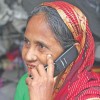
Linking Rural Development with SDGs
The 2030 agenda for sustainable development undoubtedly proposes an exciting vision, and promises a future of peace and prosperity; but these goals will not be easy to achieve unless we develop effective global partnerships and learn from the outcomes of Millennium Development Goals (MDG). We need to investigate both the successes and failures of MDGs, set our focus on result-oriented development, and encourage government and their development partners to think about the linkages between plan, policy, delivery and monitoring in resource mobilisation and management.
Every Day Is a Good Day to Hear More Women in the Media
On International Women’s Day newspapers and radio shows are filled with women’s voices. Yet too often the media’s attention is fleeting. These are the best of times, but without a doubt also the worst of times, for journalism and journalists – especially women in the media.
Step It Up for Gender Equality
In 1911, more than one million men and women attended rallies to commemorate the first International Women’s Day. Demonstrators advocated for an end to gender discrimination and for the promotion of women’s rights to work, vote, receive an education, and hold public office.Women’s Political Participation Slows, New Report Shows
As the world celebrates International Women’s Day March 8, the International Parliamentary Union (IPU) revealed a disappointing low for women’s participation in parliament.
CTBTO to Install Two Nuclear Monitoring Stations in Ecuador
The Comprehensive Test Ban Treaty Organisation (CTBTO), based in Vienna, will soon install two new monitoring stations in Ecuador. CTBTOs Executive Secretary Dr Lassina Zerbo told IPS the two stations in Ecuador, RN 24 and IS 20, “will brings us an important step closer to the completion of the International Monitoring System – the network that monitors the globe 24/7 for signs of nuclear explosive testing.”
African Staple Plantains at Risk of Same Diseases as Bananas
Anna Gamusi, has been growing ‘matooke’ - plantains - for over 20 years. She originally learnt how to grow them in her home village of Busolwe in Eastern Uganda, but says that they are no longer grown there.
Public Primary Boarding Schools in Pastoral Communities
Jonathan Tipapa is a nine year-old boy whose daily journey to and from school exposes him to many dangers that have seen him come close to dropping out of school -- like many of his friends who can be seen running after cows even on school days. He attends Enkutoto primary school in the expansive Narok South Constituency in the Rift Valley region, approximately 70 miles from the capital Nairobi.
Panama’s Expanded Canal Faces a Challenging Scenario
When the new locks of the expanded Panama Canal begin operations, they will do so amidst numerous challenges, because of the storm clouds hanging over the global economy, especially China. But local authorities and experts are not worried about the possible impact on the expanded canal.
The Empowerment of Women Will Be Central to Realising Sustainable Global Development
“Planet 50-50 by 2030: Step It Up for Gender Equality” – the theme of this year’s International Women’s Day serves as a timely reminder that, despite incremental progress of recent years and the ambition of the new global development agenda, we must redouble efforts to achieve a world underpinned by gender equality. All women must be empowered to realise their full and equal rights. But what does it actually mean to step it up for gender equality?
Anti-Mining Protests in Turkey Book Temporary Victory
Over the past weeks, thousands of people across Turkey have protested against the planned construction of a gold mine in Cerattepe, close to the town of Artvin in the northeast of the country. Protesters fear that the mine will cause irreparable damage to the unique natural environment of the region.Wild Life Crisis Threatens World’s Iconic Species
“Time is running out to end the poaching crisis that threatens some of the world’s most iconic species,” said UN Secretary General Ban Ki-moon in a statement marking World Wildlife Day.
Border Restrictions Violate 1951 Refugee Convention
When the United Nations commemorated “Zero Discrimination Day” on March 1, there was an implicit commitment by the 193 member states to abhor all forms of discrimination – including against women, minorities, indigenous people, gays and lesbians and those suffering from AIDS.
Tanzania Farmers, Pastoralists Launch Forum to Resolve Water Conflicts
At a remote village of Itunundu in Iringa, farmers and pastoralists recently met to discuss the best way to share land resources while charting out a strategy to prevent unnecessary fights among themselves. No one in the village ever imagined that this meeting would ever take place as the two groups had for long considered themselves enemies: they often clashed for water and pastures to feed their animals thus causing deaths and loss of property.Civil Society to Build Bridges With Private Sector
To successfully implement the UN’s 17 Sustainable Development Goals (SDGs), adopted by world leaders last September, it is time for "Turning Conversations into Action."Toys of Violence
In this age of advanced technology, where violent forms of entertainment thrive on the screen and in cyberspace, parenting becomes a challenging task, as children want to emulate what they see. The adoption of a resolution last year by the Sindh Assembly demanding a ban on the manufacturing, import and sale of toy guns often used in actual hold-ups was a step in the right direction.Big Question for the UK on the European Union
The British have a problem. A referendum on continuing membership of the European Union scheduled for June may lead to Brexit- Britain heading for the exit. Anybody with any knowledge of Europe’s war-like history knows this would be totally self-defeating.Exorcising Stalin
In one of his books, Mohamed Heikal, the Egyptian journalist who died last month at the age of 92, records an extraordinary encounter in 1964 between Gamal Abdel Nasser and Nikita Khrushchev.
Schools are in for Summer
“We are extremely jubilant over the rebuilding of our school that the Taliban destroyed it in 2013, due to which we used to sit without a roof,” Mujahida Bibi, a student of 8th grade in Government Girls Middle School North Waziristan Agency, told IPS.
Central America Makes Uneven Progress in Clean Energy
Over the last decade, Central America has managed to reduce its dependence on fossil fuels for the production of electric power, while expanding coverage. But the progress made by each country varies widely.A Different Honour
Sharmeen Obaid Chinoy`s record second win at the Oscars for her short document ary A Girl in the River: The Price of Forgiveness is proof that lightning can actually strike twice. Hardly four years ago, Chinoy was standing at the same stage in Los Angeles, accepting an Oscar for her documentary Saving Face, about Pakistani victims of acid attacks. Chinoy`s current Oscar winner examines a no less painful subject, honour killings in Pakistan.« Previous Page — Next Page »


The Week with IPS

NEXT STOP - SDGs
Tracking global progress towards a sustainable world
Tracking global progress towards a sustainable world
