
Monday, October 26, 2026



News and Views from the Global South
Opinion
The Iran War Is Costing Children’s Lives in Somalia
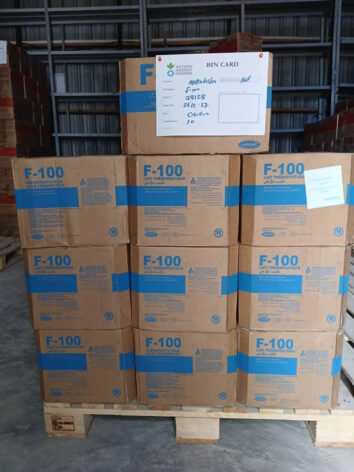
- When war erupted in the Middle East in late February, the most visible consequences were playing out in the Persian Gulf, with smoke rising from Dubai’s Jebel Ali port and shipping traffic across one of the world’s most critical maritime routes grinding to a near halt.
What was harder to see was a mother in Somalia, traveling 200 kilometers with a child too sick to sit upright, arriving at a stabilization center that was running low on the one product that could save her child’s life.
The closure of the Strait of Hormuz, one of the world’s most consequential maritime chokepoints, has sent shockwaves through global supply chains that reach far beyond the Gulf. Before the war began, roughly 3,000 vessels transited the strait each month.
In March, that number fell to just 154. The UN has warned that the resulting disruption is triggering a widening humanitarian and economic shock far beyond the Middle East, with rising oil prices and reduced maritime traffic driving up transport and food costs across import-dependent economies. We are certainly feeling that shock in Somalia.

Dr. Mohamed Omar is head of Health and Nutrition at Action Against Hunger in Somalia.
These children are treated with two products: Ready to Use Therapeutic Food (RUTF) and therapeutic milk, specifically the formulas F-75 and F-100, which are produced exclusively by Nutriset in France. Before the Strait of Hormuz closure, those products arrived in Mogadishu in 30 to 35 days via the Suez Canal and the Gulf of Aden.
Ships now divert around the entire African continent, extending delivery times to 55 to 65 days. That is nearly double the original transit time, and it comes with far less certainty about when shipments will actually arrive.
The cost increases compound the delay. A carton of therapeutic milk that cost $139 in 2024 rose to $186 in 2025 after USAID funding cuts, and has since climbed to $200 in 2026 following the Strait of Hormuz closure, a 44 percent increase in two years.
Fuel costs inside Somalia have surged by 150 percent, raising both the price of food for households and the cost of transporting supplies from Mogadishu to remote program sites like Hudur in the Bakool region. They represent the difference between whether a child receives treatment and whether a facility can afford to stay open.
Action Against Hunger, which operates 10 of the 52 remaining stabilization centers in the country, currently has only 69 cartons of therapeutic milk on hand. That figure covers roughly two weeks to one month of supply under current demand, and demand is rising sharply. Admissions at our facilities increased 35 percent between the first quarter of 2025 and the first quarter of 2026. At the same time, the number of stabilization centers across Somalia has already fallen from 71 to 52, after USAID’s termination order prompted facility closures earlier this year.
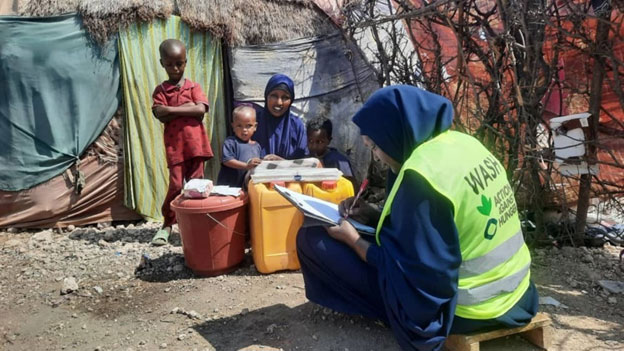
In areas such as Wajid, Somalia, Action Against Hunger replaced diesel-powered engines with solar-powered systems to supply water, reducing costs and providing a sustainable, long-term solution. Credit: Action Against Hunger
The funding gap to sustain nutrition interventions through 2026 stands at $2.9 million. That figure covers product procurement and in-country transportation costs. To put that in context: treating a child for severe acute malnutrition costs between $140 and $213. Preventing it costs $35. The math on early intervention is not complicated.
The Council on Foreign Relations has documented how shipping containers at Dubai’s International Humanitarian City now carry a $3,000 emergency surcharge, while the World Food Program has warned that supply chain pressures are driving up the costs of life-saving operations globally. These are systemic failures that compound each other.
There is a specific and urgent timeline here. UNICEF’s in-country stock of therapeutic milk is projected to run out by August 2026. Because of the extended shipping times caused by the Africa diversion route, funding must be committed by May or June for the product to arrive before that deadline.
Iran has agreed, in principle, to facilitate humanitarian aid shipments through the strait, and diplomatic efforts to reopen the waterway to commercial traffic are ongoing. But the ceasefire remains fragile, and even a partial reopening offers no guarantee that the specialized supply chains supporting therapeutic nutrition programs will recover in time.
The supply chain disruptions caused by the Iran war are a new layer on top of pre-existing funding deficits and a withdrawal of US foreign aid that was already forcing closures and rationing across the country.
The children arriving at stabilization centers and outpatient nutrition sites in Somalia did not cause any of these disruptions. They are the downstream consequence of a global logistics network absorbing simultaneous shocks it was never designed to handle. A $2.9 million funding gap is solvable. The question is whether the international community will respond in time.
IPS UN Bureau


 Print
|
Print
|




