Tuesday, August 25, 2026



News and Views from the Global South
G8: Japan Showcases its Environmental Policy
Keya Acharya
- Japan has one of the world’s most aggressive environmental policies, set both to meet 2012 emission reduction targets and to make the country – which has no natural resources of its own – less dependent on imports, according to experts meeting here. At a meeting of influential parliamentarians of GLOBE (global legislators for a balanced environment) ahead of the upcoming G8 summit in Hokkaido, Jul. 7-9, several high-profile Japanese politicians spoke of Prime Minister Fukuda’s low-carbon initiatives.
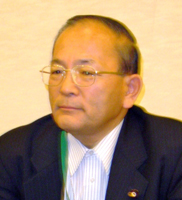
Suichi Kato, secretary-general of the parliamentarians' association for promoting renewable energy. Credit: Katsuhiro Asagiri/IPS
Fukuda leads the Team Minus 6 percent initiative, started in 2005 to reduce emissions by 6 percent – Japan’s commitment to the Kyoto Protocol. The movement has so far 2,160,000 members and 18,500 businesses that have committed to various environmental measures.
Japan’s parliament, called Diet, has also recently passed an energy conservation law making it incumbent upon citizens to follow energy-saving initiatives.
“We now have an urgent energy-saving agenda,” says GLOBE acting chairman Takashi Kosugi, who also serves as chairman of the Environment Research Council of the ruling coalition’s Liberal Democratic Party.
But, Japan’s highly mechanised society’s emissions actually increased by about 6.2 percent in spite of its impressive energy-efficient technologies. Household and vehicular emissions are the main culprits for the rising emissions.
Suichi Kato, secretary-general of the parliamentarians’ association for promoting renewable energy, who heads GLOBE’s ‘Reduce, Reuse, Recycle (3R)’ strategy emphasises the need for the G8’s support to address health hazards in transboundary wastes, recyclable usage of resources and waste management.
Kato told IPS that Japan had reduced its wastes from 100 million tonnes per annum to a current 40 million tonnes per annum. “Though our emissions have increased elsewhere, I believe emissions from wastes have been reduced. Previously we incinerated, now we use substitute methods. The 3R in Japan will see concrete results in time.”
Kato said Japan’s industry has a 93 percent rate of reusing recycled material – – especially in the aluminium sector. The steel sector has a 90 percent rate of recycling material, and the newspaper industry a 70 percent rate. “So the complete process from start to finish has a very low rate of using virgin material, it’s actually very efficient,” Kato told IPS.
At the GLOBE meeting Kato said that the G8 was progressing in initiating a global 3R movement. G8 leaders at the St. Petersburg Summit agreed to ‘set targets’ to optimize resource recycling.
Kato has proposed a strategy for the upcoming Hokkaido Summit that encourages the G8’s leadership to adopt the entire 3R cycle in collaboration with international organisations and development finance bodies.
Yuichi Moriguchi of Japan’s National Institute of Environmental Studies explained Japan’s ‘sound material-cycle’ system which identifies and manages leftover natural resources. “Japan’s initiatives are now in the G8, UNEP [U.N. Environment Programme] and have spread into the Asian region,” Moriguchi told the GLOBE legislators.
But Wakako Hironaka, opposition Democratic Party parliamentarian and GLOBE vice president, took a stab at the ruling Liberal Democratic Party coalition’s handling of Japan’s increasing consumption.
“There are hardly any renewable energy systems in place, there is no ‘carbon disclosure’ of CO2 reductions and thus our greenhouse gas emissions have actually grown to as large as 12.2 percent,” Hironako complained to the GLOBE meet, adding that laws and green house gas taxes had not been set early enough.
Hironaka proposed a Global Warming Countermeasures Basic Bill – setting emissions reductions to over 25 percent of 1990 levels and over 60 percent before 2050. “Japan needs not just bilateral but multilateral efforts in environmental and climate change programmes. Now is the time for politics to come into play,” she said.
Masahiro Tabata of the New Komeito party – part of the governing coalition – said that other than wanting the inclusion of several environmental taxes, domestic emissions trading and insurance mechanisms, the various political parties needed to “ensure that Japan’s environmental policies remained the same in spite of changes of government.”
The GLOBE legislators brokered what their president and Member of Parliament from the UK, Elliot Morley, termed a “historic agreement, given the different positions of various countries.” The agreement, which will be presented on Jun. 30 to Fukuda – G8 President – calls for the creation of a global carbon market, a technology fund to accelerate the transfer of technology to developing countries, and a set of market initiatives to reduce deforestation.
The agreement also accepts the principle of common but differentiated responsibilities, wherein developed countries continue to take the lead in reducing green house gas emissions, whilst developing countries take actions to control their emissions within the framework of sustainable development.
 Print
|
Print
|