Languages
Wednesday, November 11, 2026



News and Views from the Global South
Opinion

OPINION: Obama’s Quick Fix Won’t Solve the Regional Refugee Crisis
In recent months, an unprecedented surge of refugee women and children has been traveling alone to the United States to seek protection at our southern border.
In Bangladesh, a Steady Pursuit of Freedom
Visiting Bangladesh has been a lifelong dream of mine, but all that I had heard about a people who love freedom so much that they have withstood great armies, famine and intractable poverty could not prepare me for what I’ve seen in the last three days.
OPINION: Fighting Killer Diseases Is Essential in the Post-2015 Agenda
Undeniably, the Millennium Development Goals (MDGs) helped lift specific health concerns onto the global agenda.
Cuba-United States – Something Is Moving
In ‘Hard Choices’, her new book about her experiences as Secretary of State during U.S. President Barack Obama’s first term (2008-2012), Hillary Clinton writes something of prime importance about Cuba – she says that late in her term in office she urged Obama to reconsider the U.S. embargo against Cuba.OPINION: U.S. Blames Victims of its own Failed Foreign Policies
The events unraveling in the Middle East have proved that the vaunted “Arab Spring” has turned into a searing summer of wildfires exploding unpredictably in diverse Islamic fronts without competent firemen to hose down the unmanageable conflagration.
OP-ED: Surging Violence Against Women in Iraq
Shortly after their conquest of Mosul, young men armed with assault rifles went door to door in Iraq’s second-largest city, taking “women who are not owned” for jihad al-nikah, or sex jihad.
Higher Food Prices Can Help to End Hunger, Malnutrition and Food Waste
The choice of foods displayed on supermarket shelves can be quite bewildering. This abundance encourages us to take it for granted that we will always be able to buy the food we want at affordable prices.
Neo-Cons, Hawks Can’t Get No Iraq Traction
Despite their ubiquity on television talk shows and newspaper op-ed pages, neo-conservatives and other hawks who propelled the U.S. into war in Iraq 11 years ago are falling short in their efforts to persuade the public and Congress that Washington needs to return.
Q&A: “Fukushima Accident Still Ongoing After Three Years”
It has been three years since the nuclear accident in Fukushima, Japan. But the consequences are still ongoing due to continuous leaks of radioactivity into the environment, says independent nuclear energy consultant Mycle Schneider.
Op-Ed: Overcoming the Twin Hurdles of Inequality and Climate Change
Two major injustices – inequality and climate change – are threatening to undermine the efforts of millions of people to escape poverty and hunger.
Germany’s New Energy Revolution Still Moving Ahead
Germany has now become the world’s first modern renewable energy economy, according to the experts. The Federal Republic of Germany already obtains 29 percent of its electricity from renewable sources, meaning photovoltaic, hydro and wind power, and power produced by burning wood or other biomass.
Q&A: “Some Individuals Are Now as Wealthy as Entire Countries”
As it turns 50, the United Nations Conference on Trade and Development (UNCTAD) finds itself engaged in an ongoing struggle to reduce economic and social inequalities in the world.
Op-Ed: Not Only Hunger, but Malnutrition Too
Continued growth in developing countries, along with poverty-reduction policies, have helped to improve both income and food security globally.
Op-Ed: First Decolonisation, Now ‘Depatriarchilisation’
At the end of this week leaders of the Group of 77 and China will meet in Bolivia to commemorate the 50th anniversary of the group.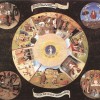
A Strange Tale of Morality: Banks, Financial Institutions and Citizens
It is a great pity that, beside opening the doors to ethics, social justice and peace, Pope Francis does not also give indications of updating traditional theology. The most urgent task is to update the Seven Deadly Sins.Brazil, Football and Protests
It is unlikely that Brazilians will listen to the audacious call made by Michel Platini – a great player in his time and now the politicking president of the Union of European Football Associations (UEFA) – on Apr. 26: “Brazil, make an effort for a month, calm down!”
A Common Vision – The Abolition of Militarism
On this Friday, June 6, people from all corners of the world gather here in Sarajevo, Bosnia, to explore a plethora of ideas on the road forward to a world in peace.
How Climate Legislation Can Help to Enable a Global Climate Deal in 2015
With leading politicians meeting next month for the World Summit of Legislators in Mexico City, it is clear that a new global climate deal is needed. Each year, the world is seeing signs of climate change's accelerating impacts, from longer, more intense droughts to stronger storms and rising seas.
OP-ED: Climate Change Threatens the Wild Beauty of Small Islands
It’s beginning to sink in that our climate is changing more rapidly than at any time in recorded history and it will have profound and irreversible effects on the planet. On World Environment Day on Jun. 5, let’s stop for a moment to consider in particular the devastating impact that climate change is having on small island states and their wildlife.
Flexible Biofuel Policies for Better Food Security
Modern biofuels have become a fact of life, part of a quest for more cost-effective and environmentally sustainable businesses and lifestyles. But to be truly sustainable, biofuel production must strike a balance between its benefits and its potential hidden costs, between energy security and food security.
More Than Generals and Troglodytes in Egypt
Unconsciously or not, most mainstream media and foreign correspondents here have been echoing Muslim Brotherhood voices by depicting Egypt's new president, Abdel Fattah Al Sisi, as the general who led the July 2013 “military coup” against the “legitimately elected” Islamist leader Mohamed Morsi.« Previous Page — Next Page »





The views expressed in these articles are those of the authors and do not necessarily represent the views of, and should not be attributed to, IPS-Inter Press Service

The Week with IPS

NEXT STOP - SDGs
Tracking global progress towards a sustainable world
Tracking global progress towards a sustainable world
