Languages
Thursday, September 17, 2026



News and Views from the Global South
Opinion

This Year Saw Most of the World Repressed – but in Civil Society there is Hope
Today is International Human Rights Day, Normally, it should be an occasion to celebrate the work of those who strive to create peaceful, just, equal and sustainable societies. But conditions for human rights defenders and their organisations to operate freely are extremely challenging around the world.
Israel-Gaza War: Deaths, Injuries and Destruction with No Plan for Peace
After the Hamas-led attack on Israel on 7 October 2023, Israel retaliated with a war in Gaza involving bombings, shootings and blockades but with no explicit plan for achieving peace with the Palestinians.
Protect the Rights and Future of Youth, Right Now, From Addiction and Harm
As the world commemorates UN Human Rights Day December 10, with the theme, “Our Rights, Our Future, Right Now,” it’s time to ask: Are we truly listening to what the youth envision for their present and future?
South Africa’s G20 Presidency: A Call for Transformative Leadership in a Fractured World
South Africa’s G20 Presidency begun in December, with only 12% of SDG targets on track and significant backsliding on more than 30%. As we write this today, there is an urgent need for a paradigm shift and practical solutions for a progressive, people-centred, and development-driven agenda in a fractured global landscape that needs collective healing.
Plastics, Power, and Politics: The High-Stakes Fight for a Global Treaty
As the fifth round of negotiations of the Intergovernmental Negotiating Committee (INC) for a global plastics treaty concluded in Busan, South Korea (25 November-December 1 2024), the meeting underscored both the complexities and the promises of multilateralism. What we saw in Busan was indicative of other environmental treatymaking spaces, including ones on climate and biodiversity.
Zambia: Civil Society Fighting New Legislative Threats and Restrictive NGO Bills
Over the past few years, new “tools of control” affecting the work of civil society organisations have multiplied, often imposing forms of “bureaucratic criminalisation” and “administrative harassment”. In particular, more and more restrictive and demanding laws are hurting civil society organisations’s capacity to operate across the globe.
Another Tsunami Sweeps Sri Lanka
On 26 December 2004 a powerful Asian tsunami swept over many of Sri Lanka’s coastal provinces, killing thousands of people and wildlife, devastating habitats and even washing away a trainload of passengers far from the rail tracks.
COP29 Outcomes – A Call to Action for the World’s Most Vulnerable Nations
The conclusion of the 29th Conference of Parties (COP29) brings with it a blend of urgency, frustration, and a glimmer of hope for the Least Developed Countries (LDCs), Landlocked Developing Countries (LLDCs), and Small Island Developing States (SIDS).
New Approaches Urgently Needed to Tackle Resurgent Social Crises
Despite uneven economic recovery since the pandemic, poverty, inequality, and food insecurity continue to worsen, including in the Asia-Pacific region, which used to fare better than the rest of the Global South.
After Gaps in UN Agreement, National Laws Must Step Up To Protect Community Land Rights
This time last year, the forestry space was abuzz with news of the big Blue Carbon deals. The deals set a staggering amount of land in Sub-Saharan Africa – 20% of the land in Zimbabwe, 10% of Liberia and Zambia, 8% of Tanzania, and an undisclosed amount of land in Kenya – to be managed by a firm in the United Arab Emirates.
Turning To Regenerative Practices and Soil Microbes To Fight Effects of Climate Change
Recently, at the UN climate conference COP29, countries agreed to do everything necessary to invest in climate solutions to protect lives and livelihoods from worsening climate change impacts and to build a prosperous world. This is necessary. Indeed, every effort must be made by our leaders to protect lives and livelihoods.
Courage, not Compromise? A Rallying Cry that Failed a Deadlocked COP Meeting
Courage and not compromise. That was the motto desperately launched by members of the civil society in the twilight of the negotiations of the Plastic Pollution Treaty in Busan, South Korea last week.
South Africa’s G20 Presidency in 2025: A Pivotal Moment for the Country and Africa
In 2025, South Africa will assume the presidency of the G20, a pivotal moment in the African country's international diplomatic efforts. The Group of Twenty (G20), is an intergovernmental economic forum comprising 19 countries and two regional unions - the European Union (EU), and recently the African Union (AU). It represents 85 per cent of the global economy, 75 per cent of world trade and 67 per cent of the global population.
COP29 Falls Short on Finance
COP29, the latest annual climate summit, had one job: to strike a deal to provide the money needed to respond to climate change. It failed. This was the first climate summit dedicated to finance. Global south countries estimate they need a combined US$1.3 trillion a year to transition to low-carbon economies and adapt to the impacts of climate change. But the last-minute offer made by global north states was for only US$300 billion a year.
Giving the Ocean a Fighting Chance Through the Great Blue Wall
The Ocean is our life source, but for decades it has been repeatedly marred by humankind. With the disposal of pollutants into the Ocean, overexploitation of Ocean resources and the human-driven increase of global temperatures, the Ocean is changing and not for the better. Our Oceans are warming, corals are dying, fish stocks are declining, toxic chemicals are being released into the Ocean – these eAects are clearly visible today, but there is hope. There are organisations from all around the world that are fighting to save our Ocean.
Confronting the Global Crisis of Land Degradation
A major new scientific report was launched December 1, a day ahead of the opening of the 16th meeting of the Conference of the Parties to the UN Convention to Combat Desertification (UNCCD COP16).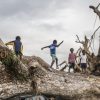
A New Compass for Climate Action
The climate crisis has become devastating across the world over the past few months: super typhoons sweeping through the Western Pacific, unprecedented superstorms in the Gulf of Mexico, raging wildfires across the Amazon rainforest, severe flooding in Central and Eastern Europe, just to mention a few. Rising seas and intensifying storms threaten to devastate communities and erase entire countries from the map.
Sudanese Women & Human Rights Defenders Call for Solidarity to Stop the Bloodshed
On 15 April 2023, the outbreak of war between the Sudanese army and the Rapid Support Forces (RSF) drastically altered the face of Sudanese society. The fighting left thousands of dead, wounded, displaced people and refugees.
Eliminating Rabies in Africa Must Begin with Quality Data
Rabies, despite being a major public health concern in Africa, is still not fully understood, due to the limited data available on it. This has slowed down efforts to eliminate it, yet the continent bears a significant burden of the disease and accounts for most of the deaths it causes globally.
Equitable Ocean Prediction Systems: Bridging the North-South Divide
At their recent Leaders’ Summit in Rio de Janeiro, the G20 committed to support developing countries in responding to global crises and achieving the Sustainable Development Goals (SDGs). To meet that pledge, the world’s leading economies need to enhance global collaboration and investment in ocean prediction systems and technology.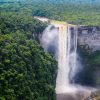
Guyana’s Dream to Be a Green Oil Producer
Long before the transformative discovery of its offshore oil in 2015, Guyana had made a strong pledge to decarbonization and climate action as set forth in its Low Carbon Development Strategy (LCDS) 2030. The development of its oil industry has led to remarkable economic growth in Guyana, including a 62.3% growth rate in 2022.« Previous Page — Next Page »


The views expressed in these articles are those of the authors and do not necessarily represent the views of, and should not be attributed to, IPS-Inter Press Service

The Week with IPS

NEXT STOP - SDGs
Tracking global progress towards a sustainable world
Tracking global progress towards a sustainable world
