Languages
Thursday, November 5, 2026



News and Views from the Global South
Opinion

The Reckless and Dangerous Misogyny of Zuckerberg and Musk
In anticipation of Donald Trump’s inauguration his gold-studded Florida estate, Mar-a-Lago, is at the heart of political power games, where influential businessmen like Mark Zuckerberg and Elon Musk are positioning themselves as key players in his orbit. Apparently unfazed by legal controversies and scandals, Trump is preparing for his return in collusion with already powerful men, who in their pursuit of personal gain and political influence reflect a disturbing trend of billionaire oligarchy merging with politics. A worrying development that might have significant consequences for the future of free speech and women’s rights.
Farmer’s Bill: A Reprieve for U.S. Farmers Affected By PFAS
The use of fertilizers has been introduced in society to enrich soil and supply high-grade harvests for centuries. As time went on, humans have managed to develop new ways to reform this operation, and as such, have formed a lessened health risk fertilizer called “biosolids”.
Ghana a Contender for BRICS+ Alliance
With heightening geopolitical interest in building a new Global South architecture, Ghana's administration is considering joining the 'partner states category' of BRICS+, an association of five major emerging economies (Brazil, Russia, India, China and South Africa).
Israel’s Genocide in Gaza
Despite the denials by the Israeli government and some of its supporters, Israel’s genocide against the Palestinians in Gaza is evident.
The Davos Disconnect
"It was the best of times; it was the worst of times." Charles Dickens is more relevant today than ever. The wealthy and powerful are meeting again this year in glamorous Davos, at an invitation-only event. They arrive in chartered aircraft and private jets to speak about our warming climate, among other global concerns.
Remittances Vs Philanthropy – a Development Practitioner’s Perspective
Across Africa, economic transformation and development are being fuelled by two significant streams of funding: remittances and philanthropy. Both play vital roles, but as the situations evolve in many African countries, one truth becomes increasingly clear – remittances are emerging as a more sustainable, dignifying force compared to traditional philanthropy.
The Fall of Assad is a Cautionary Tale of Blowback
A regime built on terror, ruled by fear and sustained by foreign proxy forces crumbled in less than a fortnight. In the end, the foundations of the House of Assad (1970–2024) rested on the shifting sands of time. In the good ol’ days, despots could retire with their plundered loot into comfortable lifestyles in Europe’s pleasure haunts. No longer. The reverse damascene expulsion has seen the Assads scurry to safety to Moscow.
How US Media Hide Truths About the Gaza War
A few days before the end of 2024, the independent magazine +972 reported that “Israeli army forces stormed the Kamal Adwan Hospital compound in Beit Lahiya, culminating a nearly week-long siege of the last functioning hospital in northern Gaza.”
The Year 2024: Hopes & Despairs
Thank God, we have survived another year of genocide, war, destruction and climate crisis. The passing year of 2024 has been a mixture of hope and despair. It began with some hope as the International Court of Justice (ICJ) ruled in favour of South Africa’s case against Israel for committing genocide and ordered Israel to take all measures within its power to prevent the commission of all acts within the scope of Article II of the Genocide Convention, and to take immediate and effective measures to enable the provision of urgently needed basic services and humanitarian assistance to address the adverse conditions of life faced by Palestinians in the Gaza Strip.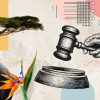
Nature Goes to Court
Nature is taking the stand as courtrooms worldwide become battlegrounds for Earth’s rights. The rise in climate litigation shows how the environment can take centre stage as a plaintiff, demanding justice and accountability, benefiting us all.
Trade Partnerships Offer Hope Against Deforestation
In Indonesia’s forests today, we can breathe a sigh of relief. At the conclusion of our dry season, during a time when climate change impacts are increasing in frequency and severity, there were no giant fires with plumes of smoke choking our region.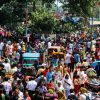
The Challenges Facing the World’s Fifth Largest Economy
India has surged forward as the world's fifth-largest economy and has now surpassed China to claim the title of the most populous nation. However, this rapid ascent is not without its challenges; rising unemployment and inflation loom large, threatening demographic dividend and its ambitious goal of sustaining a 7 to 8% GDP growth.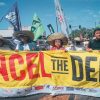
Developing Countries are Being Choked by Debt: This Could be the Year of Breaking Free
The debt disaster is back. Indeed, the aid agency Cafod reports that developing countries today face “the most acute debt crisis in history”.
Colombia’s Historic Child Marriage Ban
Colombia has just marked a historic milestone in the global campaign against child marriage, with the Senate passing one of Latin America and the Caribbean’s most comprehensive bans on child marriage and early unions. In a country where one in five girls under 18 and one in 10 under 14 are married or live in marriage-like conditions, the new law raises the minimum age to 18 with no exceptions, eliminating a 137-year-old Civil Code provision that allowed children over 14 to marry with parental consent. This achievement aligns with goal 5 of the Sustainable Development Goals (SDGs), which has a target of eliminating harmful practices like child marriage by 2030. The new law now awaits the signature of President Gustavo Petro to come into effect.
Our Health is at Stake: The Solutions SIDS Need to Fight Climate Change
Climate change is one of the most serious global threats to the future of the world’s population. Its impact extends far and wide, from the economy to governance to the very health and well-being of society.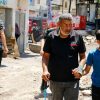
Genocidal President, Genocidal Politics
When news broke over the weekend that President Biden just approved an $8 billion deal for shipping weapons to Israel, a nameless official vowed that “we will continue to provide the capabilities necessary for Israel's defense.” Following the reports last month from Amnesty International and Human Rights Watch concluding that Israeli actions in Gaza are genocide, Biden’s decision was a new low for his presidency.
Financing for Development Priorities Today
The forthcoming fourth United Nations Financing for Development conference must address developing countries’ major financial challenges. Recent setbacks to sustainable development and climate action make FfD4 all the more critical.
The most Secret Memory of Men and the Disgraceful Condemnation of Two African Authors
In 2021, the Senegalese novelist Mohamed Mbougar Sarr became the first writer from sub-Saharan Africa to be awarded the Prix Goncourt, France’s oldest and most prestigious literary prize.
Will Trump Seize the Opportunity for an Israeli-Palestinian Breakthrough?
Trump, who wants an end to the Israeli-Hamas war even before he reassumes the Presidency, must know that denying the Palestinian right to statehood and conceding further Palestinian land to Israel is a recipe for the next horrific inferno that will overshadow even the present calamitous Israel-Hamas war.
Carter’s Virtue Trumps Mendacity
The fireplace in the State Dining Room of the White House that says, “May none but honest and wise men ever rule under this roof.” President John Adams wrote that in a letter to his wife Abigail in 1800.
A Renewed Vision for Prosperity for Landlocked Developing Countries
Over 570 million people live in the world’s 32 Landlocked Developing Countries (LLDCs), spanning across Africa, Asia, Europe, and Latin America. These nations face unique and complex development challenges. Their lack of direct access to the sea, geographical isolation, limited infrastructure, and difficulty integrating into global trade and value chains hinder sustainable development and progress.« Previous Page — Next Page »





The views expressed in these articles are those of the authors and do not necessarily represent the views of, and should not be attributed to, IPS-Inter Press Service

The Week with IPS

NEXT STOP - SDGs
Tracking global progress towards a sustainable world
Tracking global progress towards a sustainable world
