Languages
Friday, September 18, 2026



News and Views from the Global South
Opinion

From the Biodiversity COP16 to the Climate COP29: Building Equitable Accountability, Alignment, and Adequacy on Finance
The United States just went through its most consequential election. While the outcome raises questions about what the re-election of Trump means for U.S. engagement in global climate talks moving forward (in view of his previous stunt), the game is still on, with or without him. Despite the challenges, local communities, cities, states, private actors, and the public more broadly have embarked on an unstoppable journey—upholding the spirit of the Paris Agreement.
French-Speaking African Nations Bartering Natural Resources for Russian Arms
At the first ministerial conference of the Russia-Africa Partnership Forum in the southern coastal city of Sochi, seeking to deepen political and business ties with African countries, Russian President Vladimir Putin in his message and Foreign Minister Sergey Lavrov in his powerful speech underlined Russia's security support to fight terrorism and extremism across Africa.
COP29: African Countries Must Wake Up from ‘Distributed Carbon Emission Guilt’ to People-Centered Climate Action
Global warming is no longer just an issue for the environment but a crisis of life itself. Yet, African governments’ climate action strategies, specifically those submitted under the Nationally Determined Contributions (NDCs), remain disproportionately focused on emission reductions—an approach that fails to address the most pressing health needs of African communities. For many Africans, it’s hard to explain why their leaders prioritize reducing emissions, which are rather low and insignificant when the immediate threat of climate change is not their carbon footprint but their vulnerability to its effects.
Asia’s Economies Can Embrace Services to Boost Growth & Productivity
The Asia-Pacific region prospered by becoming the source of more than half of global factory output, but another transformation to higher-productivity services has the potential to further support growth.
Middle East: Ceasefires are the Only Answer
“The shockwaves from Israel’s ongoing and indiscriminate warfare on Gaza and Lebanon are reverberating across this entire region. Neither the horrific assault on Israeli civilians on 7 October 2023, nor the indiscriminate missiles launched by militant groups from Lebanon, can justify the degree of destruction on civilian lives and infrastructure in the region that I have witnessed in recent days.
The 1.5 degrees Celsius Target from Paris (Probably) Died on November 5th.
So, the worst has happened. American voters have apparently just elected the most chaotic and kleptocratic individual in their country’s political history as their president. (We say ‘apparently’, because these days nothing can be certain about the integrity of the US political or electoral system – as is the case with far too many other countries.)
4 Reasons Why the Climate Coalition Will Win Despite Trump
The nation which more than any other caused the climate crisis will leave it to the rest of the world to sort out the mess. That is a takeaway from the US election last week.
COP29: Making Space Applications Work for Women in Agriculture
When the first woman in space, Valentina Tereshkova, orbited the Earth in 1963, there were only three active Earth observation satellites. Today, the number is 114 times greater.
Israel Alienating Allies and Acquiring Adversaries
As a result of its policies and actions in response to the 7 October attack, the Israeli government has not only alienated its allies and acquired adversaries but also found itself isolated diplomatically. The consequences of those developments and realignments have occurred across countries, organizations and groups worldwide.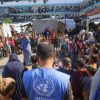
Scorched Earth Colonizing of Gaza is a Horrible Idea
For religious, humanitarian, and scientific reasons, Israel’s increasingly apparent plan for the de facto colonization of the Northern Gaza Strip is a bad idea. When that program was rejected recently by Israel’s own Defense Minister Yoav Galant, he was summarily fired by Prime Minister Netanyahu.
When the truth becomes a lie: What Trump’s election means for the world as we know it
On the day following the US election, UN Secretary General, Antonio Guterres issued a brief statement commending the people of the United States for their active participation in the democratic process. He wisely omitted mention that the election of Donald J. Trump – who attempted to overturn the people’s mandate by inciting an insurrection in 2021 - is a major setback for the UN’s worldwide quest to advance human rights and the rule of law. Trump is a self-avowed admirer of authoritarian strongmen like Russia’s Vladimir Putin and Hungary’s Viktor Orban who disdain international norms that the UN seeks to uphold.
UN Climate Summit Needs Action – not a COP-Out
The Paris Agreement on climate change is a decade old this month. While there has been progress - with new net zero pledges and new technological solutions, we are still grappling with the reality that global temperatures continue to soar. 2023 was the hottest year ever on record.
Sic Transit Gloria Mundi: Preserving the Cultural Heritage
pyramids is the monument I have made,
a shape that angry wind or hungry rain
cannot demolish, nor the innumerable ranks
of the years that march in centuries.
I shall not wholly die:
some part of me will cheat the goddess of death.

How Blue Carbon Ecosystems are Saving the Philippines’ Sinking Islands
Imagine living with water up to your knees for half of the year, where homes are flooded, and people constantly fear that the sea might one day engulf the town and everyone in it.
World Inequality Still Rising Despite Some Convergence
Despite earlier income convergence among nations, many low-income countries (LICs) and people are falling further behind. Worse, the number of poor and hungry has been increasing again after declining for decades.
Diverse Diets Are Essential for Nourishing a Healthy Planet as Well as Healthy People
It’s often said that we are what we eat. However, our diets are also a reflection on the health of our food systems, the environment and agricultural biodiversity.
Africa’s Most Important Election is Underway
Africa has had a terrible record dealing with extreme poverty. The late Adebayo Adedeji, the legendary head of the United Nations Economic Commission for Africa (ECA), campaigned vigorously but unsuccessfully in the 1980s against the IMF and World Bank-imposed structural adjustment programmes, contending that these contributed to poverty’s increase.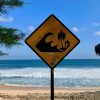
Navigating the Waves: Strengthening Tsunami Preparedness in a Changing Climate
This year’s World Tsunami Awareness Day presents a moment of reflection 20 years on from the catastrophic Indian Ocean Tsunami in 2004. The tsunami resulted in 225,000 fatalities across 14 countries and emphasized the urgent need for effective tsunami preparedness, especially in the face of growing climate change challenges.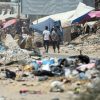
Democracy’s Dilemma: Can We Overcome Short-Termism to Build Lasting Peace?
While the expansion of democracy is a key condition for peace, the Achilles’ heel of democracies is that their leaders are constrained by electoral calendars, forcing them to push for peace or delay, whereas autocracies can afford to play the long game to achieve the favorable outcomes they desire.
Transforming Africa with the Power of Education
Africa has the youngest population in the world today. Around 40% of the population is 15 or younger. They have a non-negotiable right to an inclusive and continued quality education, just like young people everywhere across the globe.
Knife-Edge November: Teetering on the Climate Abyss
Standing high on the vertiginous edge of the future and looking down into a volcanic seething of approaching doom, it is a totally understandable desire to want to close your eyes, walk away and turn on the sports channel. If you have one.« Previous Page — Next Page »


The views expressed in these articles are those of the authors and do not necessarily represent the views of, and should not be attributed to, IPS-Inter Press Service

The Week with IPS

NEXT STOP - SDGs
Tracking global progress towards a sustainable world
Tracking global progress towards a sustainable world
