Languages
Friday, September 18, 2026



News and Views from the Global South
Opinion
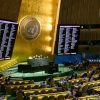
Has the United Nations Outlived its Usefulness?
The United Nations, established in 1945 at the end of World War II, has sadly virtually outlived its usefulness as it commemorated its 79th anniversary due to its failure to reform itself and adjust to the new world order following the collapse of the Soviet Union, which is significantly different from when the UN was established.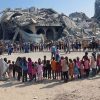
Hope Springs Eternal—Dashed it’s Deadly
The most solemn and terrifying words ever uttered are those inscribed over the gateway to Hell in Dante’s Inferno: “Abandon all hope, ye who enter here!” Hope is essential for human survival both as individuals and as nations.
The World’s Demographic Sky Is Not Collapsing
Alarmists, mainly politicians, economists and wealthy elites, are announcing that the world’s demographic sky is collapsing. The world’s demographic sky is not collapsing but simply changing.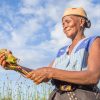
A Triple Planetary Crisis Scarring Africa’s Landscapes
Some of the creeping impacts of this triple crisis are possibly the most debilitating: Africa is the most severely impacted region by desertification and land degradation, with approximately 45% of its land area affected. In the Horn of Africa and the Sahel alone, it imposes food shortages on more than 23 million people. Just last month, more than 700,000 people were affected by floods in Central and West Africa, and tens of millions in southern Africa are facing drought.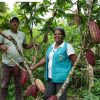
Food Security Is Key To Making ‘Peace with Nature’
As countries are meeting in Cali, Colombia, for the 2024 UN Biodiversity Conference (CBD COP 16), the fate of biodiversity hangs in the balance, and with it, the sustainability of our food systems.
Scientific Research Can Play a Key Role in Unlocking Climate Finance
Climate finance will be at the epicenter of the discussion at the UN Climate Change Conference 2024 (COP29). The focus will be on strengthening the fund and defining the conditions under which the countries of the Global South will be able to access this money. However, little is said about the scientific research that is required to gather the evidence and data to prove the loss and damage caused by the impact of climate change in developing countries.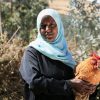
Chickens as Well as Cheetahs: Biodiversity Conservation Must Also Include Livestock
As the UN’s COP16 biodiversity conference continues, the temptation is to focus on the wild flora and fauna under threat. But there is another, less obvious yet just as critical biodiversity crisis unfolding around the world that also deserves attention.
This Is Not a Drill. Fascism Is on the Ballot. But…
The conclusion that Donald Trump is a fascist has gone mainstream, gaining wide publicity and affirmation in recent weeks. Such understanding is a problem for Trump and his boosters.
The July Revolution in Bangladesh Is Rooted in Meta-Modernist Philosophy
The students and the common people of Bangladesh dared to do something in 36 days of July-August that was considered simply impossible by most people just days before August 5, 2024. They said ‘enough is enough’ to an old order that outraged their humanity, robbed their dignity and the rulers imagined that their citadel of power was simply impenetrable. The revolutionists refused to bow down to the murderous regime that knew no bounds to its cruelty and plundering. They were ready to sacrifice their lives for the freedom of the besieged nation.
Pressure on an Atomic Level
Violence in the Middle East has escalated dramatically since the Hamas terrorist attack in October 2023 and the fallout that has since followed. There is tension, if not a state of war, between all the major opponents on the ground.
IMF isn’t doing enough to support Africa: billions could be made available through special drawing rights
At the 2021 UN Climate Summit, Barbados prime minister Mia Mottley called for more and better use of special drawing rights (SDRs), the International Monetary Fund’s reserve asset.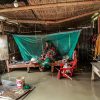
The Impact of Global Megatrends on Poverty in Asia & the Pacific
In the coming decades, the Asia-Pacific region faces a series of challenges that threaten to exacerbate poverty. Among these, climate change, demographic shifts, particularly population ageing and the rise of digital technologies stand out as three interconnected global megatrends.
Biden’s Middle East Endgame Spells a Death Sentence for Thousands More Palestinians and the Israeli Hostages
Nobody should be fooled by President Biden's recent warning to Israel that the U.S. may level consequences if it doesn't do more to surge humanitarian aid into Gaza within the next 30 days. Biden's warning, along with Anthony Blinken's 11th trip to Israel and the region to try and revive ceasefire talks, is nothing more than cynical double talk designed to appease domestic audiences and buy time for Israel to deepen its genocidal aims against the Palestinian people and brutally punish those who support their liberation.
Unlocking Urban Climate Finance: Key insights from Indonesia
Over half of Asia-Pacific's population now live in cities. While urbanization brings people closer to opportunities and better services, many urban dwellers are also experiencing the adverse impacts of climate change such as floods, urban heat and infectious diseases. Urban activities are among the major contributors to greenhouse gas (GHG) emissions.
With God on Our Side: Netanyahu, Trump, and Putin
Bronisław Malinowski (1884 – 1942) did for several years conduct socio-anthropological research in the Trobriand Islands. Returning to England after World War I, he wrote several ground breaking books, among them Magic, Science, and Religion in which he assumed that people's feelings and motives are crucial for understanding the way their society functions. Malinowski considered society to be intimately interlinked with individuality – i.e. an individual’s ideas and behaviour are created and formulated within the social circles s/he lives and vice versa. Consequently, an individual’s personality might influence an entire society, depending on the leading role s/he is granted.
The IMF Just Made the Case for its Own Irrelevance
This month, the International Monetary Fund (IMF) had an opportunity to end one of its most reviled policies and lift billions of dollars of debt off the backs of crisis-stricken developing countries. It chose not to.
Another Nobel for Anglocentric Neoliberal Institutional Economics
New institutional economics (NIE) has received another so-called Nobel prize, ostensibly for again claiming that good institutions and democratic governance ensure growth, development, equity and democracy.
Russia-Africa: Developing Media Partnership
At a recent media briefing, Maria Zakharova, the spokesperson for Russia's Foreign Ministry, criticized the United States for its support of educational programs, media and NGOs in Africa. Zakharova argued that these efforts are part of a broader attempt by the U.S. to impose Western values and governance models on sovereign African states, framing it as a form of neo-colonialism.
COP16 – Is This Our Last Chance to Save Nature?
As COP16 approaches, we have been reflecting on the state of our planet in 2024; the word "crisis" feels insufficient to describe the devastation we're witnessing.
Reviving the Spirit of the Steppe: Kazakhstan Has Hosted the 5th World Nomad Games
In a vibrant display of culture and tradition, Kazakhstan recently hosted the 5th World Nomad Games in Astana, celebrating the enduring spirit of nomadic heritage against a backdrop of modernity and globalization. This biennial event, which drew competitors and spectators from around the globe, served not only as a showcase of traditional sports but also as a poignant reminder of the resilience of a culture that faced near extinction under Soviet rule.
Beyond the Headlines: The Hidden Impact of Flooding on Agriculture and Soil Health
Hurricanes Helene and Milton resulted in record-setting rain, flooding, and flash flooding events across several states, including Florida and North Carolina, leaving devastating impacts on people, communities, and infrastructure that will require many years of rebuilding and recovery.« Previous Page — Next Page »


The views expressed in these articles are those of the authors and do not necessarily represent the views of, and should not be attributed to, IPS-Inter Press Service

The Week with IPS

NEXT STOP - SDGs
Tracking global progress towards a sustainable world
Tracking global progress towards a sustainable world
